
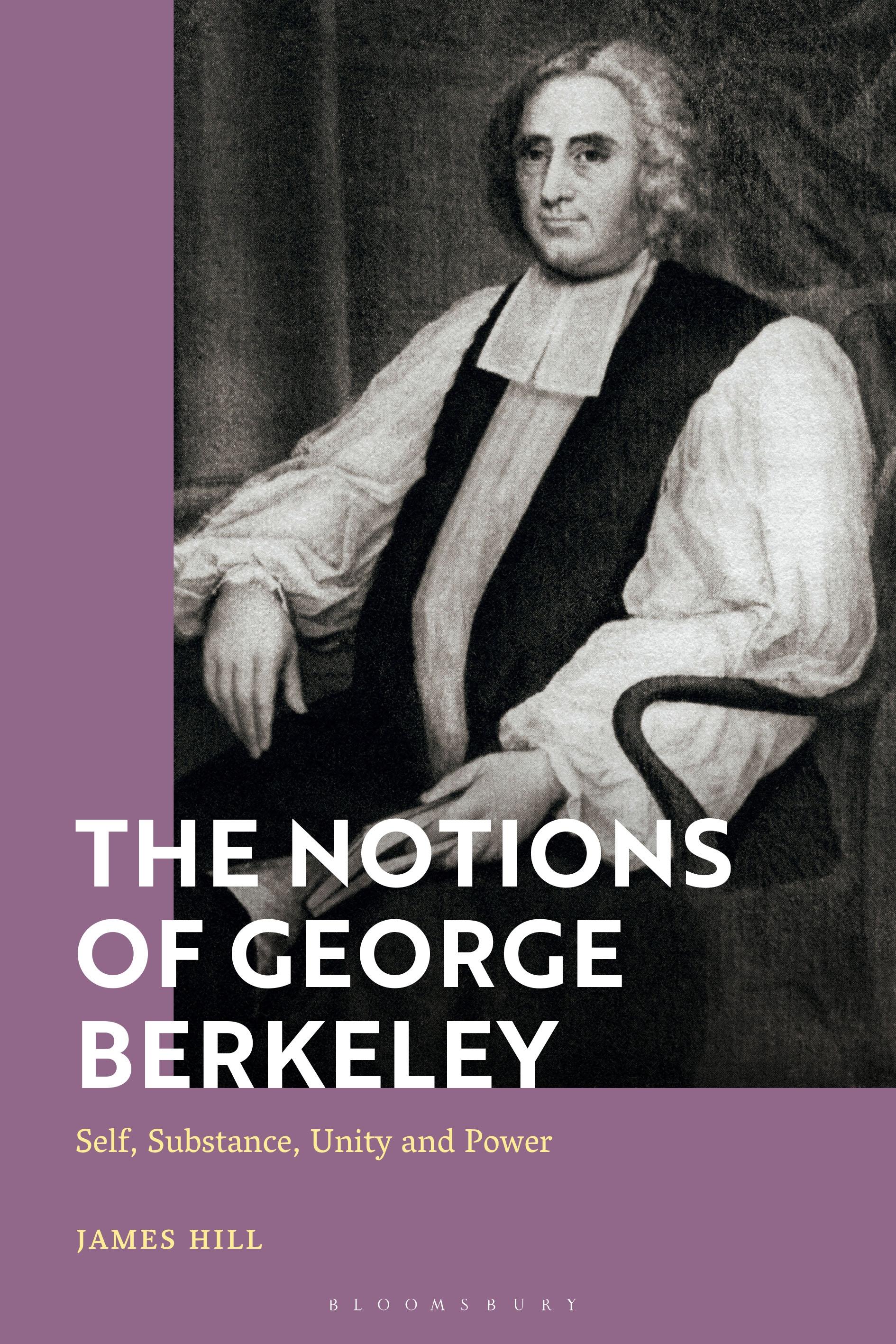
George Berkeley's doctrine of notions is often disparaged or dismissed. In a systematic interpretation and positive reconstruction of the doctrine, James Hill presents Berkeley's understanding of the inner sphere and self-awareness, and reassesses the widely held view of Berkeley as an empiricist.
Examining the development of Berkeley's philosophy from the early notebooks to the late Siris, Hill sets out how knowledge by notion involves a radical rejection of the perceptual model of self-cognition and of the attempt to frame our knowledge of the inner by analogy with the outer. He points to Berkeley's divergence from the assumption among rationalists and empiricists that we know our selves and our mental acts by idea, or by an immediate presentation before the mind.
Weaving together Berkeley's conception of the intellect, conceptual thought, mathematics, ethics and theology in the light of the doctrine of notions, Hill invites us to treat Berkeley's philosophy of mind as distinct from the empiricist tradition. This cutting edge reflection on the doctrine of notions is essential reading for students and scholars specialising in Berkeley as well as early modern accounts of the self, perception and God.
Examining the development of Berkeley's philosophy from the early notebooks to the late Siris, Hill sets out how knowledge by notion involves a radical rejection of the perceptual model of self-cognition and of the attempt to frame our knowledge of the inner by analogy with the outer. He points to Berkeley's divergence from the assumption among rationalists and empiricists that we know our selves and our mental acts by idea, or by an immediate presentation before the mind.
Weaving together Berkeley's conception of the intellect, conceptual thought, mathematics, ethics and theology in the light of the doctrine of notions, Hill invites us to treat Berkeley's philosophy of mind as distinct from the empiricist tradition. This cutting edge reflection on the doctrine of notions is essential reading for students and scholars specialising in Berkeley as well as early modern accounts of the self, perception and God.
Zahle einfach mit Karte, Klarna, Apple Pay oder Google Pay. Nicht zufrieden? Du hast immer ein 14-tägiges Widerrufsrecht. Lies mehr in unseren AGB. Hast du Fragen, schreib uns eine E-Mail an hello@memmo.org.
Memmo macht das Lernen einfacher – wo auch immer du bist. Bei uns findest du deine Kursbücher und smarte Lerntools an einem Ort: Zusammenfassungen, Quizzes, Podcasts und Lernkarten. Und Ted, dein Lernbuddy, beantwortet alles, was du wissen möchtest. Über 50.000 Studierende lernen bereits hier – gemacht, damit du schneller lernst und weniger Stress hast.