
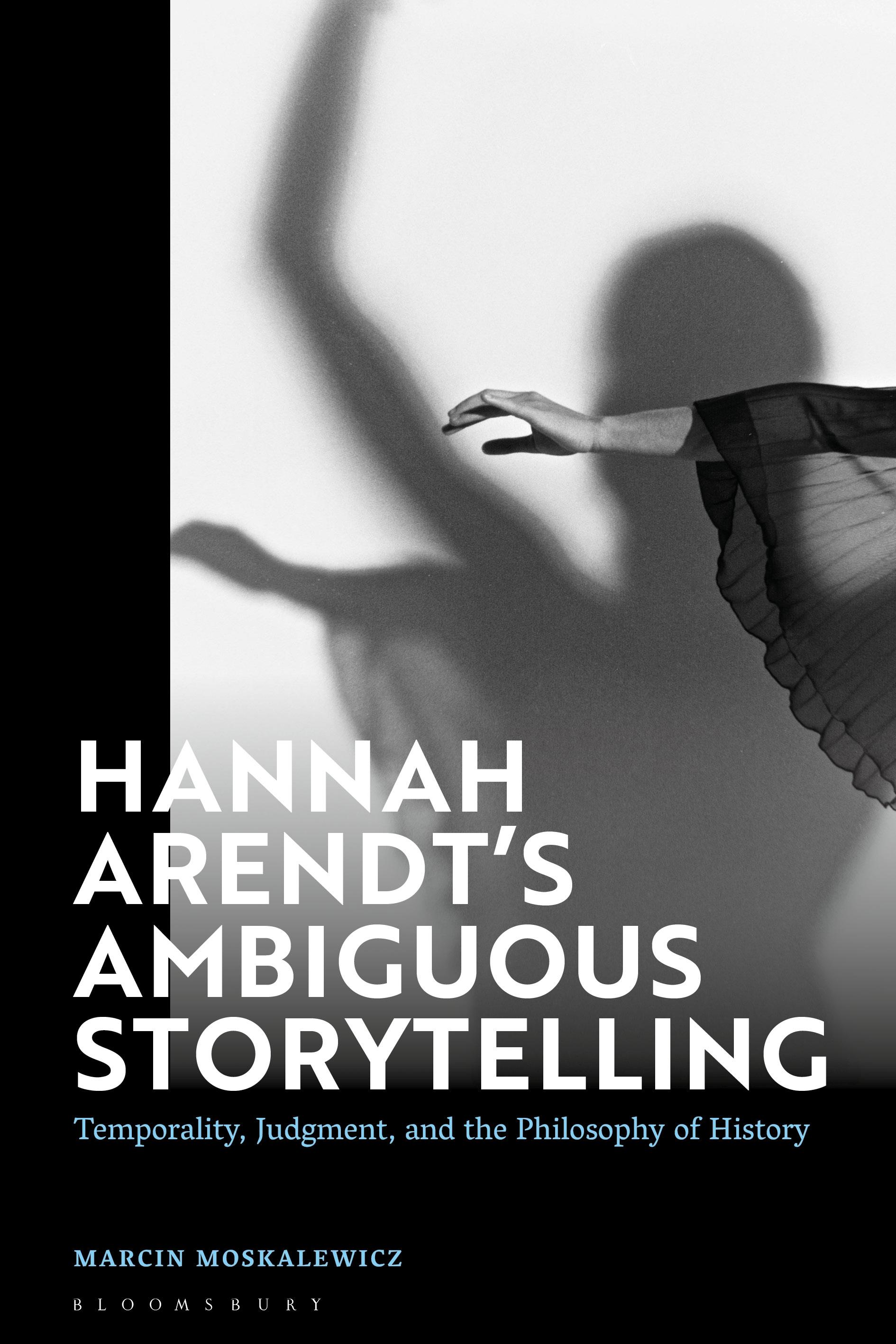
Through an original interpretation of Hannah Arendt's historiography, Marcin Moskalewicz reveals an under-acknowledged philosophy of history in her vast and variegated oeuvre, including the historical magnum opus, The Origins of Totalitarianism.
Hannah Arendt's Ambiguous Storytelling argues that the key to understanding the fragmentary thought of Arendt is through the speculative and critical dimensions of the philosophy of history. It unravels the essential aporia of Arendt's thinking – the discrepancy between political and historical meaning of events – and proposes its overcoming through aesthetic historical judgment. Reading her approach as “fragmented historiography”, the project she was committed to reveals itself as the only credible methodological response to totalitarianism and scientific approach to history, which both function as a retrospective prophecy, erroneously presenting the past as a forecast of the future.
A novel contribution to Arendt scholarship, this book will appeal to philosophers of history, political scientists and theorists alike.
Hannah Arendt's Ambiguous Storytelling argues that the key to understanding the fragmentary thought of Arendt is through the speculative and critical dimensions of the philosophy of history. It unravels the essential aporia of Arendt's thinking – the discrepancy between political and historical meaning of events – and proposes its overcoming through aesthetic historical judgment. Reading her approach as “fragmented historiography”, the project she was committed to reveals itself as the only credible methodological response to totalitarianism and scientific approach to history, which both function as a retrospective prophecy, erroneously presenting the past as a forecast of the future.
A novel contribution to Arendt scholarship, this book will appeal to philosophers of history, political scientists and theorists alike.
Zahle einfach mit Karte, Klarna, Apple Pay oder Google Pay. Nicht zufrieden? Du hast immer ein 14-tägiges Widerrufsrecht. Lies mehr in unseren AGB. Hast du Fragen, schreib uns eine E-Mail an hello@memmo.org.
Memmo macht das Lernen einfacher – wo auch immer du bist. Bei uns findest du deine Kursbücher und smarte Lerntools an einem Ort: Zusammenfassungen, Quizzes, Podcasts und Lernkarten. Und Ted, dein Lernbuddy, beantwortet alles, was du wissen möchtest. Über 50.000 Studierende lernen bereits hier – gemacht, damit du schneller lernst und weniger Stress hast.