
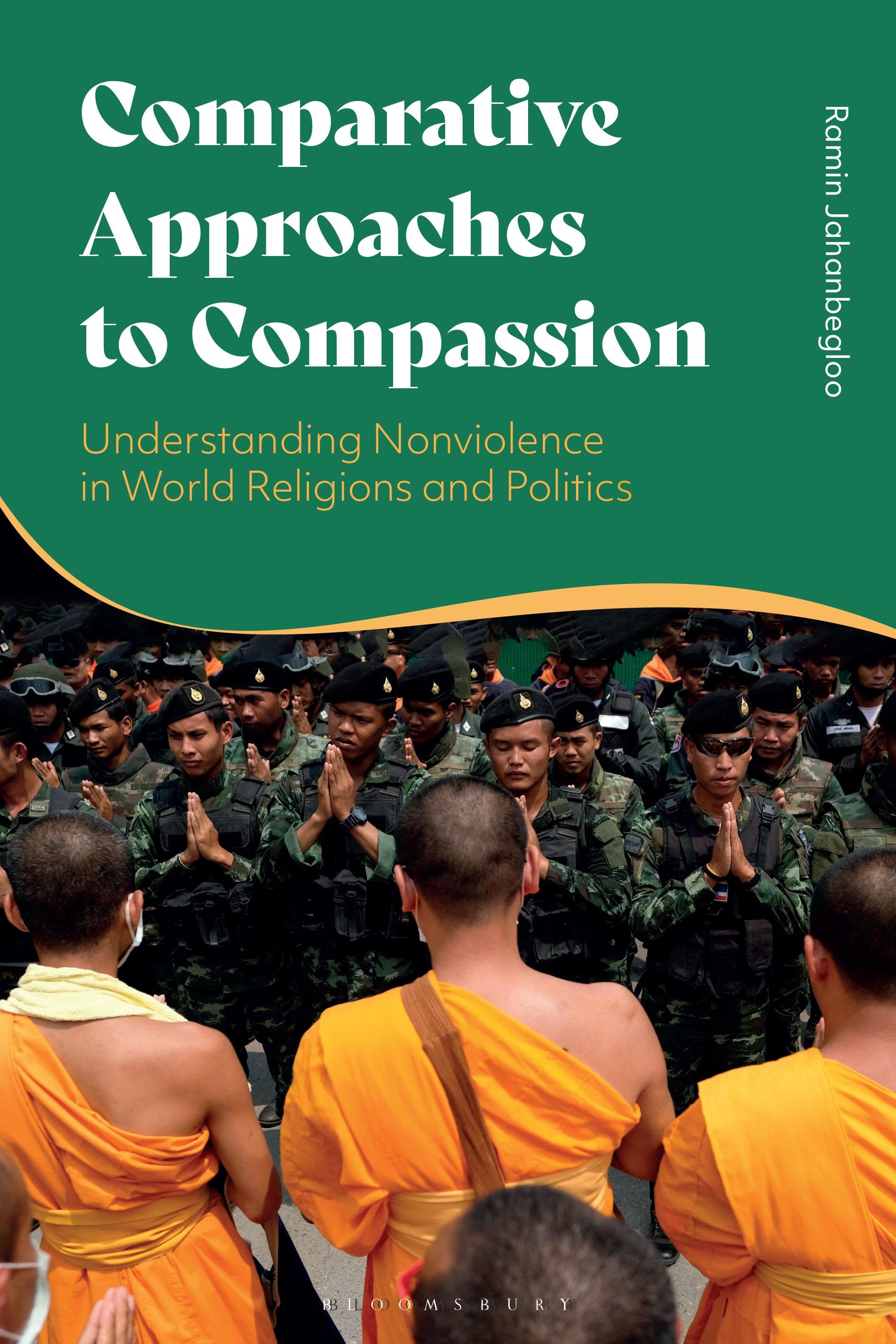
Ramin Jahanbegloo develops the concept of compassion as a practical and ethical response to the problems of today's world. Examining the power of compassion through the lens of multiple world religions, he explores ahimsa in Buddhism, Jainism and Hinduism and neighbourly love in Christianity, before synthesizing the two concepts in the Gandhian theory of non-violence and its impact on Muslim and Christian thinkers such as Abdul Ghaffar Khan and Martin Luther King, Jr. Jahanbegloo considers the idea of a compassionate civilization based on the nonviolent democratic theory put forward by Gandhi with Swaraj, and completed by Martin Luther King, Jr. with the Beloved Community.
By scrutinizing compassion in various religious and ethical traditions and exploring the relevance of homo fragilis, Jahanbegloo's comparative approach enriches our understanding of nonviolence as a universal philosophy and practice for the 21st century. He shows that nonviolence is not only a mode of thinking and a way of life, but also a powerful strategy of social and political transformation.
By scrutinizing compassion in various religious and ethical traditions and exploring the relevance of homo fragilis, Jahanbegloo's comparative approach enriches our understanding of nonviolence as a universal philosophy and practice for the 21st century. He shows that nonviolence is not only a mode of thinking and a way of life, but also a powerful strategy of social and political transformation.
Zahle einfach mit Karte, Klarna, Apple Pay oder Google Pay. Nicht zufrieden? Du hast immer ein 14-tägiges Widerrufsrecht. Lies mehr in unseren AGB. Hast du Fragen, schreib uns eine E-Mail an hello@memmo.org.
Memmo macht das Lernen einfacher – wo auch immer du bist. Bei uns findest du deine Kursbücher und smarte Lerntools an einem Ort: Zusammenfassungen, Quizzes, Podcasts und Lernkarten. Und Ted, dein Lernbuddy, beantwortet alles, was du wissen möchtest. Über 50.000 Studierende lernen bereits hier – gemacht, damit du schneller lernst und weniger Stress hast.