
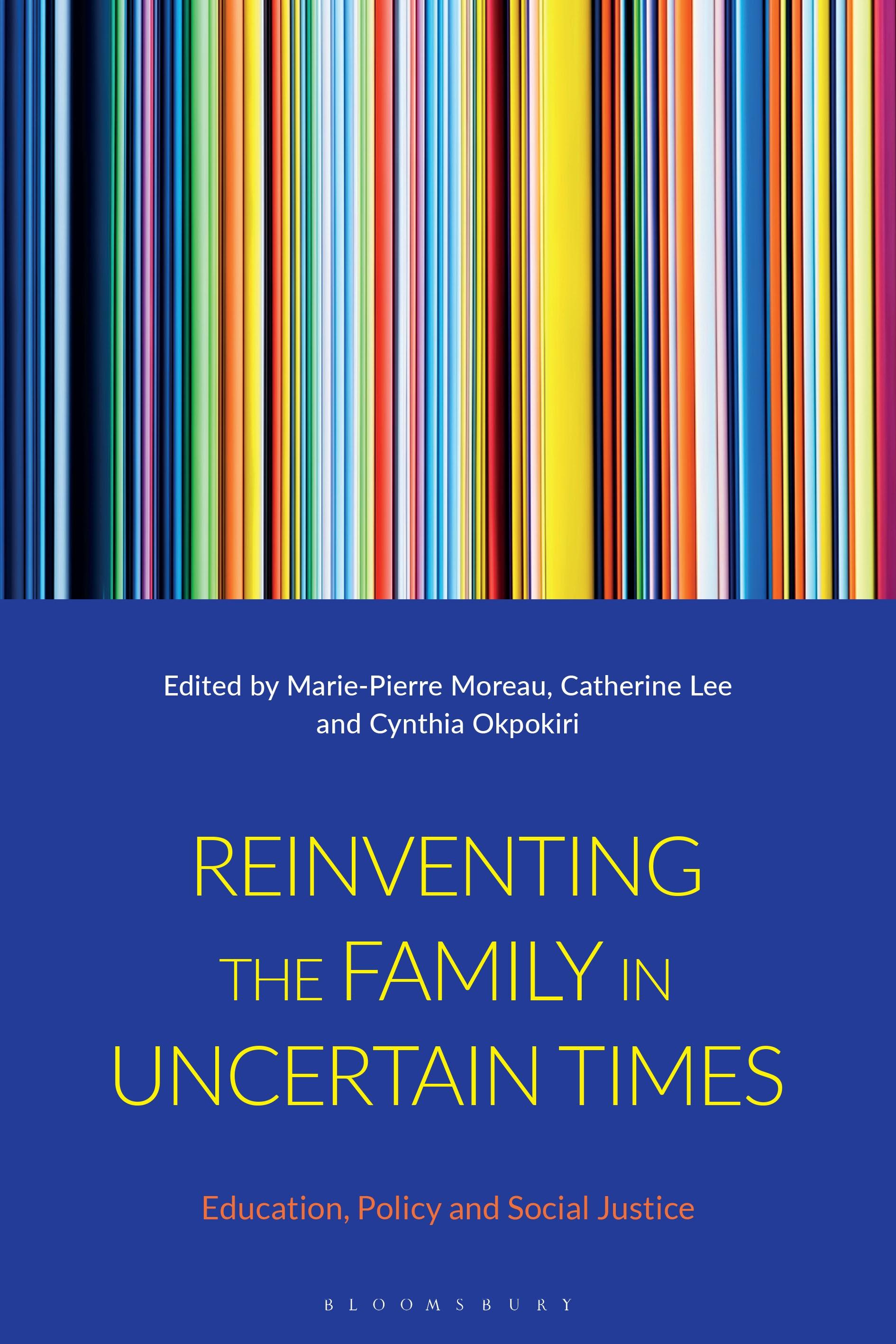
This edited volume looks at the reproduction and transformation of family norms in contemporary times. Set against a context of far-right politics calling for a return to more conservative identity politics and family norms, and building on late 20th century social movements which challenged essentialist and functionalist understandings of identities and families, it considers a variety of non-traditional family structures.
Written by scholars based in Argentina, Ghana, Italy, Portugal, the UK, and the USA, the chapters question what 'counts' as a family in contemporary times and considers how the discourses of power which operate in institutional and geographical contexts impact how families are recognized and valued. The book includes analysis of non-traditional and non-heteronormative families such as single-parent families, childless families, families with animal companions, LGBTQ families, families across the Global South, mixed heritage families and families of friends. Drawing on post-structuralist, critical, and feminist theories the contributors discuss how power relationships linked to gender, class, ethnicity, sexuality, dis/ability and other in/equalities intersect and operate in defining what counts as a family.
Written by scholars based in Argentina, Ghana, Italy, Portugal, the UK, and the USA, the chapters question what 'counts' as a family in contemporary times and considers how the discourses of power which operate in institutional and geographical contexts impact how families are recognized and valued. The book includes analysis of non-traditional and non-heteronormative families such as single-parent families, childless families, families with animal companions, LGBTQ families, families across the Global South, mixed heritage families and families of friends. Drawing on post-structuralist, critical, and feminist theories the contributors discuss how power relationships linked to gender, class, ethnicity, sexuality, dis/ability and other in/equalities intersect and operate in defining what counts as a family.
Zahle einfach mit Karte, Klarna, Apple Pay oder Google Pay. Nicht zufrieden? Du hast immer ein 14-tägiges Widerrufsrecht. Lies mehr in unseren AGB. Hast du Fragen, schreib uns eine E-Mail an hello@memmo.org.
Memmo macht das Lernen einfacher – wo auch immer du bist. Bei uns findest du deine Kursbücher und smarte Lerntools an einem Ort: Zusammenfassungen, Quizzes, Podcasts und Lernkarten. Und Ted, dein Lernbuddy, beantwortet alles, was du wissen möchtest. Über 50.000 Studierende lernen bereits hier – gemacht, damit du schneller lernst und weniger Stress hast.