
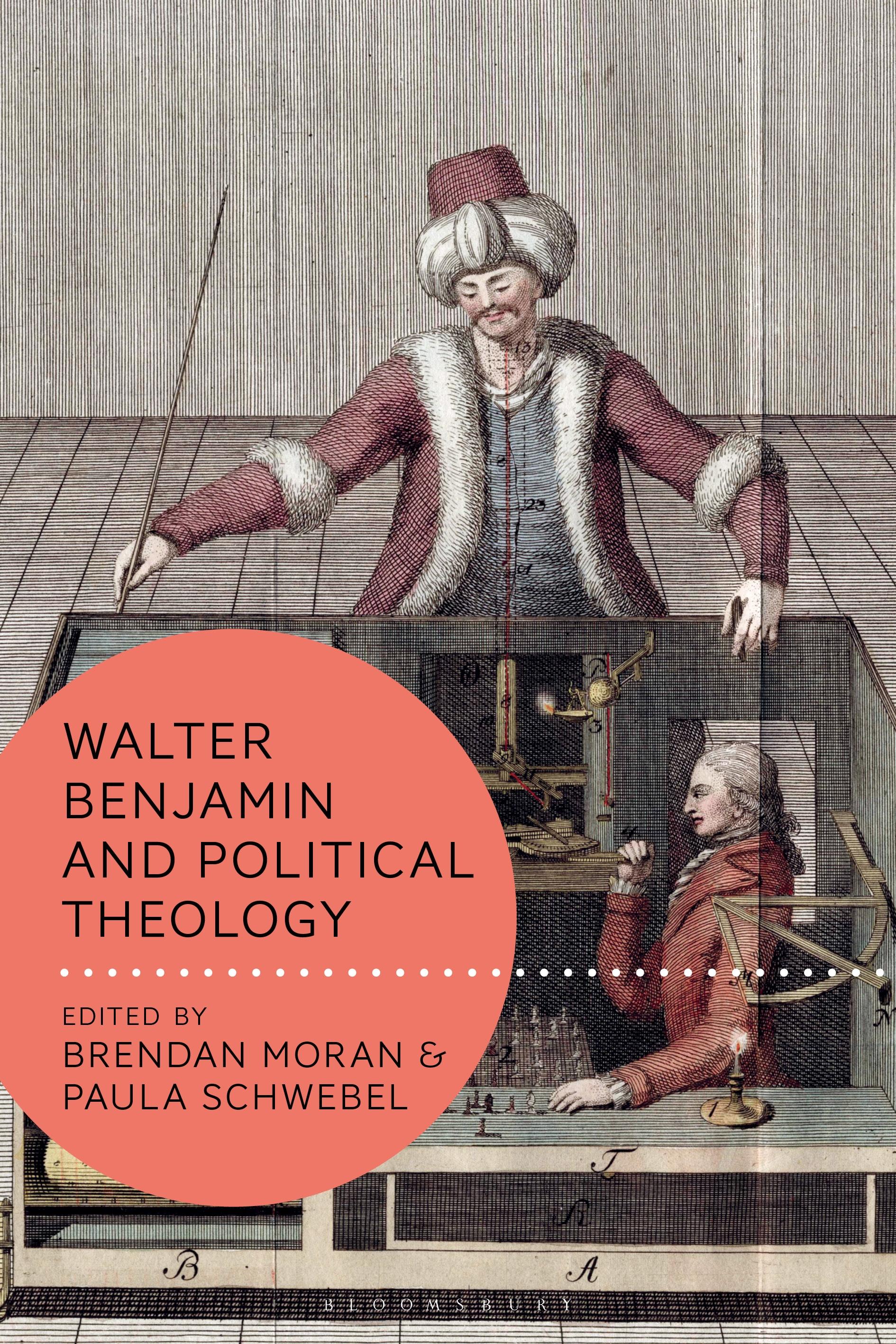
Tracing Walter Benjamin's convergences with, and divergences from, influential German legal theorist Carl Schmitt, this edited collection contextualizes Benjamin's thinking in the intellectual currents of his time, while also placing him in dialogue with traditions and thinkers from antiquity to the present. At stake is whether Benjamin presents the possibility of a distinctive political theology-a question which the collection addresses without collapsing the tensions internal to Benjamin's thought.
Benjamin's thought has been a touchstone, explicitly or implicitly, in numerous efforts to conceive of a 'new' political theology that is not anchored in legitimizing and preserving power, but in justice and liberation. Benjamin interrogates the political-theological complex from what may be construed as a vantage point opposed to Schmitt. Whereas Schmitt excavates the theological elements in modernity in order to shore up liberalism's illiberal inheritance, Benjamin roots out these latent structures in order to dissolve them and liberate us from their oppressive legacy. This volume's multifaceted contributions explore why Benjamin has been such a fertile source for thinking about political theology beyond – and often against – Schmitt. Benjamin indicates how existing political theologies can be challenged or expanded. This book accordingly makes a wide range of relevant work available for study whilst also opening new perspectives on Benjamin's œuvre.
Benjamin's thought has been a touchstone, explicitly or implicitly, in numerous efforts to conceive of a 'new' political theology that is not anchored in legitimizing and preserving power, but in justice and liberation. Benjamin interrogates the political-theological complex from what may be construed as a vantage point opposed to Schmitt. Whereas Schmitt excavates the theological elements in modernity in order to shore up liberalism's illiberal inheritance, Benjamin roots out these latent structures in order to dissolve them and liberate us from their oppressive legacy. This volume's multifaceted contributions explore why Benjamin has been such a fertile source for thinking about political theology beyond – and often against – Schmitt. Benjamin indicates how existing political theologies can be challenged or expanded. This book accordingly makes a wide range of relevant work available for study whilst also opening new perspectives on Benjamin's œuvre.
Zahle einfach mit Karte, Klarna, Apple Pay oder Google Pay. Nicht zufrieden? Du hast immer ein 14-tägiges Widerrufsrecht. Lies mehr in unseren AGB. Hast du Fragen, schreib uns eine E-Mail an hello@memmo.org.
Memmo macht das Lernen einfacher – wo auch immer du bist. Bei uns findest du deine Kursbücher und smarte Lerntools an einem Ort: Zusammenfassungen, Quizzes, Podcasts und Lernkarten. Und Ted, dein Lernbuddy, beantwortet alles, was du wissen möchtest. Über 50.000 Studierende lernen bereits hier – gemacht, damit du schneller lernst und weniger Stress hast.