
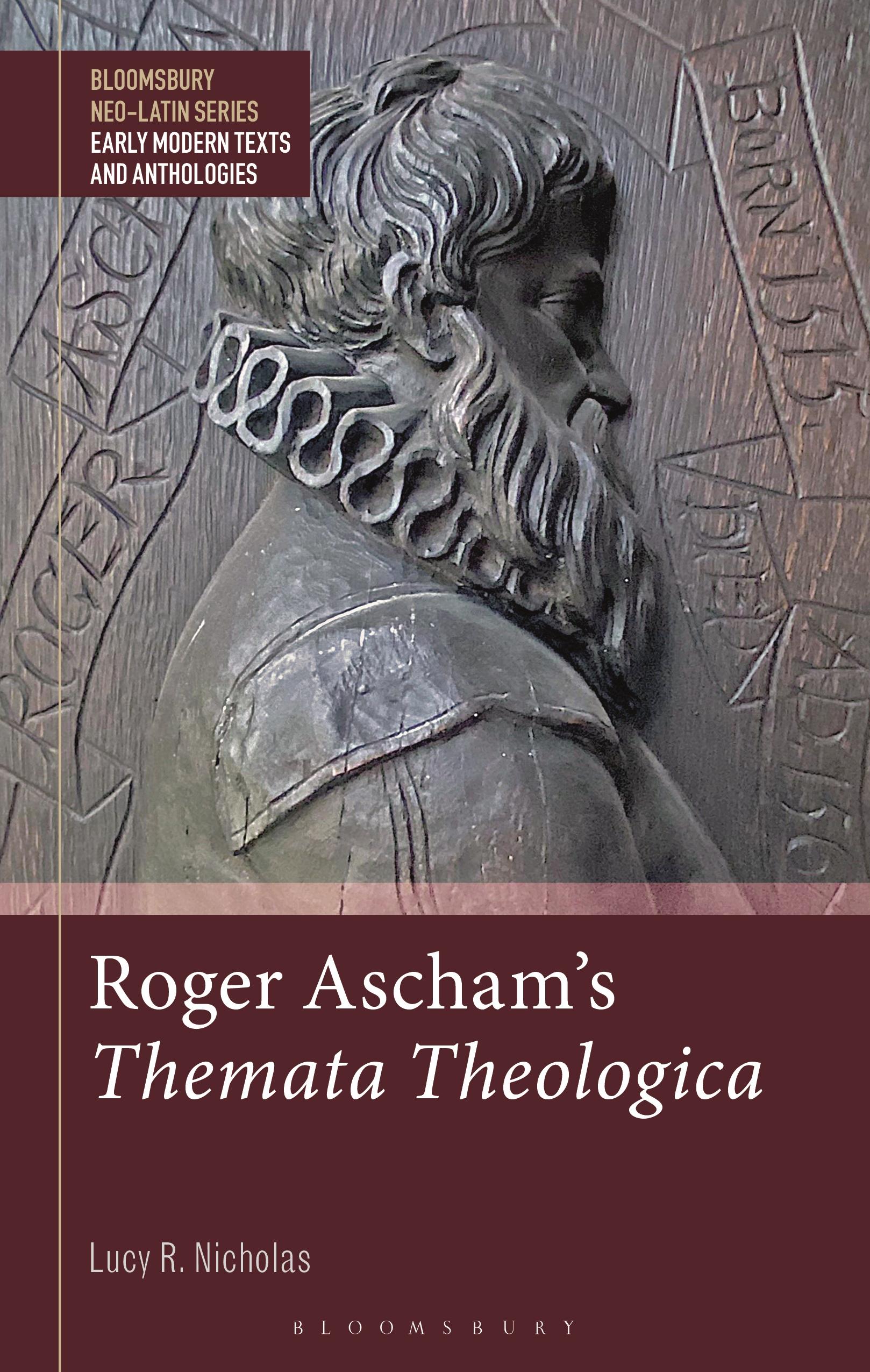
Roger Ascham is often classified as 'a great mid-Tudor humanist' and he is perhaps best known for his role as tutor to Elizabeth I. His most famous works, The Scholemaster and Toxophilus, have been extensively quarried and anthologised in studies on prose style and English humanism. By contrast, his Neo-Latin works that engaged with theology and key Reformation concerns have languished in the shadows of modern scholarship. Ascham's Themata Theologica ('Theological Topics') is one of these, and its content has the potential to open up many an investigative avenue into the intellectual and religious culture of the sixteenth century. This is the first volume to offer a corresponding English translation.
The Themata can be dated to the early to mid- 1540s, and was composed by Ascham while still at Cambridge University and serving as a senior fellow at St John's College. The work mainly comprises a compendium of relatively short commentaries on Scriptural verses (both Old and New Testament), many of which developed into expositions on difficult philosophical concepts, such as the notion of felix culpa (literally, 'happy fault') and some of the most intractable theological questions of the day, including the nature of sin, adiaphora ('matters of indifference'), justification and free will. This little-known text offers a rare opportunity to trace the course of Ascham's own religious maturation, but also offers fresh insights into the confessional climate at Cambridge University during one of the most turbulent periods of the Reformation in England.
The Themata can be dated to the early to mid- 1540s, and was composed by Ascham while still at Cambridge University and serving as a senior fellow at St John's College. The work mainly comprises a compendium of relatively short commentaries on Scriptural verses (both Old and New Testament), many of which developed into expositions on difficult philosophical concepts, such as the notion of felix culpa (literally, 'happy fault') and some of the most intractable theological questions of the day, including the nature of sin, adiaphora ('matters of indifference'), justification and free will. This little-known text offers a rare opportunity to trace the course of Ascham's own religious maturation, but also offers fresh insights into the confessional climate at Cambridge University during one of the most turbulent periods of the Reformation in England.
Zahle einfach mit Karte, Klarna, Apple Pay oder Google Pay. Nicht zufrieden? Du hast immer ein 14-tägiges Widerrufsrecht. Lies mehr in unseren AGB. Hast du Fragen, schreib uns eine E-Mail an hello@memmo.org.
Memmo macht das Lernen einfacher – wo auch immer du bist. Bei uns findest du deine Kursbücher und smarte Lerntools an einem Ort: Zusammenfassungen, Quizzes, Podcasts und Lernkarten. Und Ted, dein Lernbuddy, beantwortet alles, was du wissen möchtest. Über 50.000 Studierende lernen bereits hier – gemacht, damit du schneller lernst und weniger Stress hast.