
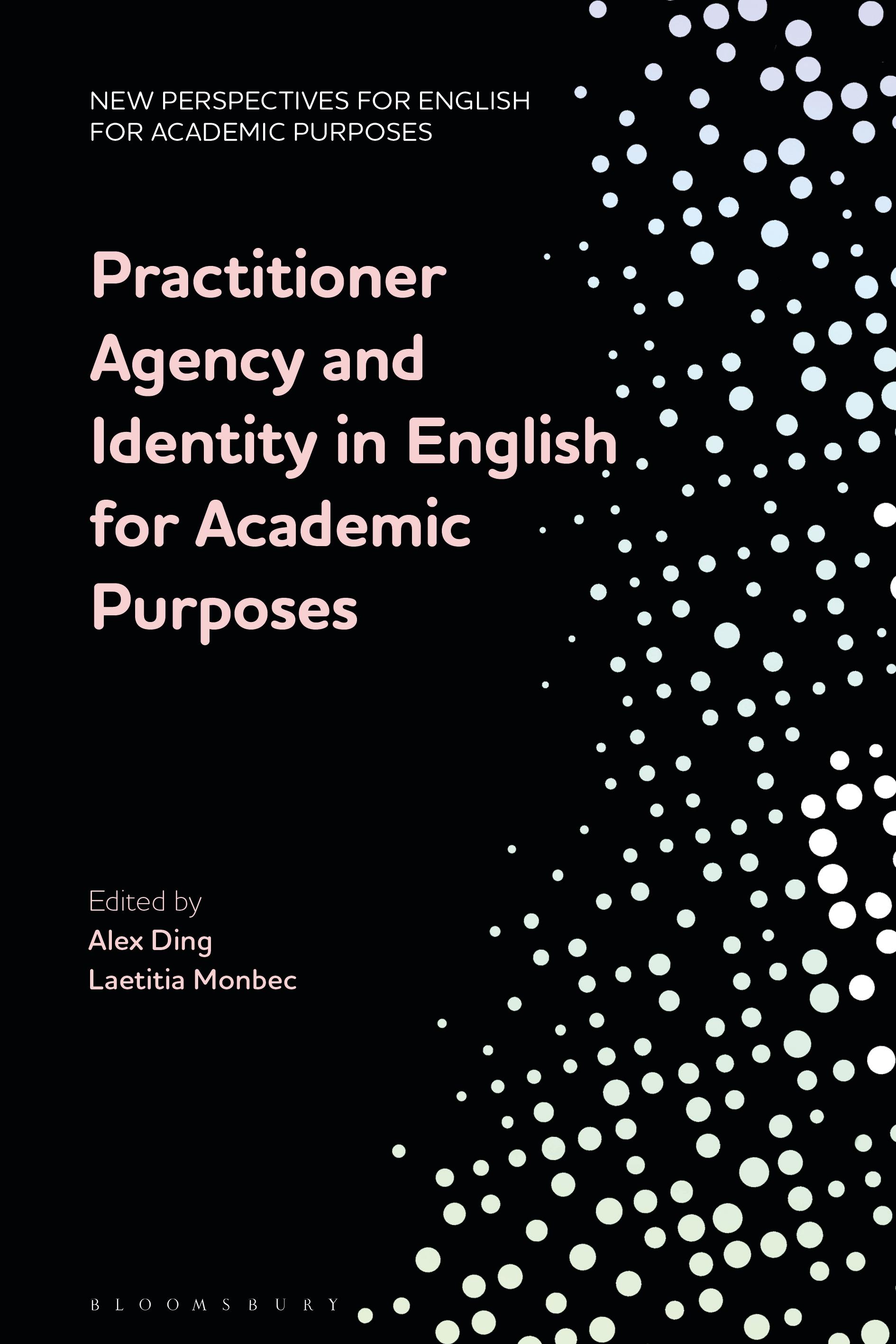
This volume provides insights into EAP practitioners' identity and agency in varied contexts and field positions.
Each chapter delves into a theoretical perspective (Bourdieu's field theory, Post-humanism, Legitimation Code Theory, Symbolic Interactionism..), and a variety of methodologies, enabling different questions to be explored. Each chapter is also a window into the everyday life of practitioners as they navigate their professional lives, and the specificities of their EAP contexts, the politics and struggles over power, domination, legitimacy, status, ambition and recognition. The authors' concerns and strategies vary and show that the weight of powerful structures and collective habitus is difficult - but not impossible- to resist.
From a socio-analysis of EAP and its narratives of origins, to a discussion on Ethics in EAP and a critique of the Global South label, the reader will explore contributions from Canada, Hong Kong, Malaysia, Pakistan, Singapore, South Africa, the UK, and Zimbabwe.
The chapters reveal a field which is made up of a constellation of worlds, each with its own logic but importantly, a field with no centre. The studies in the chapters are likely to intrigue, inspire, but also disrupt some readers' expectations and challenge their assumptions about the field and its practitioners.
Each chapter delves into a theoretical perspective (Bourdieu's field theory, Post-humanism, Legitimation Code Theory, Symbolic Interactionism..), and a variety of methodologies, enabling different questions to be explored. Each chapter is also a window into the everyday life of practitioners as they navigate their professional lives, and the specificities of their EAP contexts, the politics and struggles over power, domination, legitimacy, status, ambition and recognition. The authors' concerns and strategies vary and show that the weight of powerful structures and collective habitus is difficult - but not impossible- to resist.
From a socio-analysis of EAP and its narratives of origins, to a discussion on Ethics in EAP and a critique of the Global South label, the reader will explore contributions from Canada, Hong Kong, Malaysia, Pakistan, Singapore, South Africa, the UK, and Zimbabwe.
The chapters reveal a field which is made up of a constellation of worlds, each with its own logic but importantly, a field with no centre. The studies in the chapters are likely to intrigue, inspire, but also disrupt some readers' expectations and challenge their assumptions about the field and its practitioners.
Zahle einfach mit Karte, Klarna, Apple Pay oder Google Pay. Nicht zufrieden? Du hast immer ein 14-tägiges Widerrufsrecht. Lies mehr in unseren AGB. Hast du Fragen, schreib uns eine E-Mail an hello@memmo.org.
Memmo macht das Lernen einfacher – wo auch immer du bist. Bei uns findest du deine Kursbücher und smarte Lerntools an einem Ort: Zusammenfassungen, Quizzes, Podcasts und Lernkarten. Und Ted, dein Lernbuddy, beantwortet alles, was du wissen möchtest. Über 50.000 Studierende lernen bereits hier – gemacht, damit du schneller lernst und weniger Stress hast.