
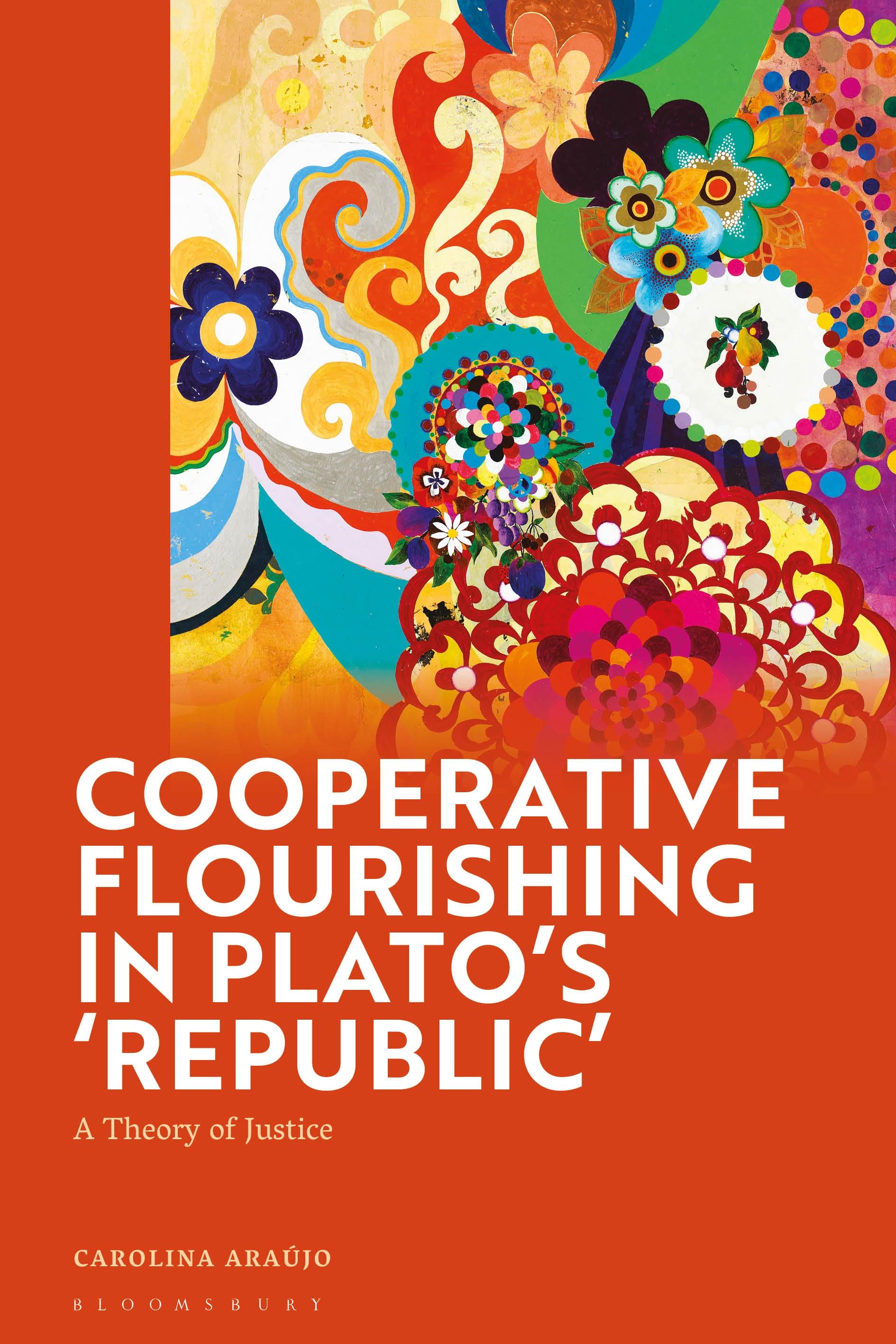
In this pathbreaking interpretation of Plato's foundational text of political philosophy, Carolina Araújo reveals how the Republic remains ripe for an interpretation grounded in notions of cooperation, flourishing and justice relevant to the diversity of contemporary life.
Plato's Republic has the Greek name of Politeia that Araújo translates as “the way of life of the citizens,” not “the State” or “the form of government” as it more traditionally rendered. Plato's treatise, Politeia, depicts the rich array of patterns emerging from human interaction and enquires into the best amongst them. Cooperative Flourishing in Plato's Republic returns to these important questions about society – how to live with a vast diversity of personalities, with different interests and abilities, all of them trying to flourish – and asks how best can we share our environment? With rigorous philosophical analysis of the Greek text, accompanied by original translations of the most important passages, Araújo upends mainstream scholarship to progress Socrates' “bottom-up” view of politics and rejects previous readings of the Republic as a proto-totalitarian text, psychological study or lengthy analogy.
By defending a theory of Platonic justice that is rooted in cooperative flourishing, the public education of all citizens and the contribution of philosophers to political life, “the beautiful city”, which Plato called Kallipolis, emerges as a hopeful possibility.
Plato's Republic has the Greek name of Politeia that Araújo translates as “the way of life of the citizens,” not “the State” or “the form of government” as it more traditionally rendered. Plato's treatise, Politeia, depicts the rich array of patterns emerging from human interaction and enquires into the best amongst them. Cooperative Flourishing in Plato's Republic returns to these important questions about society – how to live with a vast diversity of personalities, with different interests and abilities, all of them trying to flourish – and asks how best can we share our environment? With rigorous philosophical analysis of the Greek text, accompanied by original translations of the most important passages, Araújo upends mainstream scholarship to progress Socrates' “bottom-up” view of politics and rejects previous readings of the Republic as a proto-totalitarian text, psychological study or lengthy analogy.
By defending a theory of Platonic justice that is rooted in cooperative flourishing, the public education of all citizens and the contribution of philosophers to political life, “the beautiful city”, which Plato called Kallipolis, emerges as a hopeful possibility.
Zahle einfach mit Karte, Klarna, Apple Pay oder Google Pay. Nicht zufrieden? Du hast immer ein 14-tägiges Widerrufsrecht. Lies mehr in unseren AGB. Hast du Fragen, schreib uns eine E-Mail an hello@memmo.org.
Memmo macht das Lernen einfacher – wo auch immer du bist. Bei uns findest du deine Kursbücher und smarte Lerntools an einem Ort: Zusammenfassungen, Quizzes, Podcasts und Lernkarten. Und Ted, dein Lernbuddy, beantwortet alles, was du wissen möchtest. Über 50.000 Studierende lernen bereits hier – gemacht, damit du schneller lernst und weniger Stress hast.