
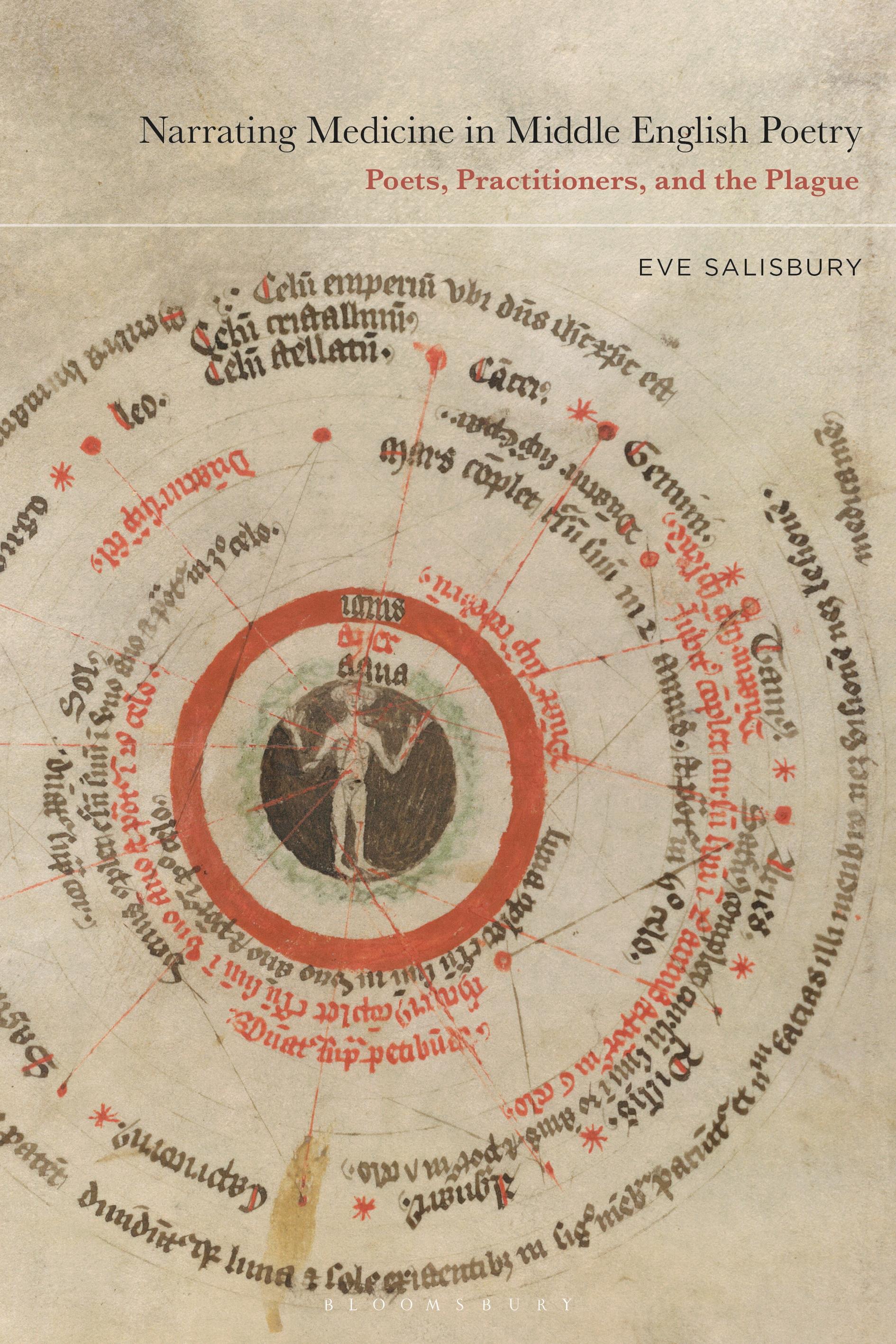
Exploring medical writing in England in the 100+ years after the advent of the “Great Mortality”, this book examines the storytelling practices of poets, patients, and physicians in the midst of a medieval public health crisis and demonstrates how literary narratives enable us to see a kinship between poetry and the healing arts.
Looking at how we can learn to diagnose a text as if we were diagnosing a body, Salisbury provides new insights into how we can recuperate the voices of those afflicted by illness in medieval texts when we have no direct testimony.
She considers how we interpret stories told by patients in narratives mediated by others, ways that women factor into the shaping of a medical canon, how medical writing intersects with religious belief and memorial practices governed by the Church, and ways that regimens of health benefit a population in the throes of an epidemic.
Looking at how we can learn to diagnose a text as if we were diagnosing a body, Salisbury provides new insights into how we can recuperate the voices of those afflicted by illness in medieval texts when we have no direct testimony.
She considers how we interpret stories told by patients in narratives mediated by others, ways that women factor into the shaping of a medical canon, how medical writing intersects with religious belief and memorial practices governed by the Church, and ways that regimens of health benefit a population in the throes of an epidemic.
Zahle einfach mit Karte, Klarna, Apple Pay oder Google Pay. Nicht zufrieden? Du hast immer ein 14-tägiges Widerrufsrecht. Lies mehr in unseren AGB. Hast du Fragen, schreib uns eine E-Mail an hello@memmo.org.
Memmo macht das Lernen einfacher – wo auch immer du bist. Bei uns findest du deine Kursbücher und smarte Lerntools an einem Ort: Zusammenfassungen, Quizzes, Podcasts und Lernkarten. Und Ted, dein Lernbuddy, beantwortet alles, was du wissen möchtest. Über 50.000 Studierende lernen bereits hier – gemacht, damit du schneller lernst und weniger Stress hast.