
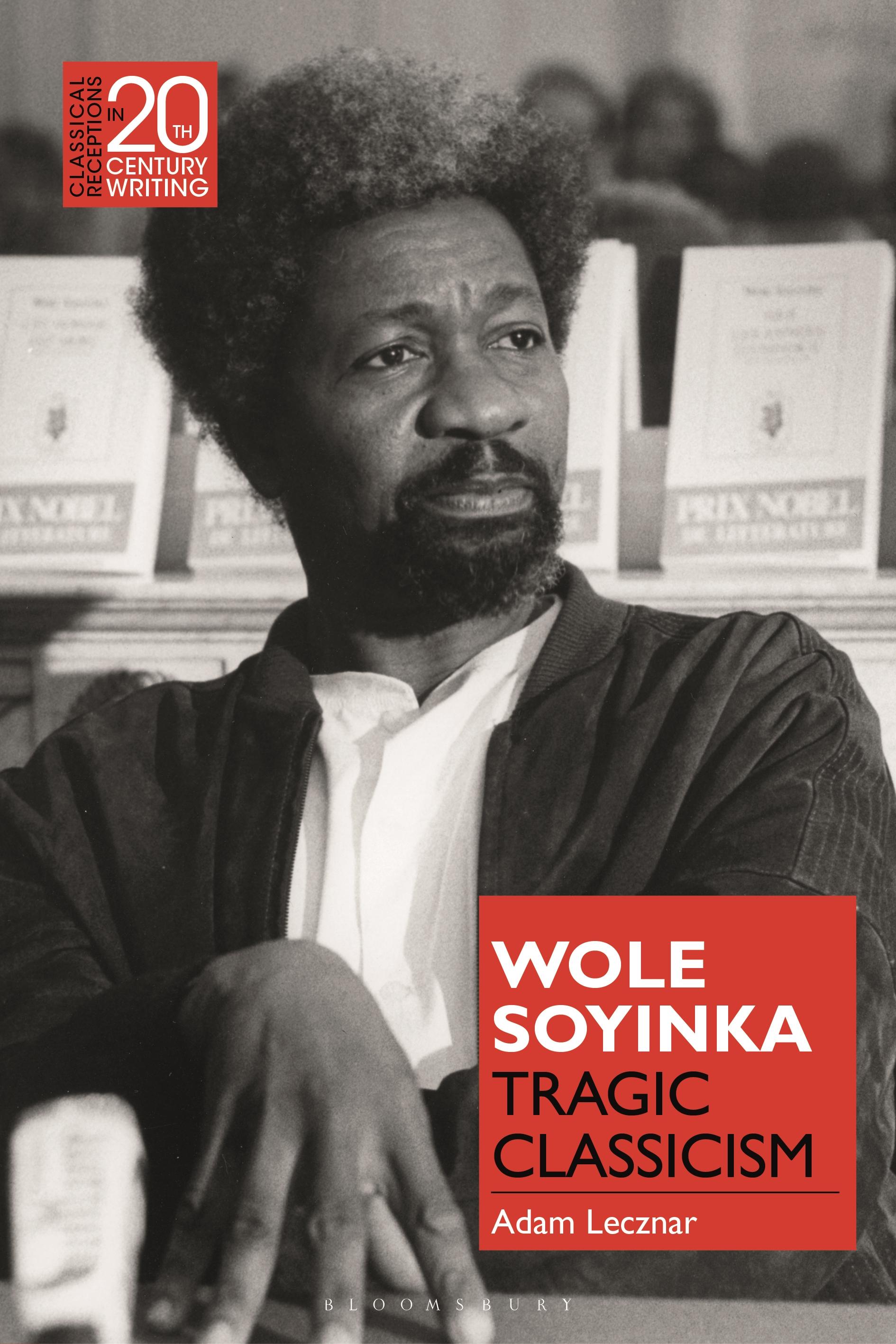
This book presents a new way of looking at Wole Soyinka's engagement with the classical past. Nigerian author and activist Wole Soyinka was the first Black African author to win the Nobel Prize for Literature (1986), and his oeuvre has become seminal to postcolonial literature. The frequent references to Greece and Rome that appear across Soyinka's writings, most explicitly in his 1973 play The Bacchae of Euripides: A Communion Rite, have often received short shrift in scholarship on the author. At best, these references have been understood as elements of Soyinka's prodigiously inclusive humanism. At worst, Soyinka's critics argue that the invocations of a Graeco-Roman past testify to the neocolonial cultural affinities that make Soyinka a problematic figure in postcolonial literary history.
Adam Lecznar challenges these readings, arguing that Soyinka's authorial outlook is informed by a hybrid form of classicism in which he aligns the legacy of Greece and Rome with the African cultural heritage to form a narrative of literary and cultural value that looks beyond the ancient Mediterranean. This book turns a spotlight on how Soyinka's appeals to Greece and Rome inform his reflections on Africa's ancient past, Yoruba belief, and the modern significance of tragedy. Lecznar contends that Soyinka's notion of classicism is not solely dependent on the memory of the Graeco-Roman past. Rather, it draws innovatively on a global cultural heritage to advance revolutionary and futural narratives of history and identity.
Adam Lecznar challenges these readings, arguing that Soyinka's authorial outlook is informed by a hybrid form of classicism in which he aligns the legacy of Greece and Rome with the African cultural heritage to form a narrative of literary and cultural value that looks beyond the ancient Mediterranean. This book turns a spotlight on how Soyinka's appeals to Greece and Rome inform his reflections on Africa's ancient past, Yoruba belief, and the modern significance of tragedy. Lecznar contends that Soyinka's notion of classicism is not solely dependent on the memory of the Graeco-Roman past. Rather, it draws innovatively on a global cultural heritage to advance revolutionary and futural narratives of history and identity.
Seiten: 176
Kategorie: Litteraturvetenskap & Teori
e-ISBN: 9781350249066
Versandgewicht: 1.2 kg
Versand in: 1-2 Tage
Zahle einfach mit Karte, Klarna, Apple Pay oder Google Pay. Nicht zufrieden? Du hast immer ein 14-tägiges Widerrufsrecht. Lies mehr in unseren AGB. Hast du Fragen, schreib uns eine E-Mail an hello@memmo.org.
Memmo macht das Lernen einfacher – wo auch immer du bist. Bei uns findest du deine Kursbücher und smarte Lerntools an einem Ort: Zusammenfassungen, Quizzes, Podcasts und Lernkarten. Und Ted, dein Lernbuddy, beantwortet alles, was du wissen möchtest. Über 50.000 Studierende lernen bereits hier – gemacht, damit du schneller lernst und weniger Stress hast.