
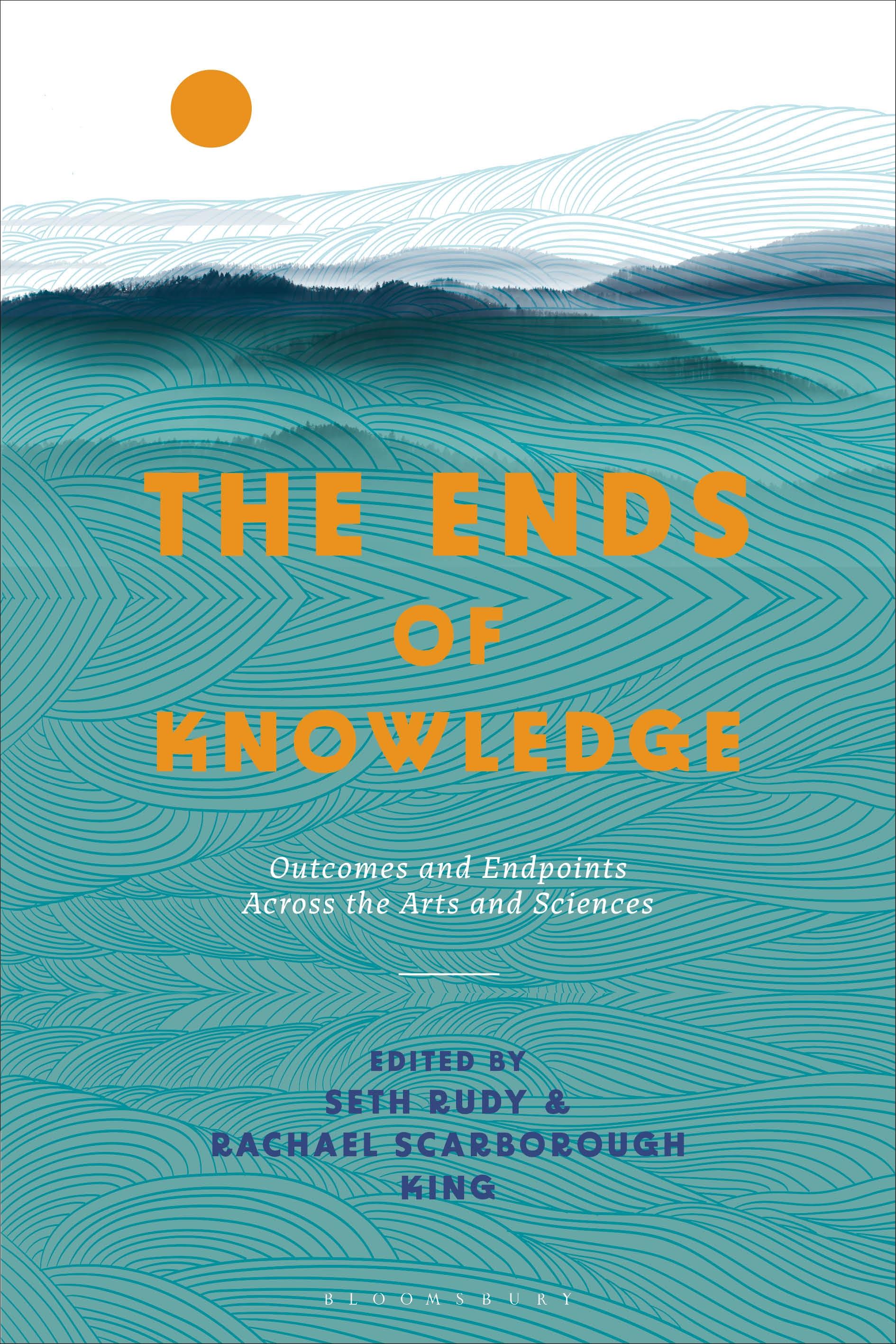
Bringing together an exciting group of knowledge workers, scholars and activists from across fields, this book revisits a foundational question of the Enlightenment: what is “the last or furthest end of knowledge”? It is a book about why we do what we do, and how we might know when we are done.
In the reorganization of knowledge that characterized the Enlightenment, disciplines were conceived as having particular “ends,” both in terms of purposes and end-points. As we experience an ongoing shift to the knowledge economy of the Information Age, this collection asks whether we still conceptualize knowledge in this way. Does an individual discipline have both an inherent purpose and a natural endpoint? What do an experiment on a fruit fly, a reading of a poem, and the writing of a line of code have in common?
Focusing on areas as diverse as AI; biology; Black studies; literary studies; physics; political activism; and the concept of disciplinarity itself, contributors uncover a life after disciplinarity for subjects that face immediate threats to the structure if not the substance of their contributions. These essays – whether reflective, historical, eulogistic, or polemical – chart a vital and necessary course towards the reorganization of knowledge production as a whole.
In the reorganization of knowledge that characterized the Enlightenment, disciplines were conceived as having particular “ends,” both in terms of purposes and end-points. As we experience an ongoing shift to the knowledge economy of the Information Age, this collection asks whether we still conceptualize knowledge in this way. Does an individual discipline have both an inherent purpose and a natural endpoint? What do an experiment on a fruit fly, a reading of a poem, and the writing of a line of code have in common?
Focusing on areas as diverse as AI; biology; Black studies; literary studies; physics; political activism; and the concept of disciplinarity itself, contributors uncover a life after disciplinarity for subjects that face immediate threats to the structure if not the substance of their contributions. These essays – whether reflective, historical, eulogistic, or polemical – chart a vital and necessary course towards the reorganization of knowledge production as a whole.
Seiten: 272
Kategorie: Vetenskapsteori och forskningsmetod
e-ISBN: 9781350242319
Versandgewicht: 1.2 kg
Versand in: 1-2 Tage
Zahle einfach mit Karte, Klarna, Apple Pay oder Google Pay. Nicht zufrieden? Du hast immer ein 14-tägiges Widerrufsrecht. Lies mehr in unseren AGB. Hast du Fragen, schreib uns eine E-Mail an hello@memmo.org.
Memmo macht das Lernen einfacher – wo auch immer du bist. Bei uns findest du deine Kursbücher und smarte Lerntools an einem Ort: Zusammenfassungen, Quizzes, Podcasts und Lernkarten. Und Ted, dein Lernbuddy, beantwortet alles, was du wissen möchtest. Über 50.000 Studierende lernen bereits hier – gemacht, damit du schneller lernst und weniger Stress hast.