
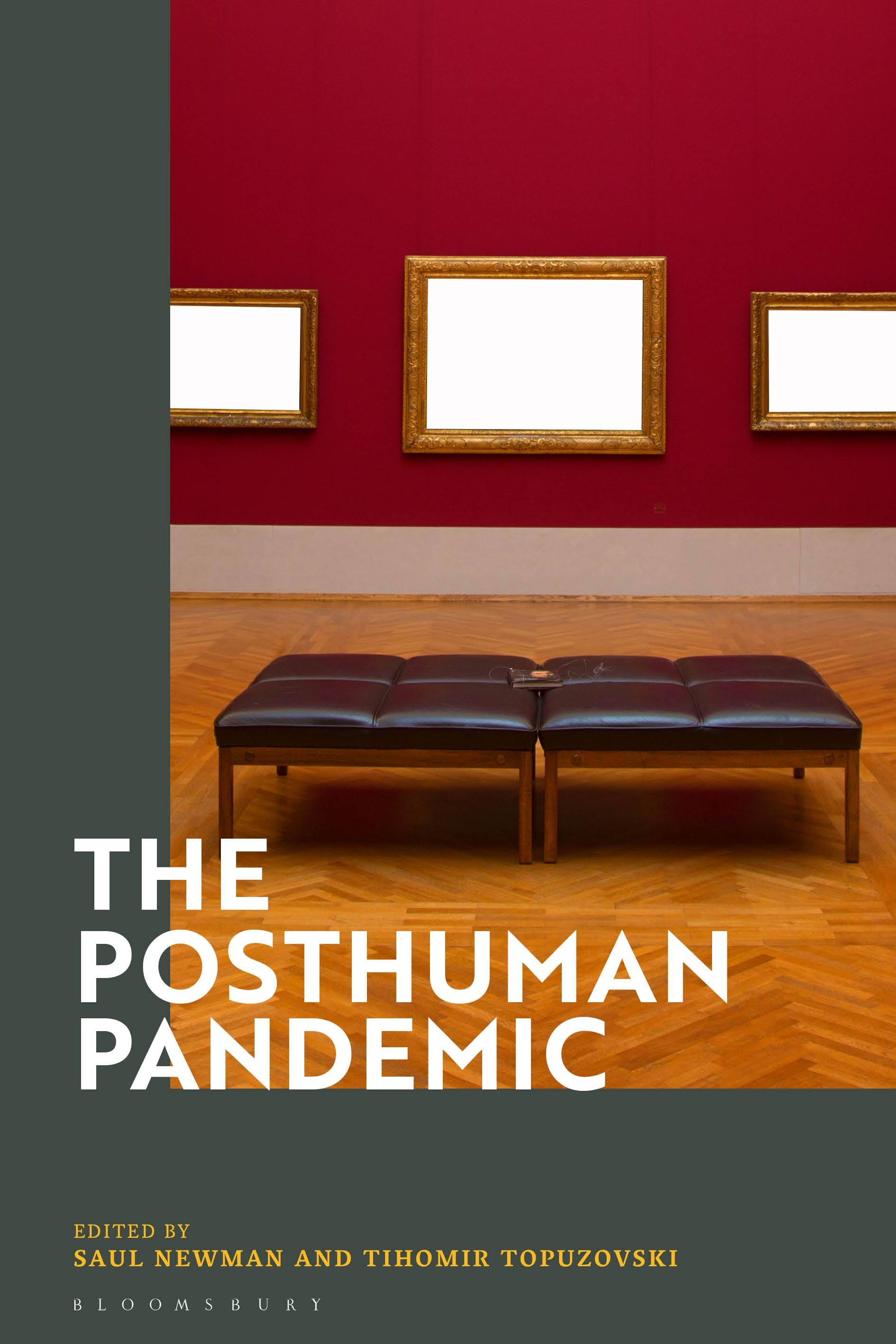
With the COVID-19 crisis forcing us to reflect in a dramatic way on the limits of the human and the implications of the Anthropocene Age, this timely volume addresses these concerns through an exploration of post-humanism as represented in philosophy, politics and aesthetics.
Global pandemics bring into sharp focus the bankruptcy of the neoliberal economic paradigm, the future of the arts sector in society, and our dependence upon political forces outside our control. In response to the recent state of emergency, The Posthuman Pandemic highlights the urgent need to rethink our anthropocentrism and develop new political models, aesthetic practices and ways of living.
Central to these discussions is the idea of post-humanism, a philosophy that can help us grapple with the crisis, as it takes seriously the unstable ecosystems on which we depend and the precarious nature of our long-cherished notions of agency and sovereignty. Bringing together international philosophers, political theorists and media and art theorists, all of whom engage with the posthuman, this volume explores a range of vital subjects, from the inequality revealed by COVID-19 survival rates to museums' role in spreading human-centric understandings of a world struck by human fragility.
Facing up to the realities that the coronavirus outbreak has uncovered, The Posthuman Pandemic combines both breadth and depth of analysis to take on the posthuman challenges confronting us today.
Global pandemics bring into sharp focus the bankruptcy of the neoliberal economic paradigm, the future of the arts sector in society, and our dependence upon political forces outside our control. In response to the recent state of emergency, The Posthuman Pandemic highlights the urgent need to rethink our anthropocentrism and develop new political models, aesthetic practices and ways of living.
Central to these discussions is the idea of post-humanism, a philosophy that can help us grapple with the crisis, as it takes seriously the unstable ecosystems on which we depend and the precarious nature of our long-cherished notions of agency and sovereignty. Bringing together international philosophers, political theorists and media and art theorists, all of whom engage with the posthuman, this volume explores a range of vital subjects, from the inequality revealed by COVID-19 survival rates to museums' role in spreading human-centric understandings of a world struck by human fragility.
Facing up to the realities that the coronavirus outbreak has uncovered, The Posthuman Pandemic combines both breadth and depth of analysis to take on the posthuman challenges confronting us today.
Zahle einfach mit Karte, Klarna, Apple Pay oder Google Pay. Nicht zufrieden? Du hast immer ein 14-tägiges Widerrufsrecht. Lies mehr in unseren AGB. Hast du Fragen, schreib uns eine E-Mail an hello@memmo.org.
Memmo macht das Lernen einfacher – wo auch immer du bist. Bei uns findest du deine Kursbücher und smarte Lerntools an einem Ort: Zusammenfassungen, Quizzes, Podcasts und Lernkarten. Und Ted, dein Lernbuddy, beantwortet alles, was du wissen möchtest. Über 50.000 Studierende lernen bereits hier – gemacht, damit du schneller lernst und weniger Stress hast.