
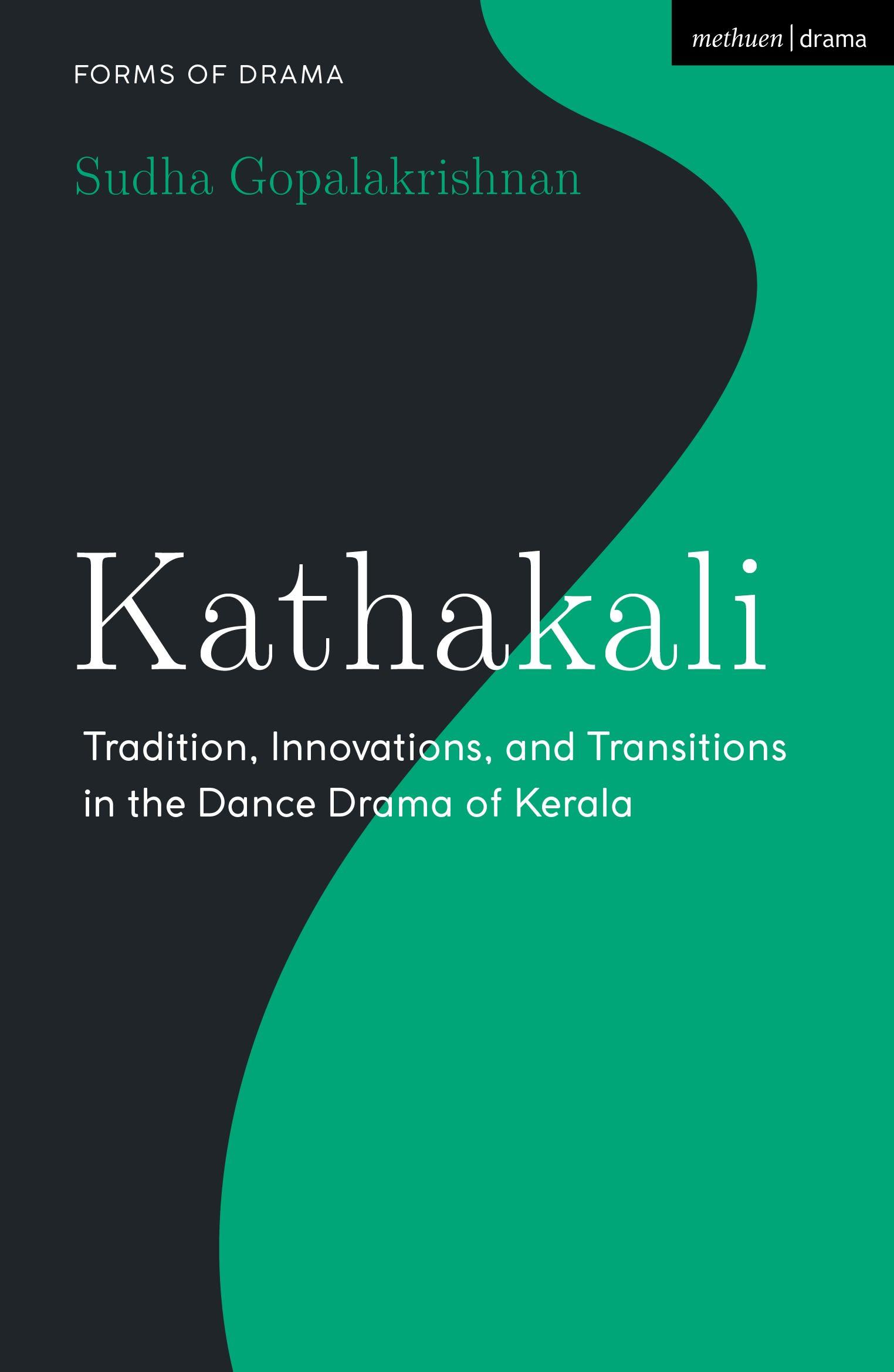
Authored by a leading exponent of the form, this book provides a clear guide to Kathakali, exploring its origin, evolution, and characteristics and the ways it has adapted for a 21st-century audience.
Kathakali is an introduction to this vibrant mode of dance drama, which comes from Kerala in southwest India and combines poetry, music, rhythm, and dance to represent stories of gods, demons, and humans. Originating in the latter part of the 16th century, today Kathakali commands attention and involves practitioners from around the world. Largely drawing its stories from the Ramayana and the Mahabharata, it integrates music, dance, grand makeup, and costume to evoke the epic universe. This book illuminates how Kathakali combines associated literary texts, performative conventions, and practices from local and pan-Indian contexts. The actors use their whole body-deploying complex dance movements, interpretive gestures, and highly developed facial expressions-as a site to depict, elaborate, and interpret action. Encapsulating the world of Kathakali, its performative grammar, and the aesthetic theories that underpin it, this book examines its history as one of continual change.
The book traces the distinctive features of Kathakali, which is sometimes tightly structured with fixed conventions, and sometimes fluid enough to incorporate imaginative flights of fancy. It assesses Kathakali's cultural legacy and charts how the form has changed over the centuries. It also includes translations of extracts from poems, plays, and performance manuals, as well as interviews with actors and cultural historians.
Kathakali is an introduction to this vibrant mode of dance drama, which comes from Kerala in southwest India and combines poetry, music, rhythm, and dance to represent stories of gods, demons, and humans. Originating in the latter part of the 16th century, today Kathakali commands attention and involves practitioners from around the world. Largely drawing its stories from the Ramayana and the Mahabharata, it integrates music, dance, grand makeup, and costume to evoke the epic universe. This book illuminates how Kathakali combines associated literary texts, performative conventions, and practices from local and pan-Indian contexts. The actors use their whole body-deploying complex dance movements, interpretive gestures, and highly developed facial expressions-as a site to depict, elaborate, and interpret action. Encapsulating the world of Kathakali, its performative grammar, and the aesthetic theories that underpin it, this book examines its history as one of continual change.
The book traces the distinctive features of Kathakali, which is sometimes tightly structured with fixed conventions, and sometimes fluid enough to incorporate imaginative flights of fancy. It assesses Kathakali's cultural legacy and charts how the form has changed over the centuries. It also includes translations of extracts from poems, plays, and performance manuals, as well as interviews with actors and cultural historians.
Zahle einfach mit Karte, Klarna, Apple Pay oder Google Pay. Nicht zufrieden? Du hast immer ein 14-tägiges Widerrufsrecht. Lies mehr in unseren AGB. Hast du Fragen, schreib uns eine E-Mail an hello@memmo.org.
Memmo macht das Lernen einfacher – wo auch immer du bist. Bei uns findest du deine Kursbücher und smarte Lerntools an einem Ort: Zusammenfassungen, Quizzes, Podcasts und Lernkarten. Und Ted, dein Lernbuddy, beantwortet alles, was du wissen möchtest. Über 50.000 Studierende lernen bereits hier – gemacht, damit du schneller lernst und weniger Stress hast.