
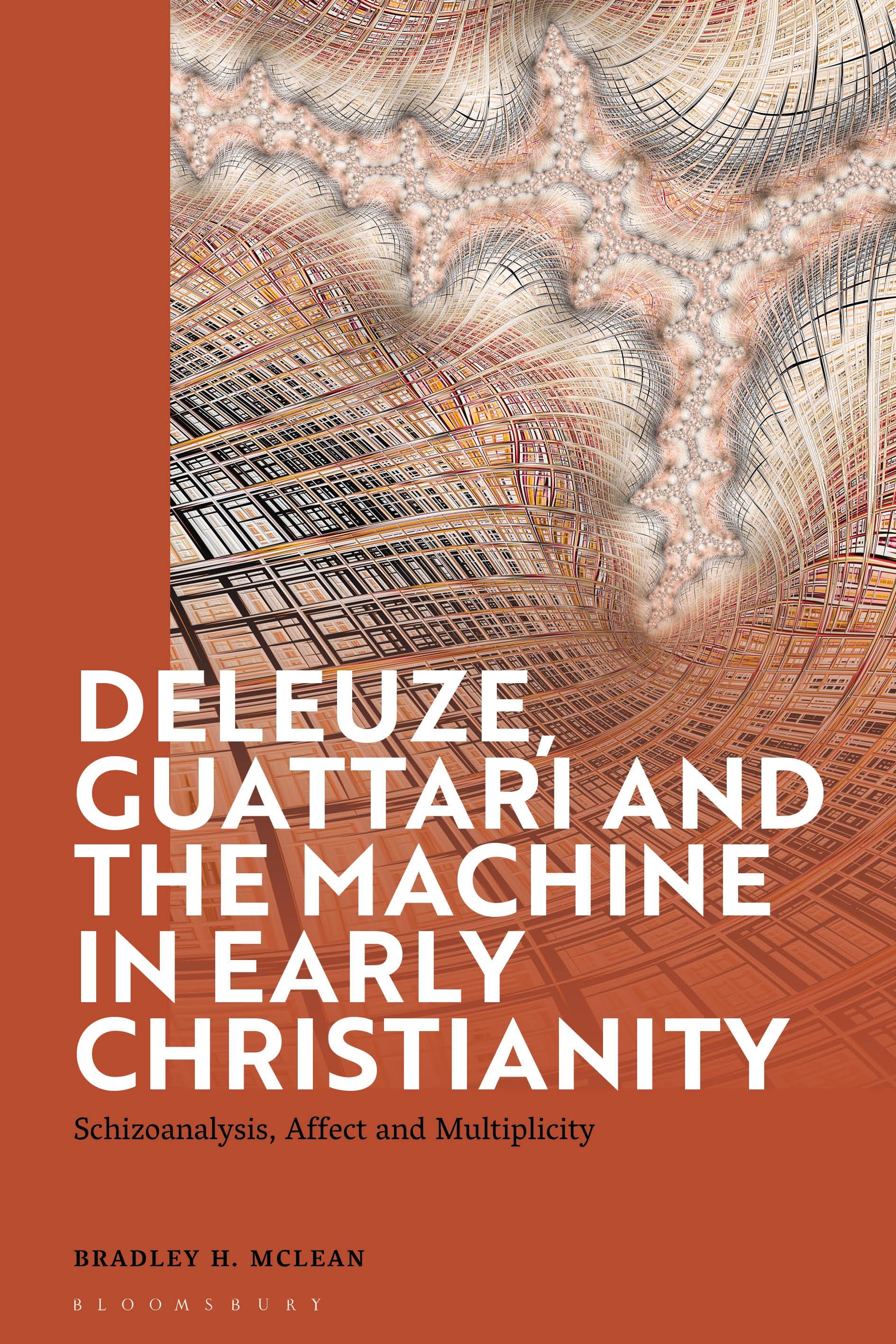
Expanding the impact of Gilles Deleuze and Félix Guattari's philosophy to the disciplines of Christian Origins and Christian theology, this original study makes the case for understanding early Christianity through such Deleuzioguattarian concepts as the 'rhizome', the 'machine', the 'body without organs' and the 'multiplicity', using the theoretical tool of schizoanalysis to do so.
The reconstruction of the historical emergence of early Christianity, Bradley H. McLean argues, has been constrained by traditional assumptions about its historical and transcendental origins. These assumptions are ill-suited to theorizing the genesis, change and transformation of early Christianity in the first three centuries of the Common Era. To capture the dynamism of early Christianity, McLean applies Guattari's concept of the 'machine', to the analysis of early Christianity. Arguing that machines are both an unnoticed dimension of early Christianity, and a major analytical tool for the discipline, McLean highlights the potential of the philosophy of Deleuze and Guattari to challenge and reconfigure not just our knowledge of early Christianity, but all aspects of Hellenistic Judaism, and the Greco-Roman world, as well as our understanding of Jesus of Nazareth and the Jesus movement.
By subverting the concept of a single transcendental or historical origin of Christianity, this book facilitates new forms of dialogue and cooperation between Christians and co-religionists.
The reconstruction of the historical emergence of early Christianity, Bradley H. McLean argues, has been constrained by traditional assumptions about its historical and transcendental origins. These assumptions are ill-suited to theorizing the genesis, change and transformation of early Christianity in the first three centuries of the Common Era. To capture the dynamism of early Christianity, McLean applies Guattari's concept of the 'machine', to the analysis of early Christianity. Arguing that machines are both an unnoticed dimension of early Christianity, and a major analytical tool for the discipline, McLean highlights the potential of the philosophy of Deleuze and Guattari to challenge and reconfigure not just our knowledge of early Christianity, but all aspects of Hellenistic Judaism, and the Greco-Roman world, as well as our understanding of Jesus of Nazareth and the Jesus movement.
By subverting the concept of a single transcendental or historical origin of Christianity, this book facilitates new forms of dialogue and cooperation between Christians and co-religionists.
Seiten: 262
Kategorie: Religion & Teologi
e-ISBN: 9781350233867
Versandgewicht: 1.2 kg
Versand in: 1-2 Tage
Zahle einfach mit Karte, Klarna, Apple Pay oder Google Pay. Nicht zufrieden? Du hast immer ein 14-tägiges Widerrufsrecht. Lies mehr in unseren AGB. Hast du Fragen, schreib uns eine E-Mail an hello@memmo.org.
Memmo macht das Lernen einfacher – wo auch immer du bist. Bei uns findest du deine Kursbücher und smarte Lerntools an einem Ort: Zusammenfassungen, Quizzes, Podcasts und Lernkarten. Und Ted, dein Lernbuddy, beantwortet alles, was du wissen möchtest. Über 50.000 Studierende lernen bereits hier – gemacht, damit du schneller lernst und weniger Stress hast.