
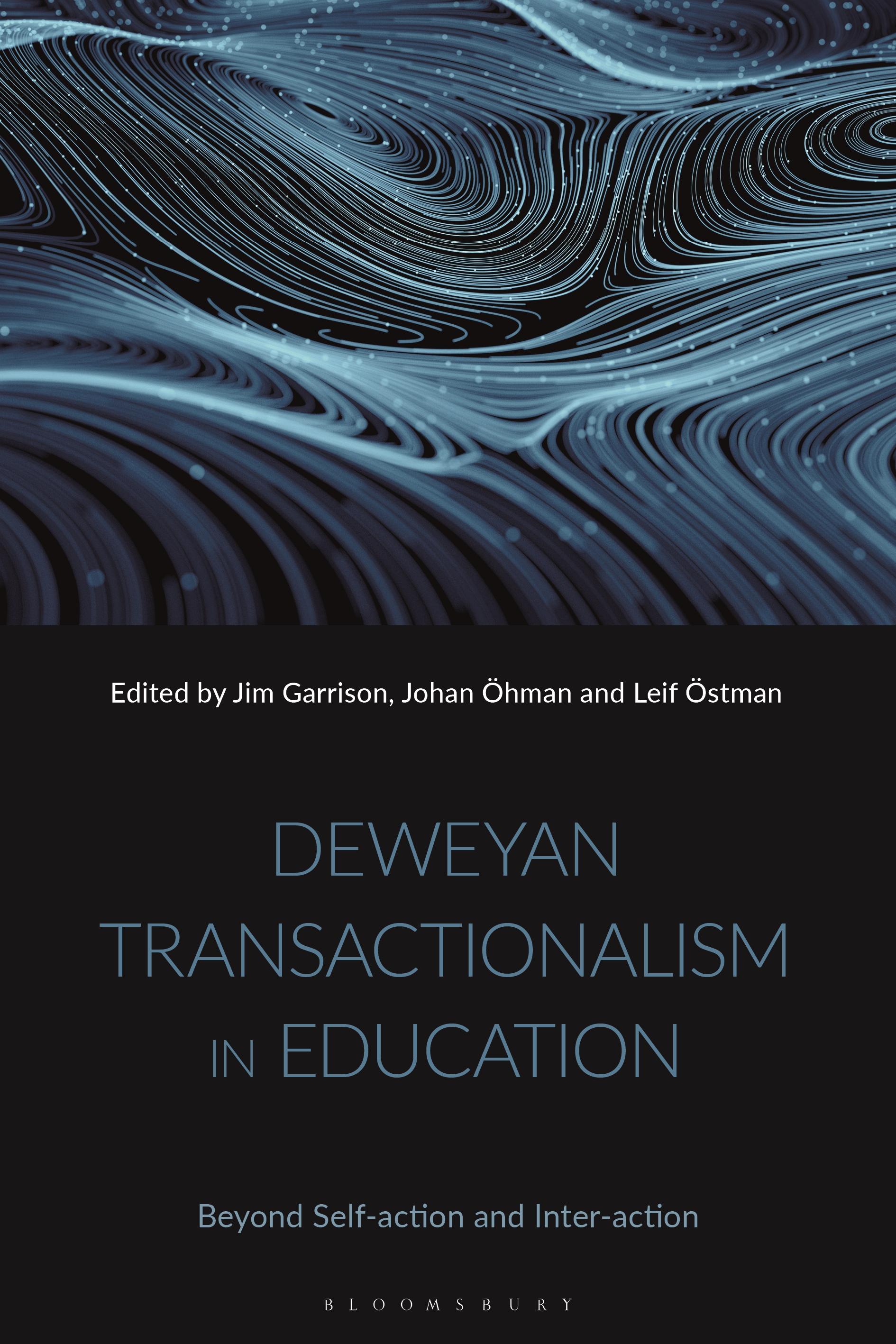
Philosophers of education are largely unaware of Dewey's concept of transactionalism, yet it is implicit in much of his philosophy, educational or otherwise from the late 1890s onwards. Written by scholars from Belgium, Italy, Norway, Sweden, and the USA, this book shows how transactionalism can offer an entirely new way of understanding teaching and learning, the individual and sociocultural dimension of education, and educational research. The contributors show how the concept helps us to see beyond an array of false dualisms, such as mind versus body, self versus society, and organism versus environment, as well as an equally vast array of binaries, such as inside-outside, presence-absence, and male-female. They introduce the key critical ideas that transactionalism represents including emergence; living in a world without a within; the temporally and extensionally distributed nature of meaning, mind, and self. The use and elaboration of transactionalism is grounded in philosophical inquires and in empirical analyses of practices in formal and informal settings including values education, early childhood education, biology education, museum education, coding and computer science, Oceanographic and Atmospheric study, policy reform, play, and the Covid-19 pandemic.
Zahle einfach mit Karte, Klarna, Apple Pay oder Google Pay. Nicht zufrieden? Du hast immer ein 14-tägiges Widerrufsrecht. Lies mehr in unseren AGB. Hast du Fragen, schreib uns eine E-Mail an hello@memmo.org.
Memmo macht das Lernen einfacher – wo auch immer du bist. Bei uns findest du deine Kursbücher und smarte Lerntools an einem Ort: Zusammenfassungen, Quizzes, Podcasts und Lernkarten. Und Ted, dein Lernbuddy, beantwortet alles, was du wissen möchtest. Über 50.000 Studierende lernen bereits hier – gemacht, damit du schneller lernst und weniger Stress hast.