
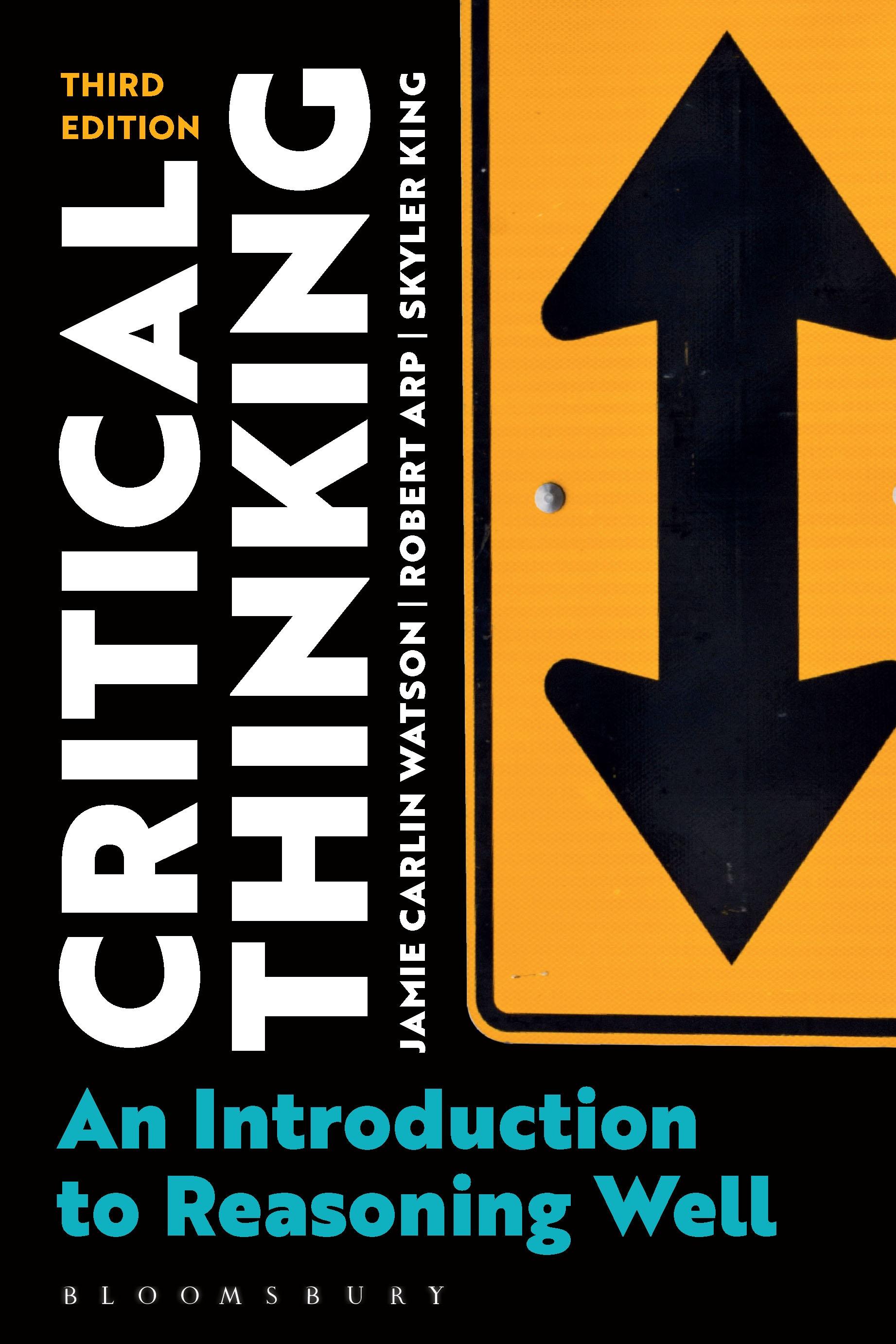
'You shouldn't drink too much. The Earth is round. Milk is good for your bones.' Are any of these claims true? How can you tell? Can you ever be certain you are right?
For anyone tackling philosophical logic for the first time, here is a practical guide to the skills required to think critically. From the basics of good reasoning to the difference between claims, evidence and arguments, Jamie Carlin Watson, Robert Arp and Skyler King cover the topics found in an introductory course.
Now revised and fully updated, this 3rd edition gives you the chance to develop critical thinking skills that can be used in and out of the classroom. Two new chapters on reasoning in the age of conspiracy theories and fake news demonstrate how to apply reason and avoid being dissuaded by the persuasive power of evidence-free emoting. Features include a glossary, chapter goals, more student-friendly exercises, study questions, diagrams, and suggestions for further reading. Chapter topics, organised around real-life examples such as predicting the weather, a murder mystery and the Ouija board, cover:
- the structure, formation, analysis and recognition of arguments
- deductive validity and soundness
- inductive strength and cogency
- inference to the best explanation
- truth tables
- tools for argument assessment
- informal and formal fallacies
This entertaining and easy-to-follow introduction is a complete beginner's tool set to good reasoning, analyzing and arguing.
For anyone tackling philosophical logic for the first time, here is a practical guide to the skills required to think critically. From the basics of good reasoning to the difference between claims, evidence and arguments, Jamie Carlin Watson, Robert Arp and Skyler King cover the topics found in an introductory course.
Now revised and fully updated, this 3rd edition gives you the chance to develop critical thinking skills that can be used in and out of the classroom. Two new chapters on reasoning in the age of conspiracy theories and fake news demonstrate how to apply reason and avoid being dissuaded by the persuasive power of evidence-free emoting. Features include a glossary, chapter goals, more student-friendly exercises, study questions, diagrams, and suggestions for further reading. Chapter topics, organised around real-life examples such as predicting the weather, a murder mystery and the Ouija board, cover:
- the structure, formation, analysis and recognition of arguments
- deductive validity and soundness
- inductive strength and cogency
- inference to the best explanation
- truth tables
- tools for argument assessment
- informal and formal fallacies
This entertaining and easy-to-follow introduction is a complete beginner's tool set to good reasoning, analyzing and arguing.
Zahle einfach mit Karte, Klarna, Apple Pay oder Google Pay. Nicht zufrieden? Du hast immer ein 14-tägiges Widerrufsrecht. Lies mehr in unseren AGB. Hast du Fragen, schreib uns eine E-Mail an hello@memmo.org.
Memmo macht das Lernen einfacher – wo auch immer du bist. Bei uns findest du deine Kursbücher und smarte Lerntools an einem Ort: Zusammenfassungen, Quizzes, Podcasts und Lernkarten. Und Ted, dein Lernbuddy, beantwortet alles, was du wissen möchtest. Über 50.000 Studierende lernen bereits hier – gemacht, damit du schneller lernst und weniger Stress hast.