
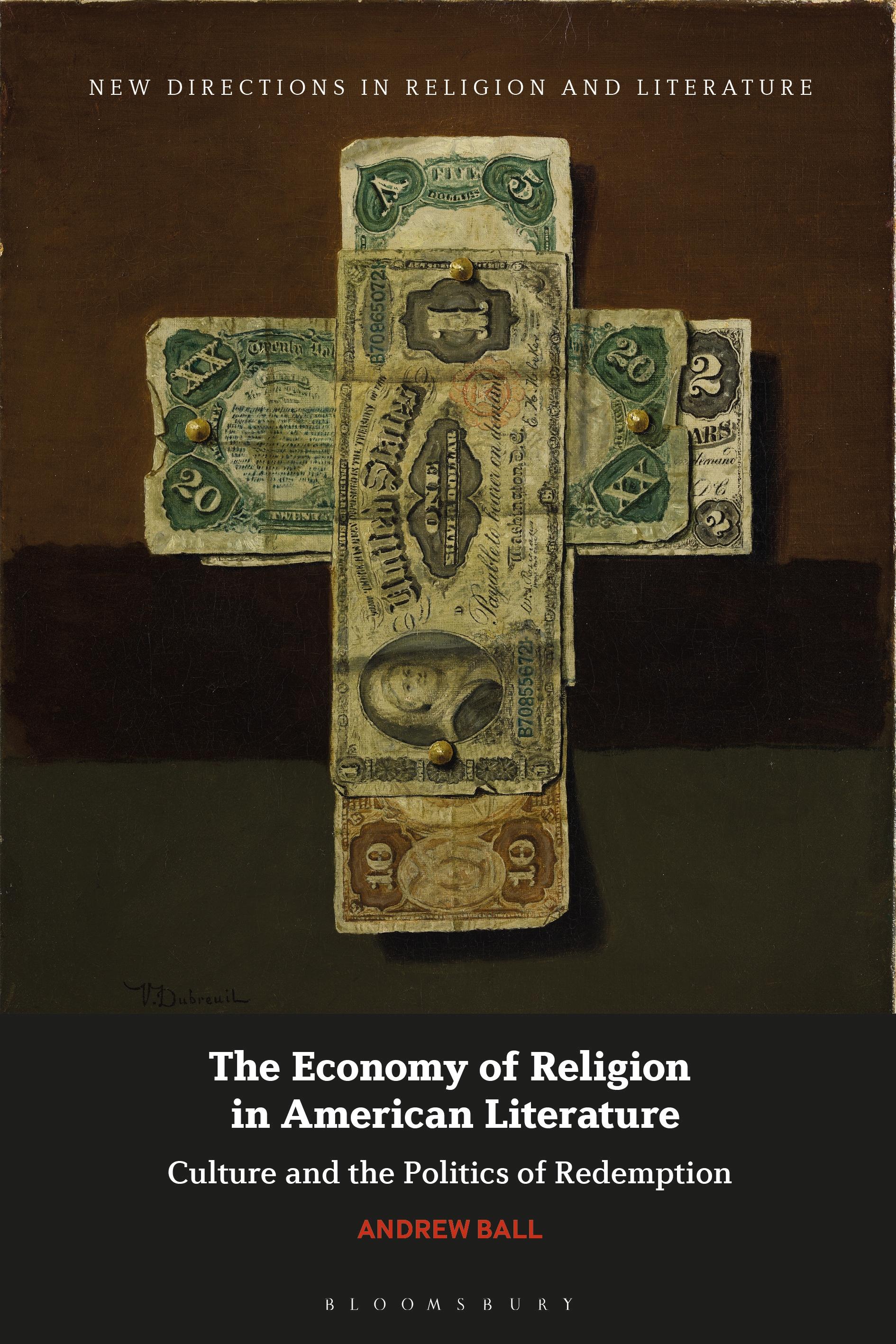
Examining how economic change influences religion, and the way literature mediates that influence, this book provides a thorough reassessment of modern American culture. Focusing on the period 1840-1940, the author shows how the development of capitalism reshaped American Protestantism and addresses the necessary role of literature in that process.
Arguing that the “spirit of capitalism” was not fostered by traditional Puritanism, Ball explores the ways that Christianity was transformed by the market and industrial revolutions. This book refutes the long-held secularization thesis by showing that modernity was a time when new forms of the sacred proliferated, and that this religious flourishing was essential to the production of American culture.
Ball draws from the work of Émile Durkheim and cultural sociology to interpret modern social upheavals like religious awakenings, revivalism, and the labor movement. Examining work from writers like Rebecca Harding Davis, Jack London, and Countee Cullen, he shows how concepts of salvation fundamentally intersect with matters of race, gender, and class, and proposes a theory that explains the enchantment of modern American society.
Arguing that the “spirit of capitalism” was not fostered by traditional Puritanism, Ball explores the ways that Christianity was transformed by the market and industrial revolutions. This book refutes the long-held secularization thesis by showing that modernity was a time when new forms of the sacred proliferated, and that this religious flourishing was essential to the production of American culture.
Ball draws from the work of Émile Durkheim and cultural sociology to interpret modern social upheavals like religious awakenings, revivalism, and the labor movement. Examining work from writers like Rebecca Harding Davis, Jack London, and Countee Cullen, he shows how concepts of salvation fundamentally intersect with matters of race, gender, and class, and proposes a theory that explains the enchantment of modern American society.
Zahle einfach mit Karte, Klarna, Apple Pay oder Google Pay. Nicht zufrieden? Du hast immer ein 14-tägiges Widerrufsrecht. Lies mehr in unseren AGB. Hast du Fragen, schreib uns eine E-Mail an hello@memmo.org.
Memmo macht das Lernen einfacher – wo auch immer du bist. Bei uns findest du deine Kursbücher und smarte Lerntools an einem Ort: Zusammenfassungen, Quizzes, Podcasts und Lernkarten. Und Ted, dein Lernbuddy, beantwortet alles, was du wissen möchtest. Über 50.000 Studierende lernen bereits hier – gemacht, damit du schneller lernst und weniger Stress hast.