
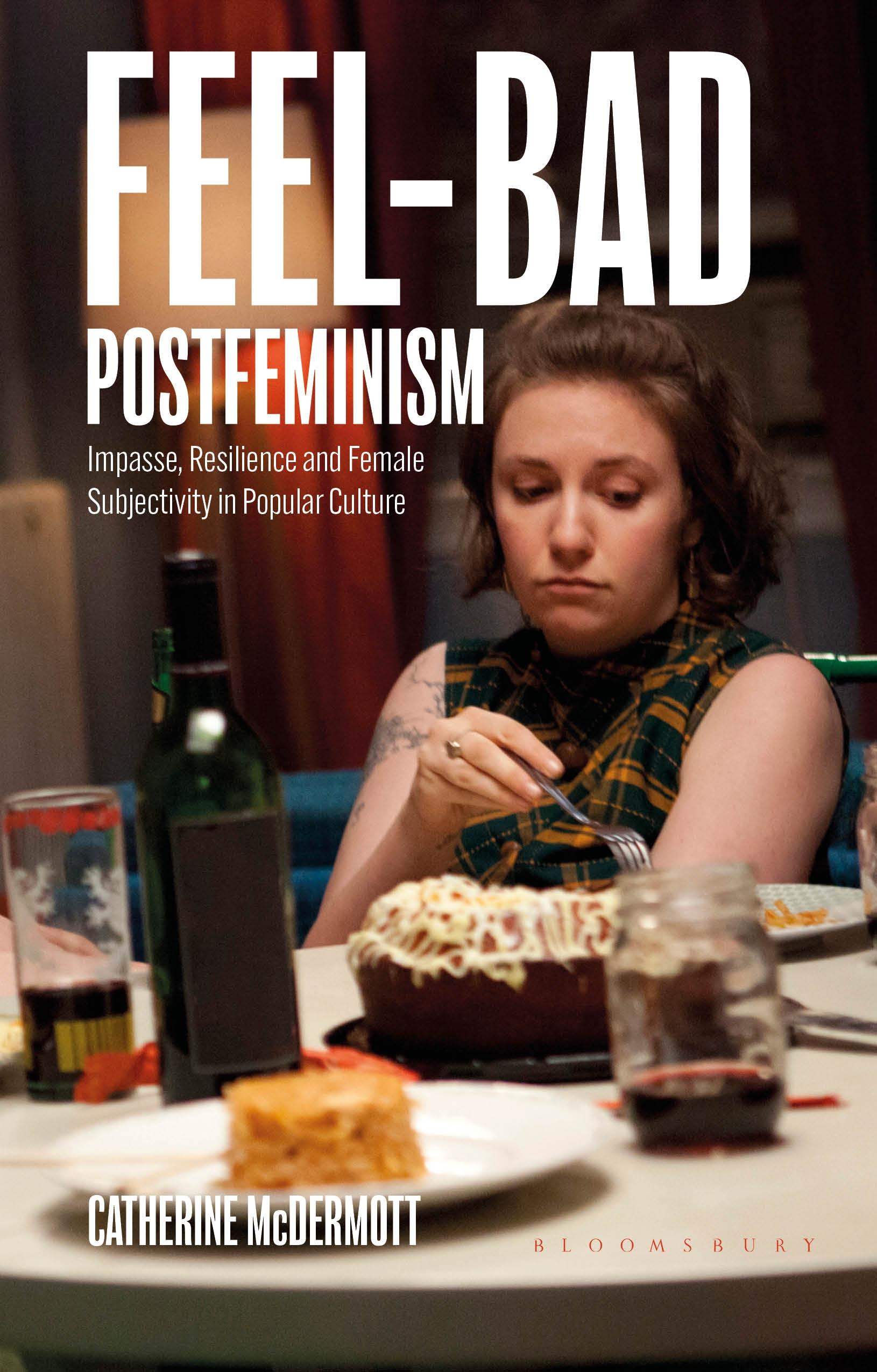
In Feel-Bad Postfeminism, Catherine McDermott provides crucial insight into what growing up during empowerment postfeminism feels like, and outlines the continuing postfeminist legacy of resilience in girlhood coming-of-age narratives.
McDermott's analysis of Gone Girl (2012), Girls (2012–2017) and Appropriate Behaviour (2012) illuminates a major cultural turn in which the pleasures of postfeminist empowerment curdle into a profound sense of rage and resentment. By contrast, close examination of The Hunger Games (2008–2010), Girlhood (2014) and Catch Me Daddy (2014) reveals that contemporary genres are increasingly constructing girls as uniquely capable of resiliently overcoming and adapting to unforgiving social conditions.
She develops an affective vocabulary to better understand contemporary modes of defiant, transformative and relational resilience, as well as a framework through which to expand on further modes that are specific to the genres they emerge within. Overall, the book suggests that exploration of the affective dimensions of girls' and women's culture can offer new insights into how coming-of-age, girlhood and femininity are culturally produced in the aftermath of postfeminism.
McDermott's analysis of Gone Girl (2012), Girls (2012–2017) and Appropriate Behaviour (2012) illuminates a major cultural turn in which the pleasures of postfeminist empowerment curdle into a profound sense of rage and resentment. By contrast, close examination of The Hunger Games (2008–2010), Girlhood (2014) and Catch Me Daddy (2014) reveals that contemporary genres are increasingly constructing girls as uniquely capable of resiliently overcoming and adapting to unforgiving social conditions.
She develops an affective vocabulary to better understand contemporary modes of defiant, transformative and relational resilience, as well as a framework through which to expand on further modes that are specific to the genres they emerge within. Overall, the book suggests that exploration of the affective dimensions of girls' and women's culture can offer new insights into how coming-of-age, girlhood and femininity are culturally produced in the aftermath of postfeminism.
Zahle einfach mit Karte, Klarna, Apple Pay oder Google Pay. Nicht zufrieden? Du hast immer ein 14-tägiges Widerrufsrecht. Lies mehr in unseren AGB. Hast du Fragen, schreib uns eine E-Mail an hello@memmo.org.
Memmo macht das Lernen einfacher – wo auch immer du bist. Bei uns findest du deine Kursbücher und smarte Lerntools an einem Ort: Zusammenfassungen, Quizzes, Podcasts und Lernkarten. Und Ted, dein Lernbuddy, beantwortet alles, was du wissen möchtest. Über 50.000 Studierende lernen bereits hier – gemacht, damit du schneller lernst und weniger Stress hast.