
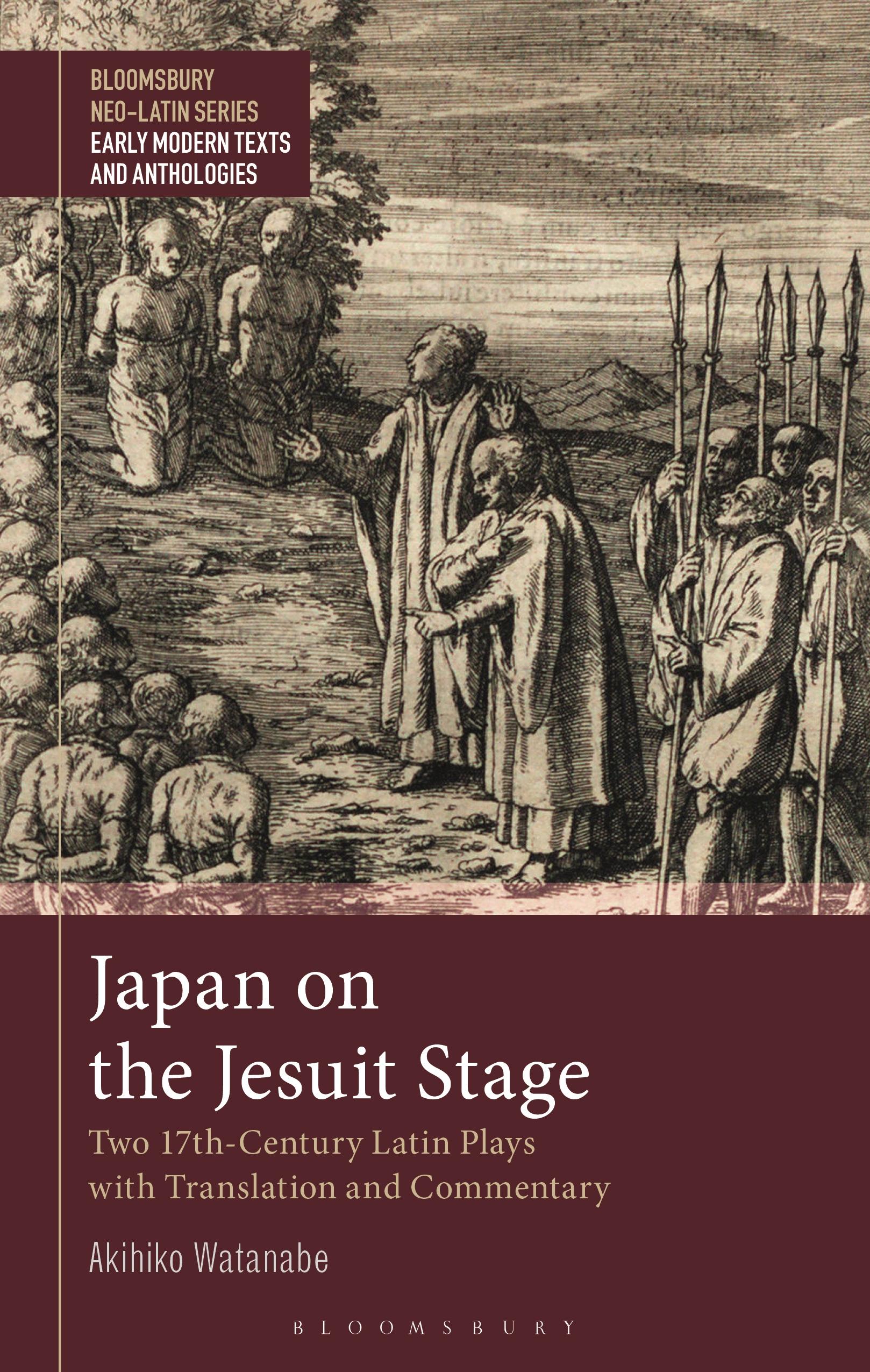
The Jesuits were a major source of European information on Japan from the late 16th to early 17th century. Not only were they active missionaries but they also produced linguistic, religious and cultural tracts, regional chronicles, as well as hundreds of Latin plays written in imitation of classical Greco-Roman theatre but set in Japan. An intriguing yet underexplored segment of Jesuit school theatre is that which stages non-classical, non-Western subjects such as Japan, and this volume is the first to present Latin texts of two of these plays alongside full English translations, commentaries and an extensive introduction.
The plays in question - Martyrs of Japan and Victor the Japanese - were performed in Koblenz and Munich, in 1625 and 1665 respectively, and are collated from original 17th-century manuscripts for this edition. They were based on specific events which took place in Japan in 1597 and 1613, and their main characters are historically attested Japanese Catholic converts and their pagan peers.
The juxtaposition of the Latin texts and original English translations makes the plays newly accessible to a wide readership, shedding light on the ways in which Western classical humanism rooted in ancient Mediterranean theatre became intertwined with momentous historical developments across the globe to produce these unique spectacles. The introduction and commentary examine the historical, cultural and literary contexts and provide guidance on interpretative and stylistic issues, allowing for a full appreciation of the plays in which pagan classical, Christian, early modern European and Japanese elements come together.
The plays in question - Martyrs of Japan and Victor the Japanese - were performed in Koblenz and Munich, in 1625 and 1665 respectively, and are collated from original 17th-century manuscripts for this edition. They were based on specific events which took place in Japan in 1597 and 1613, and their main characters are historically attested Japanese Catholic converts and their pagan peers.
The juxtaposition of the Latin texts and original English translations makes the plays newly accessible to a wide readership, shedding light on the ways in which Western classical humanism rooted in ancient Mediterranean theatre became intertwined with momentous historical developments across the globe to produce these unique spectacles. The introduction and commentary examine the historical, cultural and literary contexts and provide guidance on interpretative and stylistic issues, allowing for a full appreciation of the plays in which pagan classical, Christian, early modern European and Japanese elements come together.
Seiten: 272
Kategorie: Drama, Teater & Scenkonst
e-ISBN: 9781350217225
Versandgewicht: 1.2 kg
Versand in: 1-2 Tage
Zahle einfach mit Karte, Klarna, Apple Pay oder Google Pay. Nicht zufrieden? Du hast immer ein 14-tägiges Widerrufsrecht. Lies mehr in unseren AGB. Hast du Fragen, schreib uns eine E-Mail an hello@memmo.org.
Memmo macht das Lernen einfacher – wo auch immer du bist. Bei uns findest du deine Kursbücher und smarte Lerntools an einem Ort: Zusammenfassungen, Quizzes, Podcasts und Lernkarten. Und Ted, dein Lernbuddy, beantwortet alles, was du wissen möchtest. Über 50.000 Studierende lernen bereits hier – gemacht, damit du schneller lernst und weniger Stress hast.