
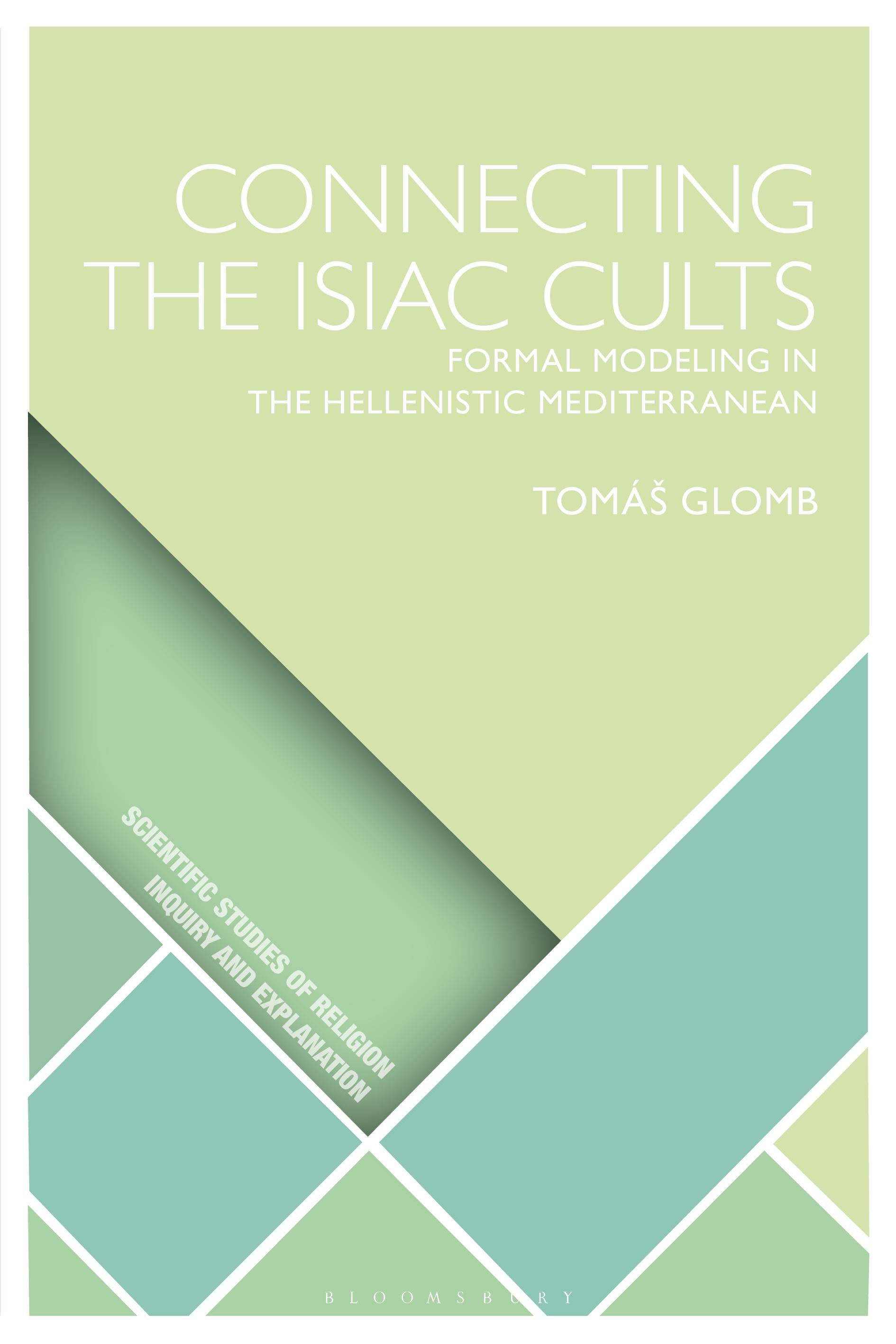
Why did Egyptian cults, especially those dedicated to the goddess Isis and god Sarapis, spread so successfully across the ancient Mediterranean after the death of Alexander the Great? How are we limited by the established methodological apparatus of historiography and which innovative methods from other disciplines can overcome these limits?
In this book, Tomáš Glomb shows that while the interplay of different factors such as the economy, climate, and politics created favorable conditions for the early spread of the Isiac cults, the use of innovative quantitative methods can shed new light and help disentangle the complex interplay of individual factors.
Using a combination of geospatial modeling, mathematical modeling, and network analysis, Glomb determines that, at least in the regions of the Hellenistic Aegean and western Asia Minor, the political channels created by the Ptolemaic dynasty were a dominant force in the local spread of the Isiac cults. An important contribution to the historiography of the ancient Mediterranean, this book answers the specific question of “how it happened” as well as, “how can we answer it beyond the limits of the established methodological apparatus in historiography.”
In this book, Tomáš Glomb shows that while the interplay of different factors such as the economy, climate, and politics created favorable conditions for the early spread of the Isiac cults, the use of innovative quantitative methods can shed new light and help disentangle the complex interplay of individual factors.
Using a combination of geospatial modeling, mathematical modeling, and network analysis, Glomb determines that, at least in the regions of the Hellenistic Aegean and western Asia Minor, the political channels created by the Ptolemaic dynasty were a dominant force in the local spread of the Isiac cults. An important contribution to the historiography of the ancient Mediterranean, this book answers the specific question of “how it happened” as well as, “how can we answer it beyond the limits of the established methodological apparatus in historiography.”
Zahle einfach mit Karte, Klarna, Apple Pay oder Google Pay. Nicht zufrieden? Du hast immer ein 14-tägiges Widerrufsrecht. Lies mehr in unseren AGB. Hast du Fragen, schreib uns eine E-Mail an hello@memmo.org.
Memmo macht das Lernen einfacher – wo auch immer du bist. Bei uns findest du deine Kursbücher und smarte Lerntools an einem Ort: Zusammenfassungen, Quizzes, Podcasts und Lernkarten. Und Ted, dein Lernbuddy, beantwortet alles, was du wissen möchtest. Über 50.000 Studierende lernen bereits hier – gemacht, damit du schneller lernst und weniger Stress hast.