
Winner of the British Association of Film, Television and Screen Studies (BAFTSS) 2023 Award for Best First Monograph.
Winner of the Association of Moving Image Researchers (AIM) 2022 Award for Best Monograph.
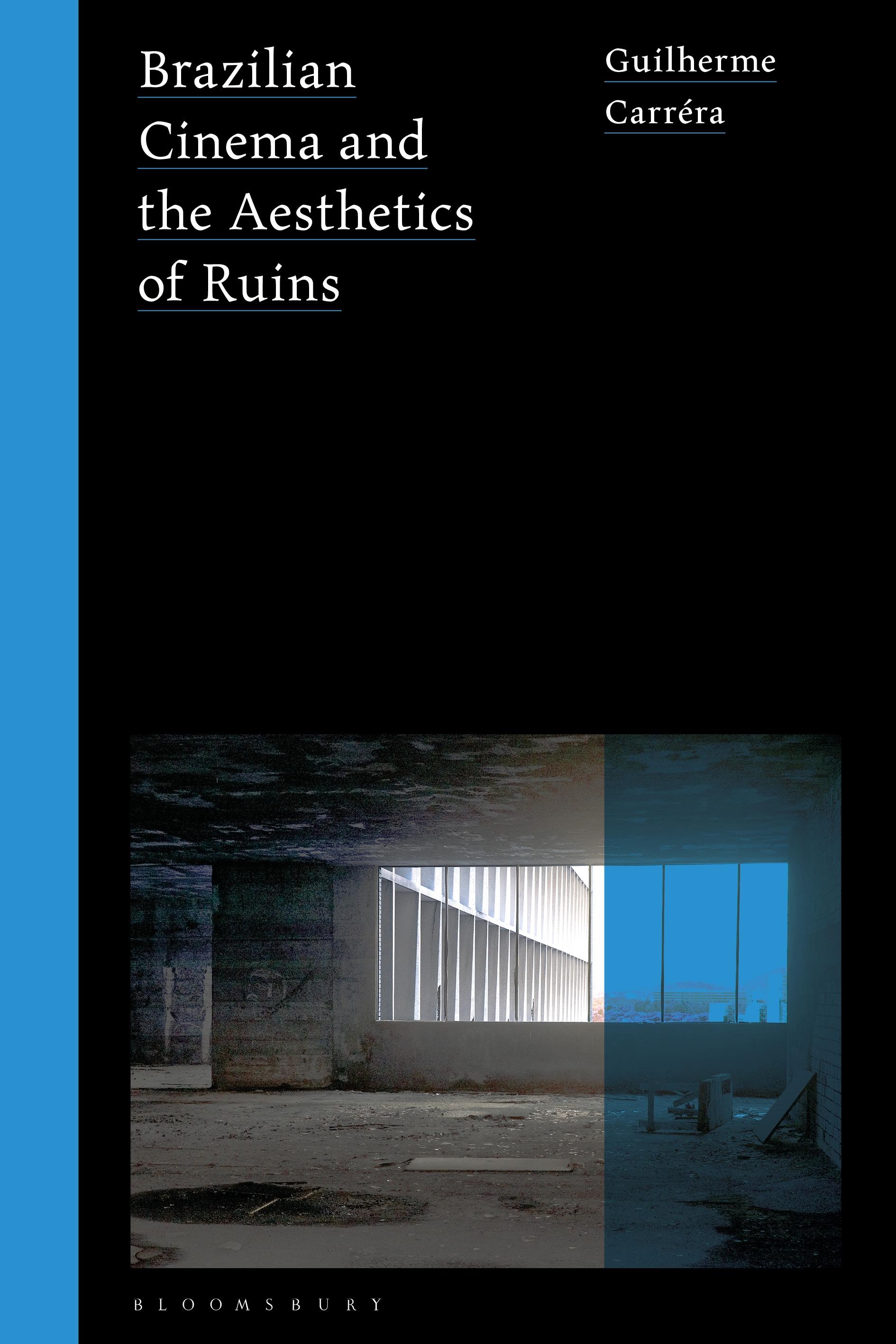
Guilherme Carréra's compelling book examines imagery of ruins in contemporary Brazilian cinema and considers these representations in the context of Brazilian society. Carréra analyses three groups of unconventional documentaries focused on distinct geographies: Brasília - The Age of Stone (2013) and White Out, Black In (2014); Rio de Janeiro - ExPerimetral (2016), The Harbour (2013), Tropical Curse (2016) and HU Enigma (2011); and indigenous territories - Corumbiara: They Shoot Indians, Don't They? (2009), Tava, The House of Stone (2012), Two Villages, One Path (2008) and Guarani Exile (2011). In portraying ruinscapes in different ways, these powerful films articulate critiques of the notions of progress and (under) development in the Brazilian nation.
Carréra invites the reader to walk amid the debris and reflect upon the strategies of spatial representation employed by the filmmakers. He addresses this body of films in relation to the legacies of Cinema Novo, Tropicália and Cinema Marginal, asking how these presentday films dialogue with or depart from previous traditions. Through this dialogue, he argues, the selected films challenge not only documentary-making conventions but also the country's official narrative.
Winner of the Association of Moving Image Researchers (AIM) 2022 Award for Best Monograph.
Guilherme Carréra's compelling book examines imagery of ruins in contemporary Brazilian cinema and considers these representations in the context of Brazilian society. Carréra analyses three groups of unconventional documentaries focused on distinct geographies: Brasília - The Age of Stone (2013) and White Out, Black In (2014); Rio de Janeiro - ExPerimetral (2016), The Harbour (2013), Tropical Curse (2016) and HU Enigma (2011); and indigenous territories - Corumbiara: They Shoot Indians, Don't They? (2009), Tava, The House of Stone (2012), Two Villages, One Path (2008) and Guarani Exile (2011). In portraying ruinscapes in different ways, these powerful films articulate critiques of the notions of progress and (under) development in the Brazilian nation.
Carréra invites the reader to walk amid the debris and reflect upon the strategies of spatial representation employed by the filmmakers. He addresses this body of films in relation to the legacies of Cinema Novo, Tropicália and Cinema Marginal, asking how these presentday films dialogue with or depart from previous traditions. Through this dialogue, he argues, the selected films challenge not only documentary-making conventions but also the country's official narrative.
Seiten: 352
Kategorie: Film- & Medievetenskap
e-ISBN: 9781350203037
Versandgewicht: 1.2 kg
Versand in: 1-2 Tage
Zahle einfach mit Karte, Klarna, Apple Pay oder Google Pay. Nicht zufrieden? Du hast immer ein 14-tägiges Widerrufsrecht. Lies mehr in unseren AGB. Hast du Fragen, schreib uns eine E-Mail an hello@memmo.org.
Memmo macht das Lernen einfacher – wo auch immer du bist. Bei uns findest du deine Kursbücher und smarte Lerntools an einem Ort: Zusammenfassungen, Quizzes, Podcasts und Lernkarten. Und Ted, dein Lernbuddy, beantwortet alles, was du wissen möchtest. Über 50.000 Studierende lernen bereits hier – gemacht, damit du schneller lernst und weniger Stress hast.