
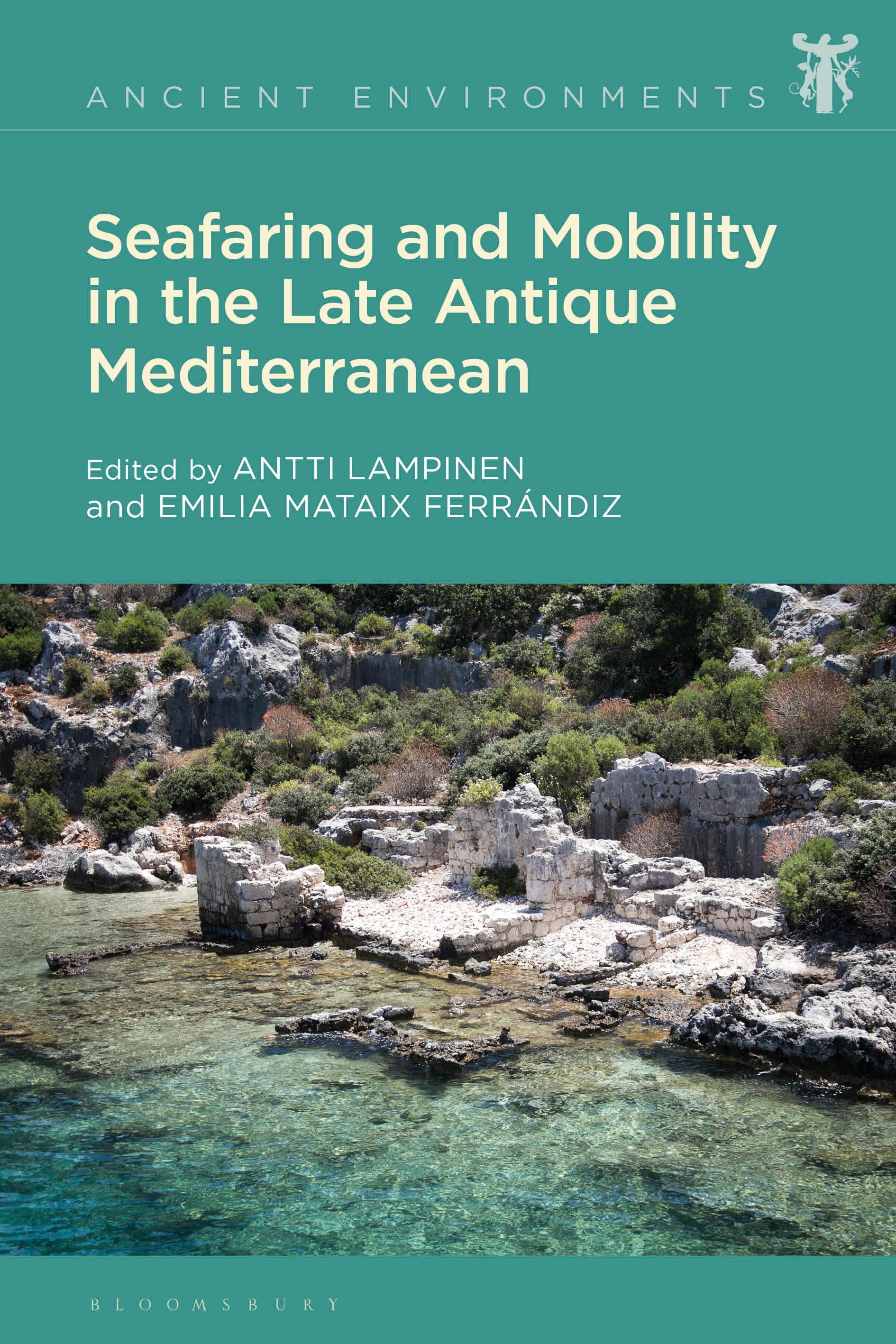
More than any other type of environment, with the possible exception of mountains, the sea has been understood since antiquity as being immovable to a proverbial degree. Yet it was the sea's capacity for movement – both literally and figuratively through such emotions as fear, hope and pity – that formed one of the primary means of conceptualizing its significance in Late Antique societies.
This volume advances a new and interdisciplinary understanding of what the sea as an environment and the pursuit of seafaring meant in antiquity, drawing on a range of literary, legal and archaeological evidence to explore the social, economic and cultural factors at play. The contributions are structured into three thematic parts which move from broad conceptual categories to specific questions of networks and mobility. Part One takes a wide view of the Mediterranean as an environment with great metaphorical and symbolic potential. Part Two looks at networks of seaborne communication and the role of islands as the characteristic hubs of the Mediterranean. Finally, Part Three engages with the practicalities of tackling the sea as a challenging environment that needs to be challenged politically, legally and for the means of travel.
This volume advances a new and interdisciplinary understanding of what the sea as an environment and the pursuit of seafaring meant in antiquity, drawing on a range of literary, legal and archaeological evidence to explore the social, economic and cultural factors at play. The contributions are structured into three thematic parts which move from broad conceptual categories to specific questions of networks and mobility. Part One takes a wide view of the Mediterranean as an environment with great metaphorical and symbolic potential. Part Two looks at networks of seaborne communication and the role of islands as the characteristic hubs of the Mediterranean. Finally, Part Three engages with the practicalities of tackling the sea as a challenging environment that needs to be challenged politically, legally and for the means of travel.
Zahle einfach mit Karte, Klarna, Apple Pay oder Google Pay. Nicht zufrieden? Du hast immer ein 14-tägiges Widerrufsrecht. Lies mehr in unseren AGB. Hast du Fragen, schreib uns eine E-Mail an hello@memmo.org.
Memmo macht das Lernen einfacher – wo auch immer du bist. Bei uns findest du deine Kursbücher und smarte Lerntools an einem Ort: Zusammenfassungen, Quizzes, Podcasts und Lernkarten. Und Ted, dein Lernbuddy, beantwortet alles, was du wissen möchtest. Über 50.000 Studierende lernen bereits hier – gemacht, damit du schneller lernst und weniger Stress hast.