
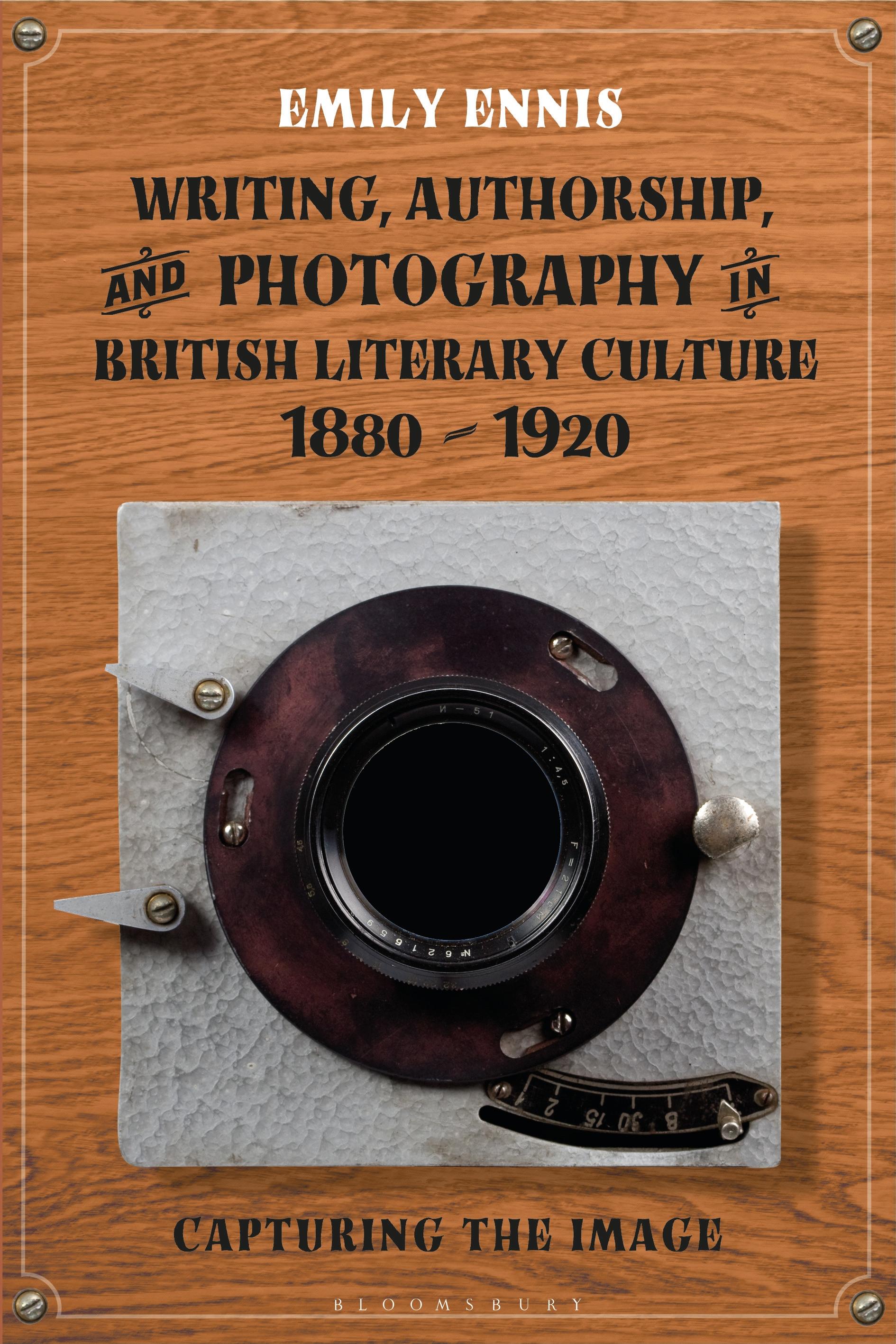
At the turn of the 20th century, printing and photographic technologies evolved rapidly, leading to the birth of mass media and the rise of the amateur photographer. Demonstrating how this development happened symbiotically with great changes in the shape of British literature, Writing, Authorship and Photography in British Literary Culture, 1880-1920 explores this co-evolution, showing that as both writing and photography became tools of mass dissemination, literary writers were forced to re-evaluate their professional and personal identities.
Focusing on four key authors-Thomas Hardy, Bram Stoker, Joseph Conrad and Virginia Woolf-each of which had their own private and professional connections to photographs, this book offers valuable historical contexts for contemporary cultural developments and anxieties. At first establishing the authors' response to developing technologies through their non-fiction, personal correspondences and working drafts, Ennis moves on to examine how their perceptions of photography extend into their major works of fiction: A Laodicean, Dracula, The Secret Agent, The Inheritors and The Voyage Out.
Reflecting on the first 'graphic revolution' in a world where text and image are now reproduced digitally and circulated en masse and online, Ennis redirects our attention to when image and text appeared alongside each other for the first time and the crises this sparked for authors: how they would respond to increasingly photographic depictions of everyday life, and in turn, how their writing adapted to a distinctly visual mass media.
Focusing on four key authors-Thomas Hardy, Bram Stoker, Joseph Conrad and Virginia Woolf-each of which had their own private and professional connections to photographs, this book offers valuable historical contexts for contemporary cultural developments and anxieties. At first establishing the authors' response to developing technologies through their non-fiction, personal correspondences and working drafts, Ennis moves on to examine how their perceptions of photography extend into their major works of fiction: A Laodicean, Dracula, The Secret Agent, The Inheritors and The Voyage Out.
Reflecting on the first 'graphic revolution' in a world where text and image are now reproduced digitally and circulated en masse and online, Ennis redirects our attention to when image and text appeared alongside each other for the first time and the crises this sparked for authors: how they would respond to increasingly photographic depictions of everyday life, and in turn, how their writing adapted to a distinctly visual mass media.
Zahle einfach mit Karte, Klarna, Apple Pay oder Google Pay. Nicht zufrieden? Du hast immer ein 14-tägiges Widerrufsrecht. Lies mehr in unseren AGB. Hast du Fragen, schreib uns eine E-Mail an hello@memmo.org.
Memmo macht das Lernen einfacher – wo auch immer du bist. Bei uns findest du deine Kursbücher und smarte Lerntools an einem Ort: Zusammenfassungen, Quizzes, Podcasts und Lernkarten. Und Ted, dein Lernbuddy, beantwortet alles, was du wissen möchtest. Über 50.000 Studierende lernen bereits hier – gemacht, damit du schneller lernst und weniger Stress hast.