
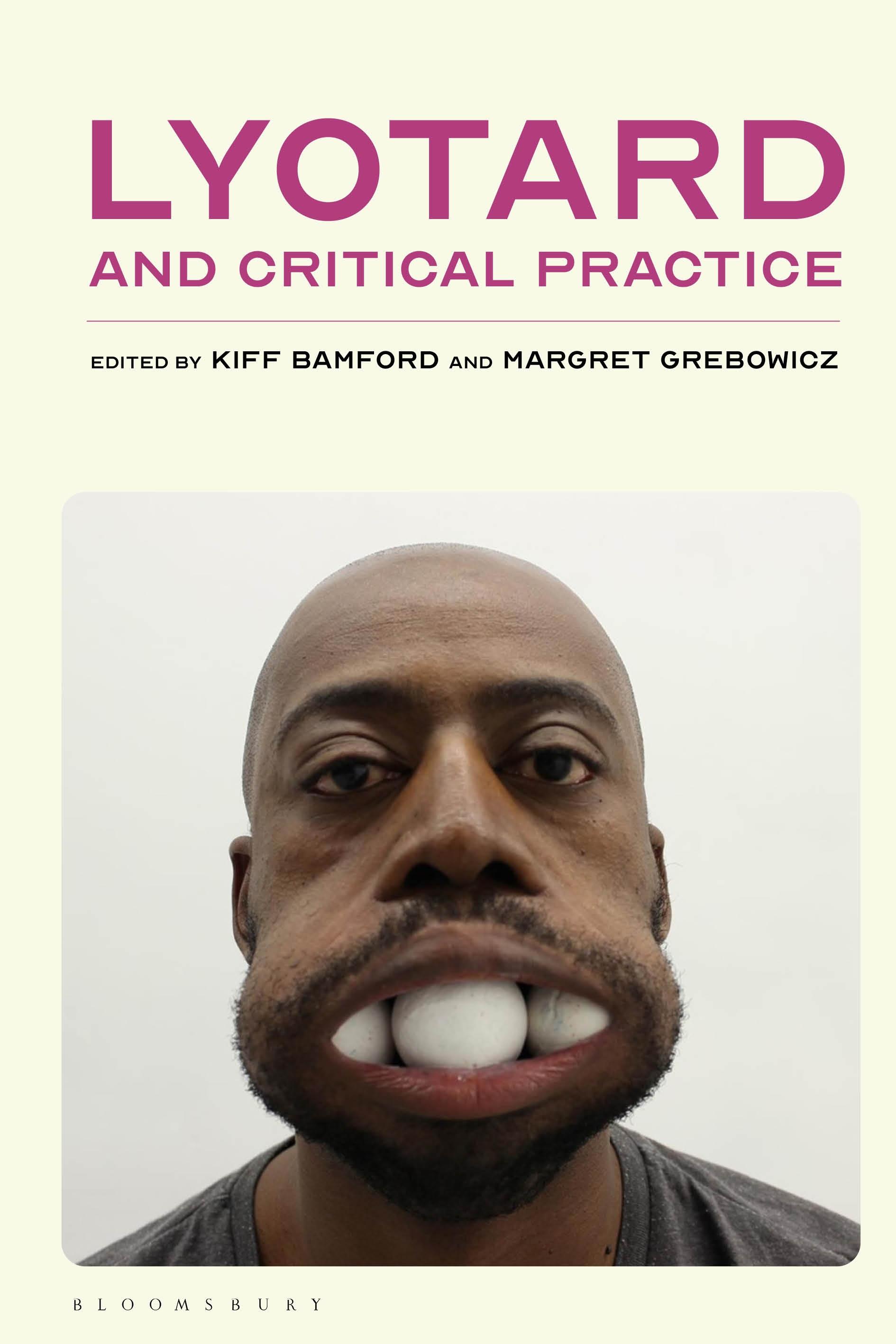
Jean-François Lyotard (1924-1998) was one of the previous century's most provocative thinkers. Can his work help us address the crisis currently facing the humanities?
The dominant economic discourse sees the humanities as “low-value,” an irritation at best. Lyotard helps us to think against this pervasive dismissal of creative activity, not by defending the honor of the humanities, but by inviting critical practices which aggravate this irritation. Critical practices trouble what counts as critique, embrace incertitude, and listen for silenced voices.
Twelve essays by artists and researchers take up Lyotard's invitation and begin to develop the idea of critical practice in the contemporary context. Three sections titled “What resists thinking;” “Long views and distances” and “Why art practice?” address contemporary concerns like affectivity, aesthetics, economic imperatives, militarism, pedagogy, posthumanism, and the closure of what in Lyotard's time was called "the West."
Four short pieces by Lyotard intervene in and buttress the discussion: “Apathy in Theory” and “Interview with Art Présent,” here published in English for the first time, and “Affect-phrase” and “The Other's Rights” republished here to highlight his prescient concern for that which cannot be articulated.
The dominant economic discourse sees the humanities as “low-value,” an irritation at best. Lyotard helps us to think against this pervasive dismissal of creative activity, not by defending the honor of the humanities, but by inviting critical practices which aggravate this irritation. Critical practices trouble what counts as critique, embrace incertitude, and listen for silenced voices.
Twelve essays by artists and researchers take up Lyotard's invitation and begin to develop the idea of critical practice in the contemporary context. Three sections titled “What resists thinking;” “Long views and distances” and “Why art practice?” address contemporary concerns like affectivity, aesthetics, economic imperatives, militarism, pedagogy, posthumanism, and the closure of what in Lyotard's time was called "the West."
Four short pieces by Lyotard intervene in and buttress the discussion: “Apathy in Theory” and “Interview with Art Présent,” here published in English for the first time, and “Affect-phrase” and “The Other's Rights” republished here to highlight his prescient concern for that which cannot be articulated.
Zahle einfach mit Karte, Klarna, Apple Pay oder Google Pay. Nicht zufrieden? Du hast immer ein 14-tägiges Widerrufsrecht. Lies mehr in unseren AGB. Hast du Fragen, schreib uns eine E-Mail an hello@memmo.org.
Memmo macht das Lernen einfacher – wo auch immer du bist. Bei uns findest du deine Kursbücher und smarte Lerntools an einem Ort: Zusammenfassungen, Quizzes, Podcasts und Lernkarten. Und Ted, dein Lernbuddy, beantwortet alles, was du wissen möchtest. Über 50.000 Studierende lernen bereits hier – gemacht, damit du schneller lernst und weniger Stress hast.