
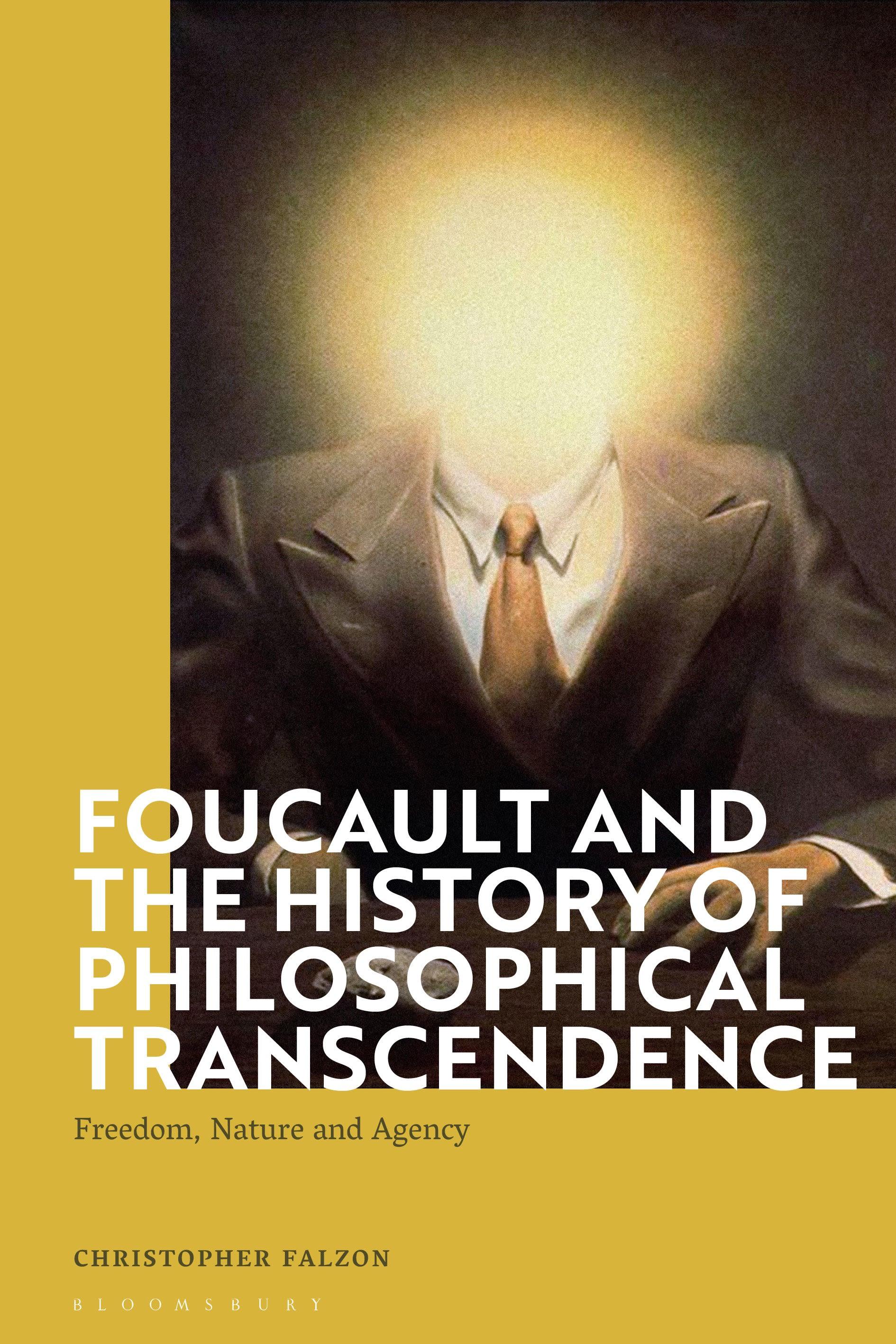
In an original approach to Foucault's philosophy, Christopher Falzon argues for a reading of Foucault as a philosopher of finite transcendence, and explores its implications for ethics.
In order to distinguish Foucault's position, Falzon charts the historical trajectory of transcendence as a philosophical concept, starting with the radical notion of transcendence that was introduced by Plato, and which reappears in various forms in subsequent thinkers from the Stoics to Descartes, and from Kant to Sartre. He argues that Foucault's critique of the transcendent subject of humanism is a rejection not of transcendence per se but of radical transcendence in its distinctively modern form. As such, he shows how Foucault's conceptualisation of transcendence as finite enables a picture of the human being as neither fully determined nor a creature of infinite possibilities, but as both subject and object, affected by but also able to affect the world.
With the notion of finite transcendence Falzon captures the essence of Foucault's unique philosophy and provides a new insight into his contribution to ethics. Demonstrating its contemporary relevance, Foucault and the History of Philosophical Transcendence further explores the potential application of Foucault's approach to the current ecological crisis.
In order to distinguish Foucault's position, Falzon charts the historical trajectory of transcendence as a philosophical concept, starting with the radical notion of transcendence that was introduced by Plato, and which reappears in various forms in subsequent thinkers from the Stoics to Descartes, and from Kant to Sartre. He argues that Foucault's critique of the transcendent subject of humanism is a rejection not of transcendence per se but of radical transcendence in its distinctively modern form. As such, he shows how Foucault's conceptualisation of transcendence as finite enables a picture of the human being as neither fully determined nor a creature of infinite possibilities, but as both subject and object, affected by but also able to affect the world.
With the notion of finite transcendence Falzon captures the essence of Foucault's unique philosophy and provides a new insight into his contribution to ethics. Demonstrating its contemporary relevance, Foucault and the History of Philosophical Transcendence further explores the potential application of Foucault's approach to the current ecological crisis.
Zahle einfach mit Karte, Klarna, Apple Pay oder Google Pay. Nicht zufrieden? Du hast immer ein 14-tägiges Widerrufsrecht. Lies mehr in unseren AGB. Hast du Fragen, schreib uns eine E-Mail an hello@memmo.org.
Memmo macht das Lernen einfacher – wo auch immer du bist. Bei uns findest du deine Kursbücher und smarte Lerntools an einem Ort: Zusammenfassungen, Quizzes, Podcasts und Lernkarten. Und Ted, dein Lernbuddy, beantwortet alles, was du wissen möchtest. Über 50.000 Studierende lernen bereits hier – gemacht, damit du schneller lernst und weniger Stress hast.