
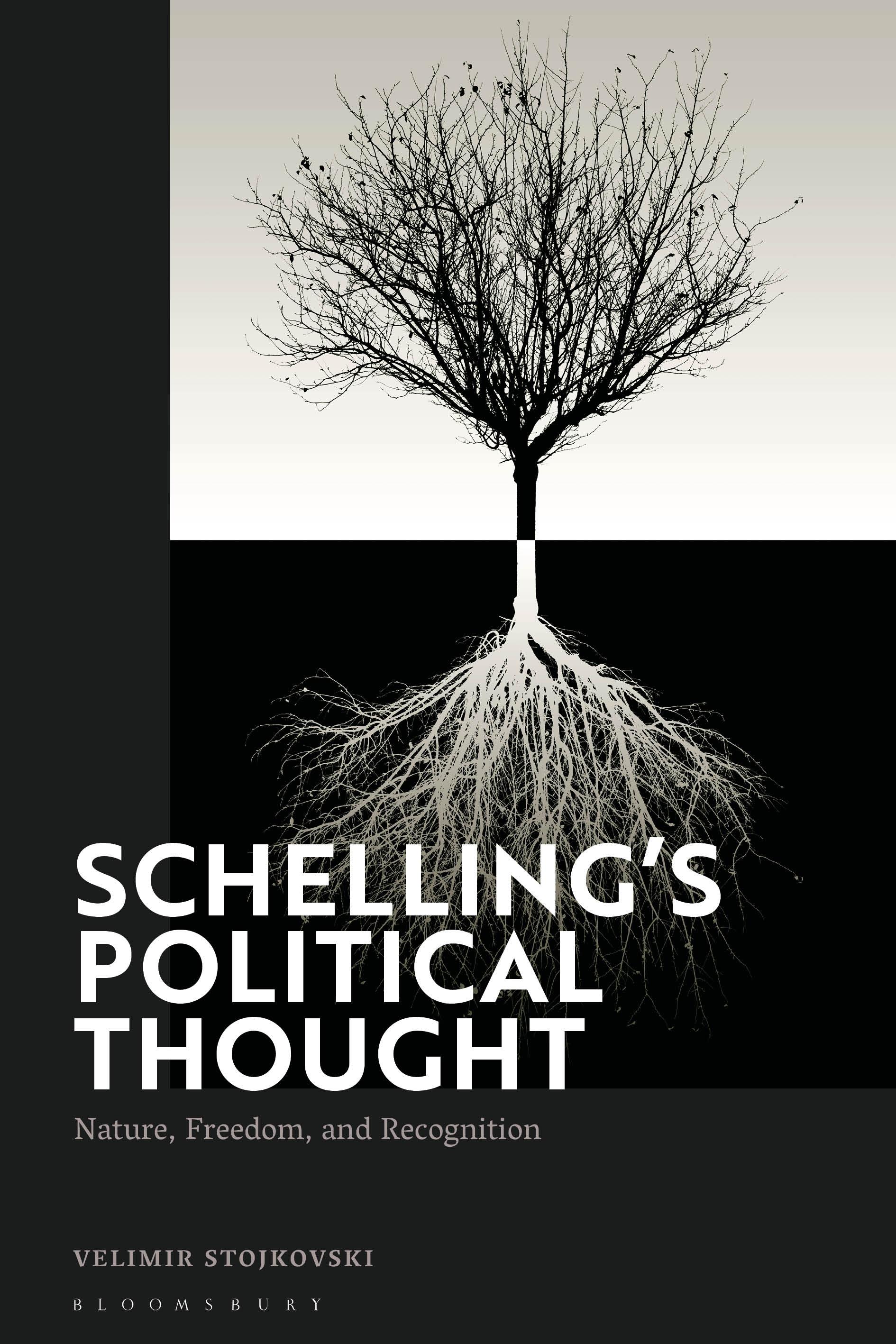
In the first study to examine F. W. J. Schelling's political thought, Velimir Stojkovski not only unearths a neglected dimension of the influential thinker's philosophy but further shows what it can teach us about our ethical and political responsibilities today.
Unlike Hegel or Fichte, Schelling never wrote a political treatise. Yet by reconstructing the portions of such works as The New Deductions of Natural Right that deal explicitly with the political and by thematically rethinking parts of his writings that have a clear repercussion on politics – in particular those on nature, freedom and religion – this book reveals the centrality of politics to his oeuvre.
Revisiting his corpus in this way, Stojkovski uncovers a number of ways we can learn from Schelling and his reception. He examines how Schelling's views on nature can clarify our moral and political obligations to the non-human world and further demonstrates how the separation of ontology as first philosophy from the ethico-political has resulted in a fragmented view of the status of the political subject and thus the body politic. Forcefully renouncing this fragmentation, Stojkovski explores how the same divide has contributed to the ongoing political turmoil in Europe and America.
Combining an exploration of German Idealism with contemporary concerns, this is an essential study that will introduce readers to a new Schelling: a political thinker for the 21st century.
Unlike Hegel or Fichte, Schelling never wrote a political treatise. Yet by reconstructing the portions of such works as The New Deductions of Natural Right that deal explicitly with the political and by thematically rethinking parts of his writings that have a clear repercussion on politics – in particular those on nature, freedom and religion – this book reveals the centrality of politics to his oeuvre.
Revisiting his corpus in this way, Stojkovski uncovers a number of ways we can learn from Schelling and his reception. He examines how Schelling's views on nature can clarify our moral and political obligations to the non-human world and further demonstrates how the separation of ontology as first philosophy from the ethico-political has resulted in a fragmented view of the status of the political subject and thus the body politic. Forcefully renouncing this fragmentation, Stojkovski explores how the same divide has contributed to the ongoing political turmoil in Europe and America.
Combining an exploration of German Idealism with contemporary concerns, this is an essential study that will introduce readers to a new Schelling: a political thinker for the 21st century.
Zahle einfach mit Karte, Klarna, Apple Pay oder Google Pay. Nicht zufrieden? Du hast immer ein 14-tägiges Widerrufsrecht. Lies mehr in unseren AGB. Hast du Fragen, schreib uns eine E-Mail an hello@memmo.org.
Memmo macht das Lernen einfacher – wo auch immer du bist. Bei uns findest du deine Kursbücher und smarte Lerntools an einem Ort: Zusammenfassungen, Quizzes, Podcasts und Lernkarten. Und Ted, dein Lernbuddy, beantwortet alles, was du wissen möchtest. Über 50.000 Studierende lernen bereits hier – gemacht, damit du schneller lernst und weniger Stress hast.