
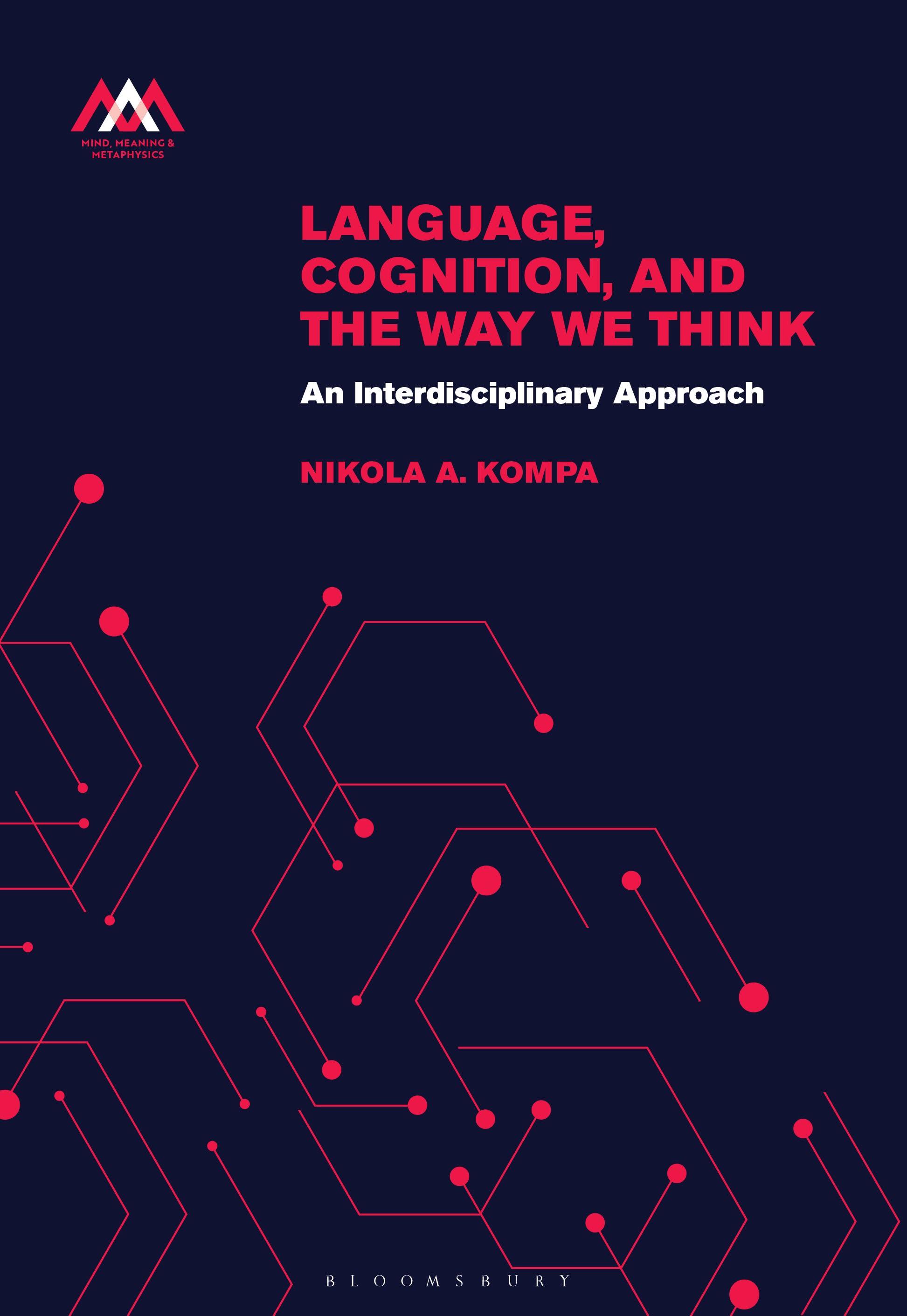
The cognitive potency of the human mind can be fully appreciated only if it is conceived of as a linguistic mind. This is the starting point of Nikola Kompa's investigation into the relationship between language and cognition.
Underpinned by philosophical ideas from Plato to Ockham, and from Locke to Vygotsky, Kompa uses theories within the philosophy of language, mind, and cognitive science and draws on neuro-psychology and psycholinguistic studies to explore core ideas about language and cognition. How did language transform our ancestors into creatures of considerable cognitive and social accomplishment? How does language augment cognition? Is language only a means of communicating our ideas or is a means of thinking itself? Her study has repercussions for a broad range of questions, from how humans differ from other animals and what a cognitive architecture looks like if it approximates the achievements of the human mind, to questions of education and cross-cultural communication.
Theorizing and forming hypotheses about how language and cognition might have coevolved, how the availability of (symbolic) labels enhance various cognitive functions, what the cognitive function of inner speech might be and how inner speech and thought relate to each other, Kompa addresses the perennial philosophical question of what the benefits of having a language might be, and brings into sharper relief the intimate connection between linguistic and other cognitive functions. Informed by recent discussions on language evolution, labels, and inner speech, this timely contribution helps us understand more about how language changes the way we think.
Underpinned by philosophical ideas from Plato to Ockham, and from Locke to Vygotsky, Kompa uses theories within the philosophy of language, mind, and cognitive science and draws on neuro-psychology and psycholinguistic studies to explore core ideas about language and cognition. How did language transform our ancestors into creatures of considerable cognitive and social accomplishment? How does language augment cognition? Is language only a means of communicating our ideas or is a means of thinking itself? Her study has repercussions for a broad range of questions, from how humans differ from other animals and what a cognitive architecture looks like if it approximates the achievements of the human mind, to questions of education and cross-cultural communication.
Theorizing and forming hypotheses about how language and cognition might have coevolved, how the availability of (symbolic) labels enhance various cognitive functions, what the cognitive function of inner speech might be and how inner speech and thought relate to each other, Kompa addresses the perennial philosophical question of what the benefits of having a language might be, and brings into sharper relief the intimate connection between linguistic and other cognitive functions. Informed by recent discussions on language evolution, labels, and inner speech, this timely contribution helps us understand more about how language changes the way we think.
Zahle einfach mit Karte, Klarna, Apple Pay oder Google Pay. Nicht zufrieden? Du hast immer ein 14-tägiges Widerrufsrecht. Lies mehr in unseren AGB. Hast du Fragen, schreib uns eine E-Mail an hello@memmo.org.
Memmo macht das Lernen einfacher – wo auch immer du bist. Bei uns findest du deine Kursbücher und smarte Lerntools an einem Ort: Zusammenfassungen, Quizzes, Podcasts und Lernkarten. Und Ted, dein Lernbuddy, beantwortet alles, was du wissen möchtest. Über 50.000 Studierende lernen bereits hier – gemacht, damit du schneller lernst und weniger Stress hast.