
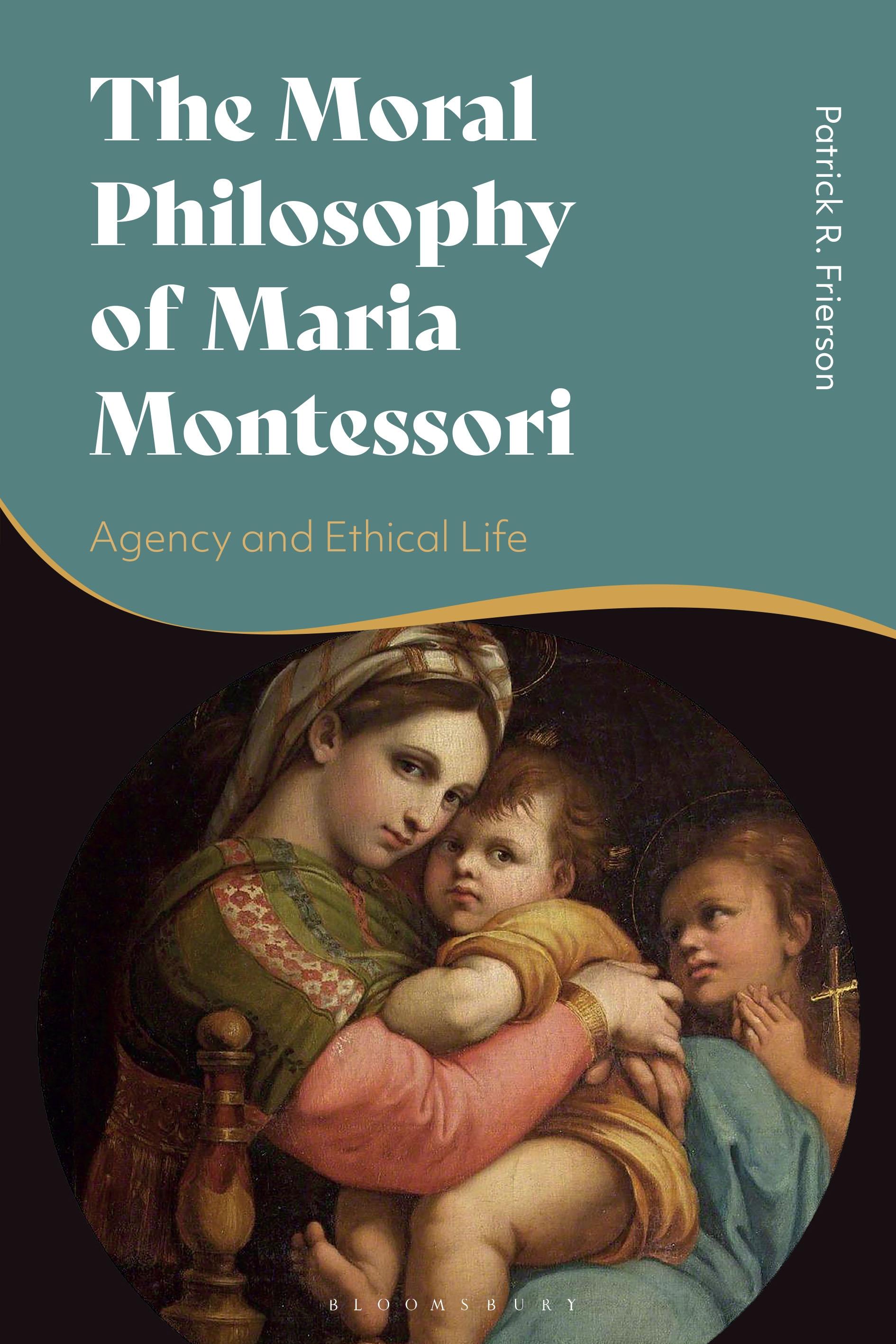
In the first scholarly exposition of Maria Montessori's moral philosophy, Patrick R. Frierson presents an empirically-grounded ethics that takes its start from our tendency to strive for excellence and emphasizes mutual respect, social solidarity, and love.
Laying out a compelling, Montessorian approach to ethical life, Frierson constructs an account of human agency based on children, who when attentively at work on self-chosen tasks, have agency worthy of respect. Through this interpretation of children's agency, he introduces the core concept of Montessorian “character”: in Montessori's ethics, character provides the ultimate value worthy of direct respect, and those with character have a natural tendency to respect others. Character is enhanced through corporate forms of agency that Montessori calls “social solidarity.”
Weaving this educationalist's ethics with theory from Nietzsche, Aristotle, Kant, Hegel, and Marx, Frierson places Montessori in the context of the history of philosophy. His study effectively unites philosophy and education, showing how human ethical life can be enhanced through a moral theory based on the respectful attention to the lived agency of young children.
Laying out a compelling, Montessorian approach to ethical life, Frierson constructs an account of human agency based on children, who when attentively at work on self-chosen tasks, have agency worthy of respect. Through this interpretation of children's agency, he introduces the core concept of Montessorian “character”: in Montessori's ethics, character provides the ultimate value worthy of direct respect, and those with character have a natural tendency to respect others. Character is enhanced through corporate forms of agency that Montessori calls “social solidarity.”
Weaving this educationalist's ethics with theory from Nietzsche, Aristotle, Kant, Hegel, and Marx, Frierson places Montessori in the context of the history of philosophy. His study effectively unites philosophy and education, showing how human ethical life can be enhanced through a moral theory based on the respectful attention to the lived agency of young children.
Zahle einfach mit Karte, Klarna, Apple Pay oder Google Pay. Nicht zufrieden? Du hast immer ein 14-tägiges Widerrufsrecht. Lies mehr in unseren AGB. Hast du Fragen, schreib uns eine E-Mail an hello@memmo.org.
Memmo macht das Lernen einfacher – wo auch immer du bist. Bei uns findest du deine Kursbücher und smarte Lerntools an einem Ort: Zusammenfassungen, Quizzes, Podcasts und Lernkarten. Und Ted, dein Lernbuddy, beantwortet alles, was du wissen möchtest. Über 50.000 Studierende lernen bereits hier – gemacht, damit du schneller lernst und weniger Stress hast.