
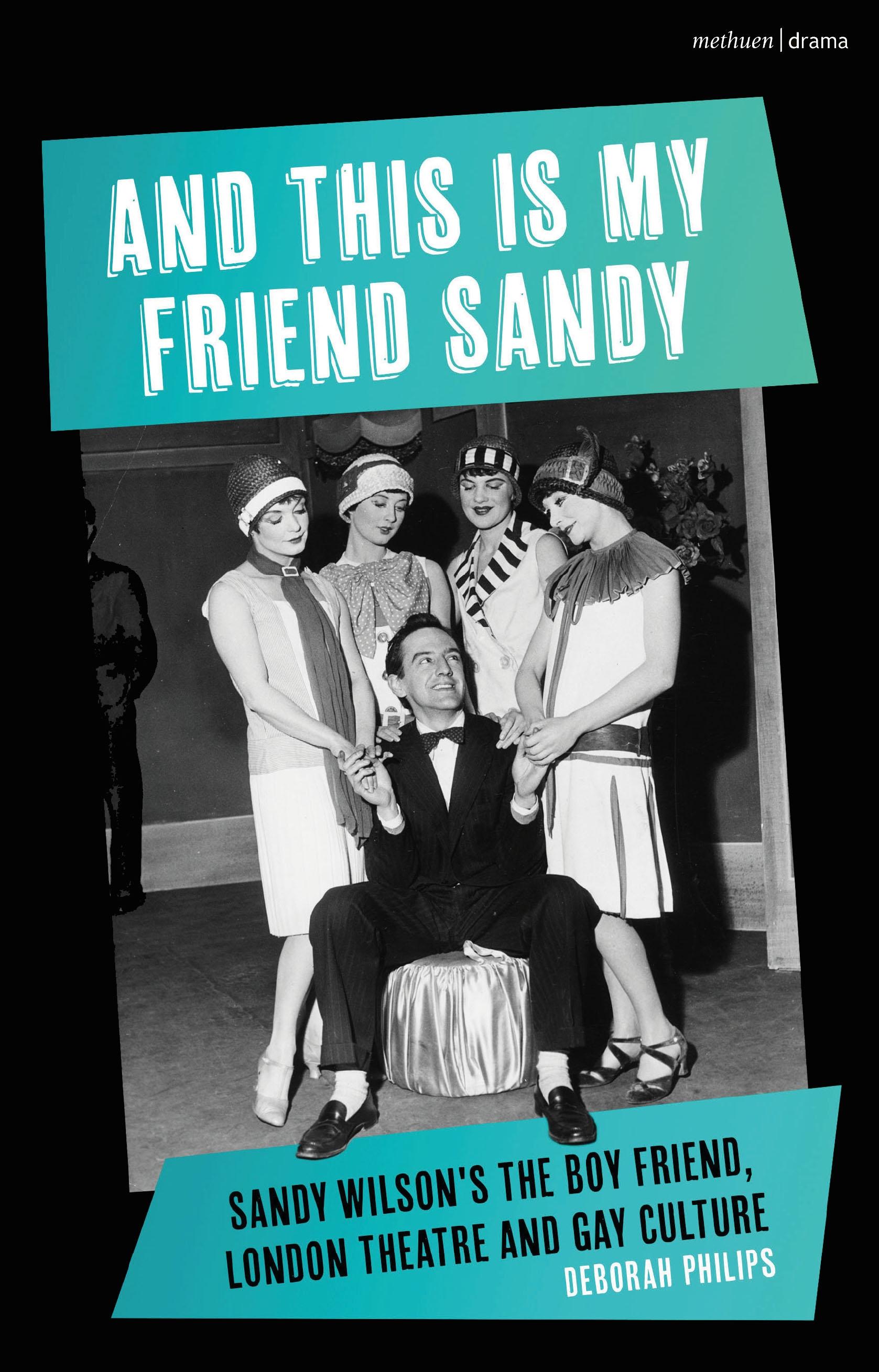
This book situates the production of The Boy Friend and the Players' Theatre in the context of a post-war London and reads The Boy Friend, and Wilson's later work, as exercises in contemporary camp. It argues for Wilson as a significant and transitional figure both for musical theatre and for modes of homosexuality in the context of the pre-Wolfenden 1950s.
Sandy Wilson's The Boy Friend is one of the most successful British musicals ever written. First produced at the Players' Theatre Club in London in 1953 it transferred to the West End and Broadway, making a star out of Julie Andrews and gave Twiggy a leading role in Ken Russell's 1971 film adaptation.
Despite this success, little is known about Wilson, a gay writer working in Britain in the 1950s at a time when homosexuality was illegal.
Drawing on original research assembled from the Wilson archives at the Harry Ransom Center, this is the first critical study of Wilson as a key figure of 1950s British theatre. Beginning with the often overlooked context of the Players' Theatre Club through to Wilson's relationship to industry figures such as Binkie Beaumont, Noël Coward and Ivor Novello, this study explores the work in the broader history of Soho gay culture. As well as a critical perspective on The Boy Friend, later works such as Divorce Me, Darling!, The Buccaneer and Valmouth are examined as well as uncompleted musical versions of Pygmalion and Goodbye to Berlin to give a comprehensive and original perspective on one of British theatre's most celebrated yet overlooked talents.
Sandy Wilson's The Boy Friend is one of the most successful British musicals ever written. First produced at the Players' Theatre Club in London in 1953 it transferred to the West End and Broadway, making a star out of Julie Andrews and gave Twiggy a leading role in Ken Russell's 1971 film adaptation.
Despite this success, little is known about Wilson, a gay writer working in Britain in the 1950s at a time when homosexuality was illegal.
Drawing on original research assembled from the Wilson archives at the Harry Ransom Center, this is the first critical study of Wilson as a key figure of 1950s British theatre. Beginning with the often overlooked context of the Players' Theatre Club through to Wilson's relationship to industry figures such as Binkie Beaumont, Noël Coward and Ivor Novello, this study explores the work in the broader history of Soho gay culture. As well as a critical perspective on The Boy Friend, later works such as Divorce Me, Darling!, The Buccaneer and Valmouth are examined as well as uncompleted musical versions of Pygmalion and Goodbye to Berlin to give a comprehensive and original perspective on one of British theatre's most celebrated yet overlooked talents.
Zahle einfach mit Karte, Klarna, Apple Pay oder Google Pay. Nicht zufrieden? Du hast immer ein 14-tägiges Widerrufsrecht. Lies mehr in unseren AGB. Hast du Fragen, schreib uns eine E-Mail an hello@memmo.org.
Memmo macht das Lernen einfacher – wo auch immer du bist. Bei uns findest du deine Kursbücher und smarte Lerntools an einem Ort: Zusammenfassungen, Quizzes, Podcasts und Lernkarten. Und Ted, dein Lernbuddy, beantwortet alles, was du wissen möchtest. Über 50.000 Studierende lernen bereits hier – gemacht, damit du schneller lernst und weniger Stress hast.