
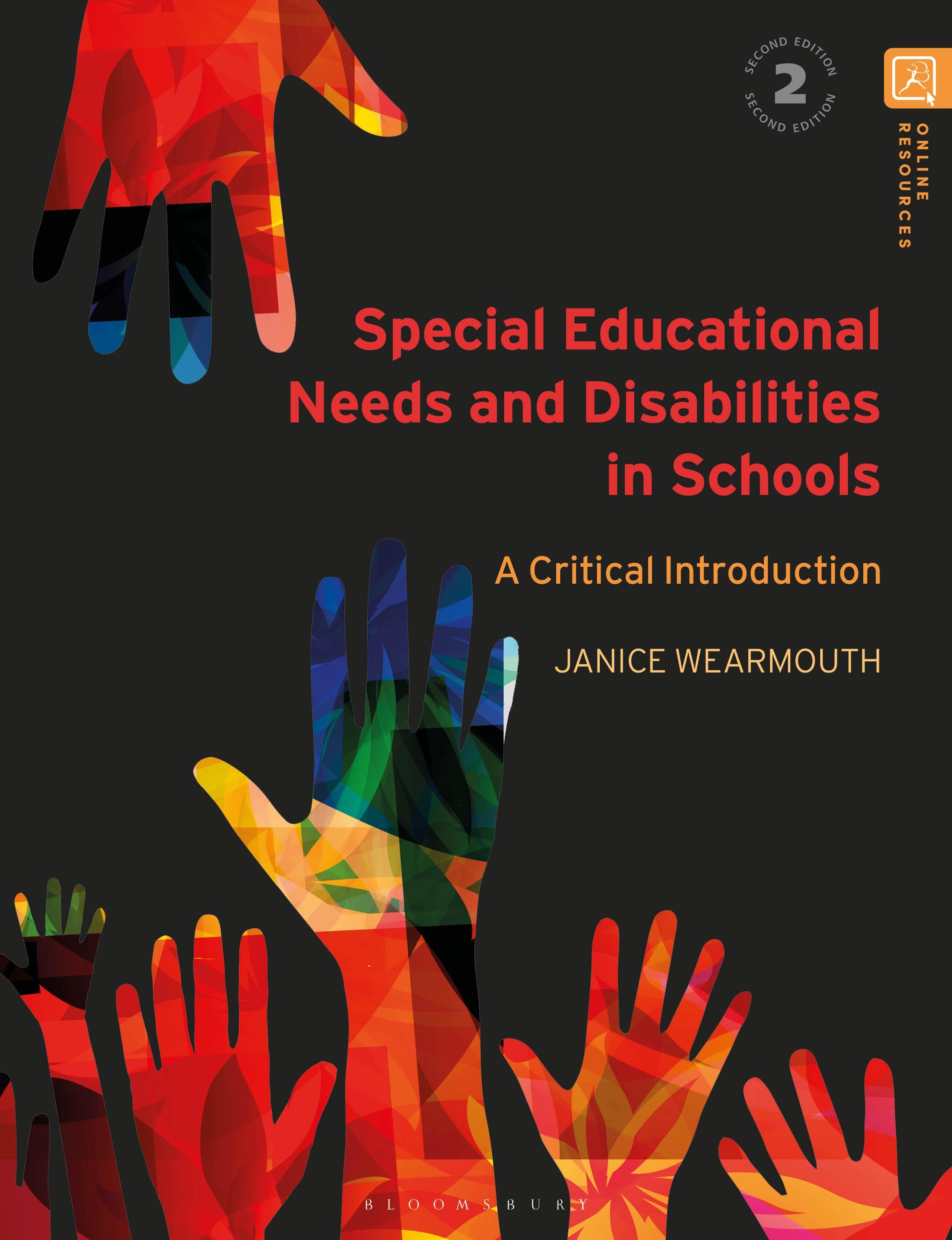
Special Educational Needs and Disabilities in Schools is an essential resource designed to support you during and beyond your teaching training to understand, assess and address special and/or additional educational needs and disabilities (SEND). In addition to the expected updates throughout to the latest research and legislation, new developments include:
- expanded discussions of key topics such as bullying, social, emotional and mental health
- detailed coverage of planning for transition across the age ranges
- suggestions of hardware and software for day-to-day use and use in exam conditions
- increased focus on the importance of positive and supportive relationships
Drawing on her wealth of experience, close contact with schools, families and students as well as relevant research, Janice Wearmouth explores a wide range of approaches to assess and address the most common forms of SEND. These include difficulties in communication and cognition, behavioural concerns related to social, emotional and mental health, sensory and/or physical needs, and literacy and numeracy difficulties.
The author uses key questions to introduce each chapter, and reflective activities to encourage you to consider your own practice to ensure that all young people reach their potential. She illustrates policy and provision for SEND in a highly authentic and engaging way with a range of exemplars, vignettes and personal accounts of young people's and families' experiences within the field, and provides a wealth of additional resources on the companion website.
- expanded discussions of key topics such as bullying, social, emotional and mental health
- detailed coverage of planning for transition across the age ranges
- suggestions of hardware and software for day-to-day use and use in exam conditions
- increased focus on the importance of positive and supportive relationships
Drawing on her wealth of experience, close contact with schools, families and students as well as relevant research, Janice Wearmouth explores a wide range of approaches to assess and address the most common forms of SEND. These include difficulties in communication and cognition, behavioural concerns related to social, emotional and mental health, sensory and/or physical needs, and literacy and numeracy difficulties.
The author uses key questions to introduce each chapter, and reflective activities to encourage you to consider your own practice to ensure that all young people reach their potential. She illustrates policy and provision for SEND in a highly authentic and engaging way with a range of exemplars, vignettes and personal accounts of young people's and families' experiences within the field, and provides a wealth of additional resources on the companion website.
Zahle einfach mit Karte, Klarna, Apple Pay oder Google Pay. Nicht zufrieden? Du hast immer ein 14-tägiges Widerrufsrecht. Lies mehr in unseren AGB. Hast du Fragen, schreib uns eine E-Mail an hello@memmo.org.
Memmo macht das Lernen einfacher – wo auch immer du bist. Bei uns findest du deine Kursbücher und smarte Lerntools an einem Ort: Zusammenfassungen, Quizzes, Podcasts und Lernkarten. Und Ted, dein Lernbuddy, beantwortet alles, was du wissen möchtest. Über 50.000 Studierende lernen bereits hier – gemacht, damit du schneller lernst und weniger Stress hast.