
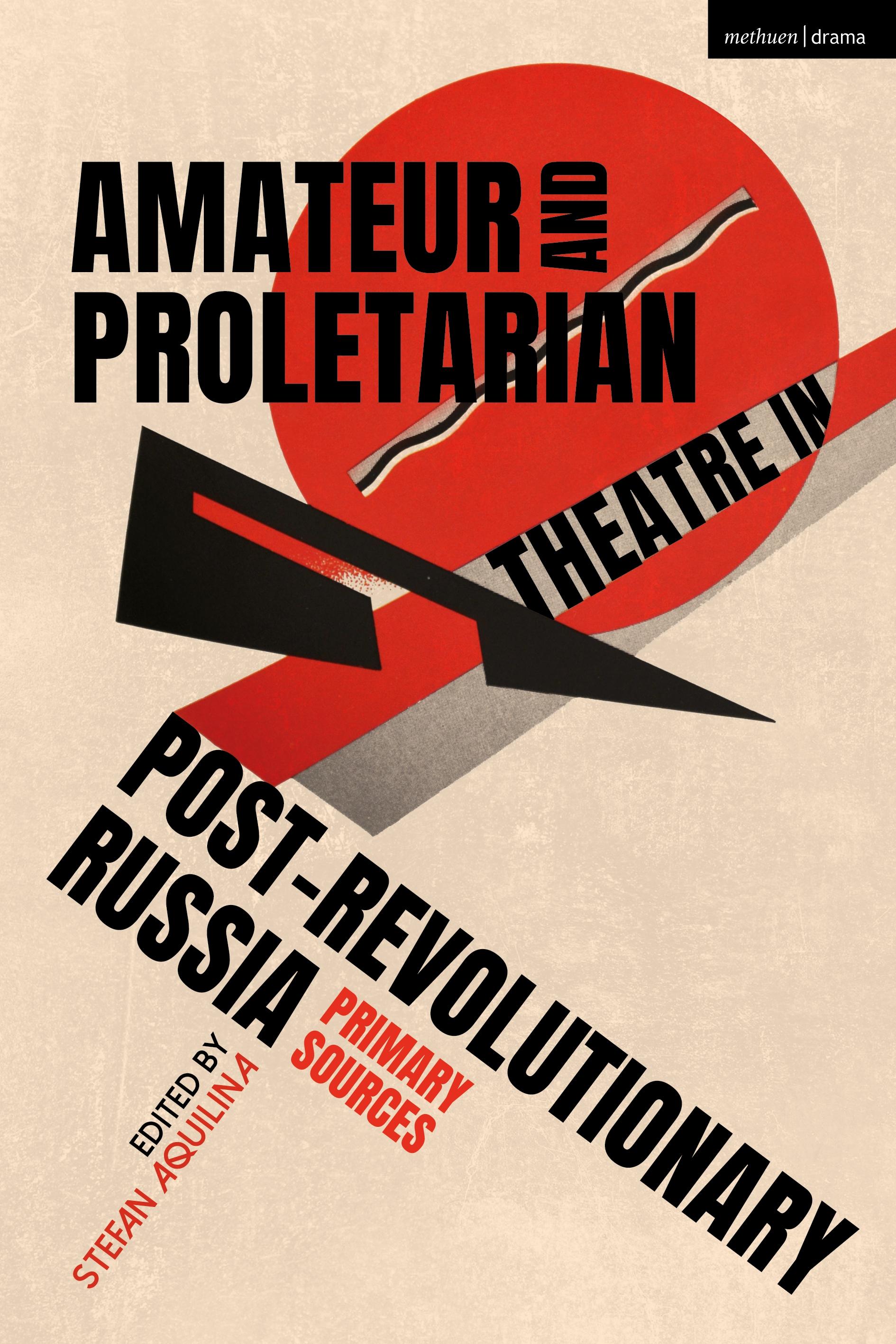
This is the first collection of primary sources that addresses the amateur theatre produced by the workers in the first decade after the Russian Revolution. Newly translated from the Russian, the essays capture both theoretical articulations on the scene – by luminaries such as Alexander Bogdanov, Platon Kerzhentsev, Valerian Pletnev, Alexander Mgebrov and Valentin Smyshliaev – and the more fleeting descriptions and first-hand accounts of the productions staged, accounts and voices which are typically harder to capture.
The essays tell a story of unabashed optimism in the creativity of the working classes. They speak of the use of theatre to carve a public and political role in the construction of a new world. The sources, however, also exhibit the flipside of the scene, or the sombre difficulties faced by the amateur actors and the incessant calls to raise standards through professional help. The narrative developed is that of an amateur theatre which began as an autonomous and heterogeneous activity but which by the mid-to-late 1920s was transformed into a regulated practice and a space for cultural programming.
The collection makes an important contribution to our understanding of modern theatre: scholarship conventionally tackles the canonical names from the professional world but gives little attention to the more down-to-earth forms of performance taking place in factories, clubs and amateur circles. An introductory essay also highlights the range and significance of the collection and draws links between the essays.
The essays tell a story of unabashed optimism in the creativity of the working classes. They speak of the use of theatre to carve a public and political role in the construction of a new world. The sources, however, also exhibit the flipside of the scene, or the sombre difficulties faced by the amateur actors and the incessant calls to raise standards through professional help. The narrative developed is that of an amateur theatre which began as an autonomous and heterogeneous activity but which by the mid-to-late 1920s was transformed into a regulated practice and a space for cultural programming.
The collection makes an important contribution to our understanding of modern theatre: scholarship conventionally tackles the canonical names from the professional world but gives little attention to the more down-to-earth forms of performance taking place in factories, clubs and amateur circles. An introductory essay also highlights the range and significance of the collection and draws links between the essays.
Seiten: 232
Kategorie: Drama, Teater & Scenkonst
e-ISBN: 9781350170988
Versandgewicht: 1.2 kg
Versand in: 1-2 Tage
Zahle einfach mit Karte, Klarna, Apple Pay oder Google Pay. Nicht zufrieden? Du hast immer ein 14-tägiges Widerrufsrecht. Lies mehr in unseren AGB. Hast du Fragen, schreib uns eine E-Mail an hello@memmo.org.
Memmo macht das Lernen einfacher – wo auch immer du bist. Bei uns findest du deine Kursbücher und smarte Lerntools an einem Ort: Zusammenfassungen, Quizzes, Podcasts und Lernkarten. Und Ted, dein Lernbuddy, beantwortet alles, was du wissen möchtest. Über 50.000 Studierende lernen bereits hier – gemacht, damit du schneller lernst und weniger Stress hast.