
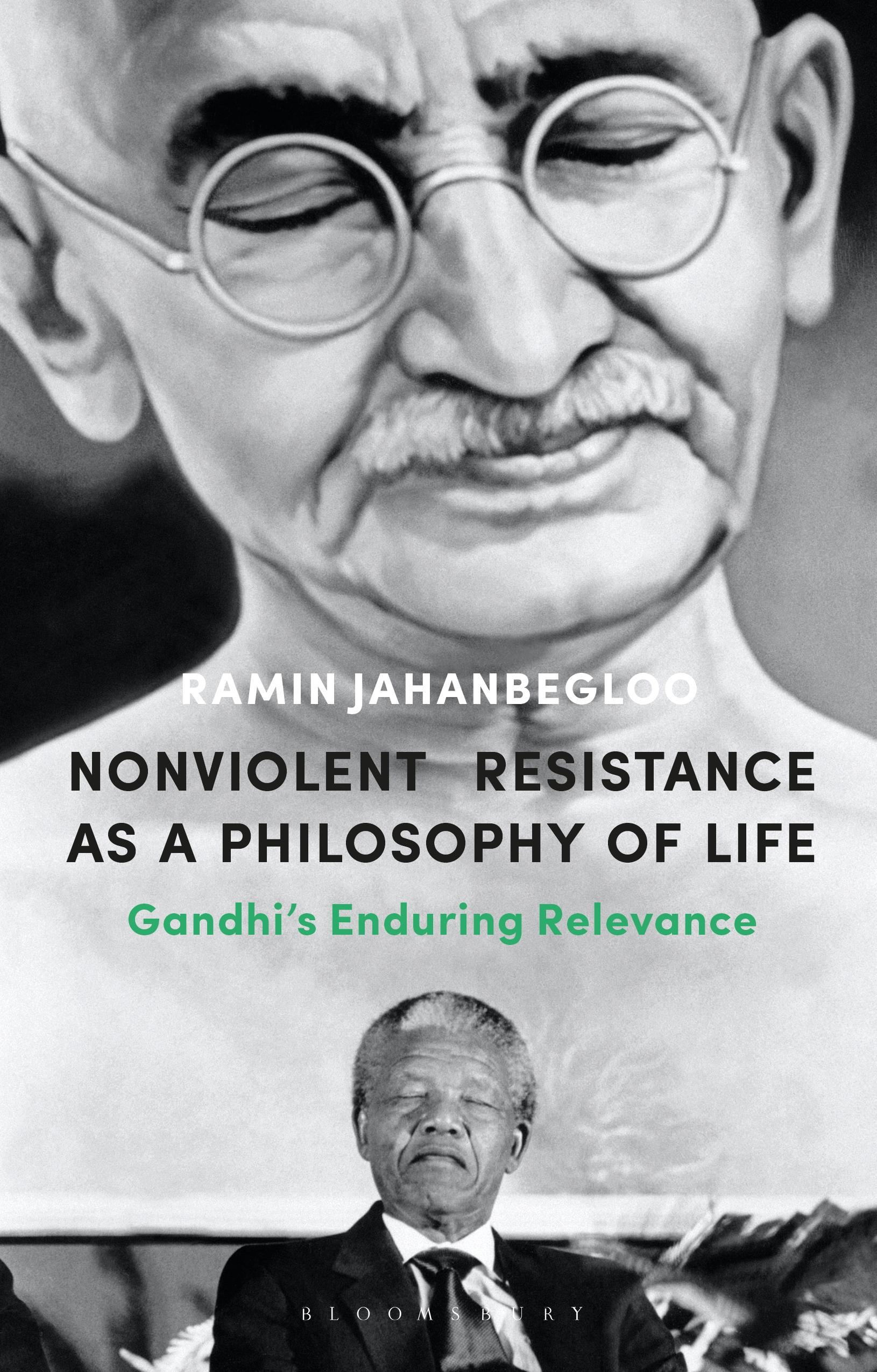
What do we mean by nonviolence? What can nonviolence achieve? Are there limits to nonviolence and, if so, what are they? These are the questions the Iranian political philosopher and activist Ramin Jahanbegloo tackles in his journey through the major political advocates of nonviolence during the 20th century.
While nonviolent resistance has accompanied human culture from its earliest beginnings, and representations of nonviolence in Eastern religions like Jainism, Buddhism and Hinduism are ubiquitous, it is only in 20th century that it emerged as a major preoccupation of figures such as Gandhi, Martin Luther King Jr., Nelson Mandela, Mother Teresa and Václav Havel. Focusing on examples of their way of thinking in different cultural, geographic and political contexts, from the Indian Independence Movement and US Civil rights and Anti-Apartheid movement to the Velvet Revolution in Czechoslovakia and nonviolent protests in Tunisia, Iran, Serbia and Hong-Kong, Jahanbegloo explores why nonviolence remains relevant as a form of resistance against injustice and oppression around the world.
With balanced readings of central players and events, this comparative study of a pivotal form of resistance written by accomplished scholar of Gandhi presents convincing reasons to commit to nonviolence, reminding us why it matters to the development of contemporary political thought.
While nonviolent resistance has accompanied human culture from its earliest beginnings, and representations of nonviolence in Eastern religions like Jainism, Buddhism and Hinduism are ubiquitous, it is only in 20th century that it emerged as a major preoccupation of figures such as Gandhi, Martin Luther King Jr., Nelson Mandela, Mother Teresa and Václav Havel. Focusing on examples of their way of thinking in different cultural, geographic and political contexts, from the Indian Independence Movement and US Civil rights and Anti-Apartheid movement to the Velvet Revolution in Czechoslovakia and nonviolent protests in Tunisia, Iran, Serbia and Hong-Kong, Jahanbegloo explores why nonviolence remains relevant as a form of resistance against injustice and oppression around the world.
With balanced readings of central players and events, this comparative study of a pivotal form of resistance written by accomplished scholar of Gandhi presents convincing reasons to commit to nonviolence, reminding us why it matters to the development of contemporary political thought.
Zahle einfach mit Karte, Klarna, Apple Pay oder Google Pay. Nicht zufrieden? Du hast immer ein 14-tägiges Widerrufsrecht. Lies mehr in unseren AGB. Hast du Fragen, schreib uns eine E-Mail an hello@memmo.org.
Memmo macht das Lernen einfacher – wo auch immer du bist. Bei uns findest du deine Kursbücher und smarte Lerntools an einem Ort: Zusammenfassungen, Quizzes, Podcasts und Lernkarten. Und Ted, dein Lernbuddy, beantwortet alles, was du wissen möchtest. Über 50.000 Studierende lernen bereits hier – gemacht, damit du schneller lernst und weniger Stress hast.