
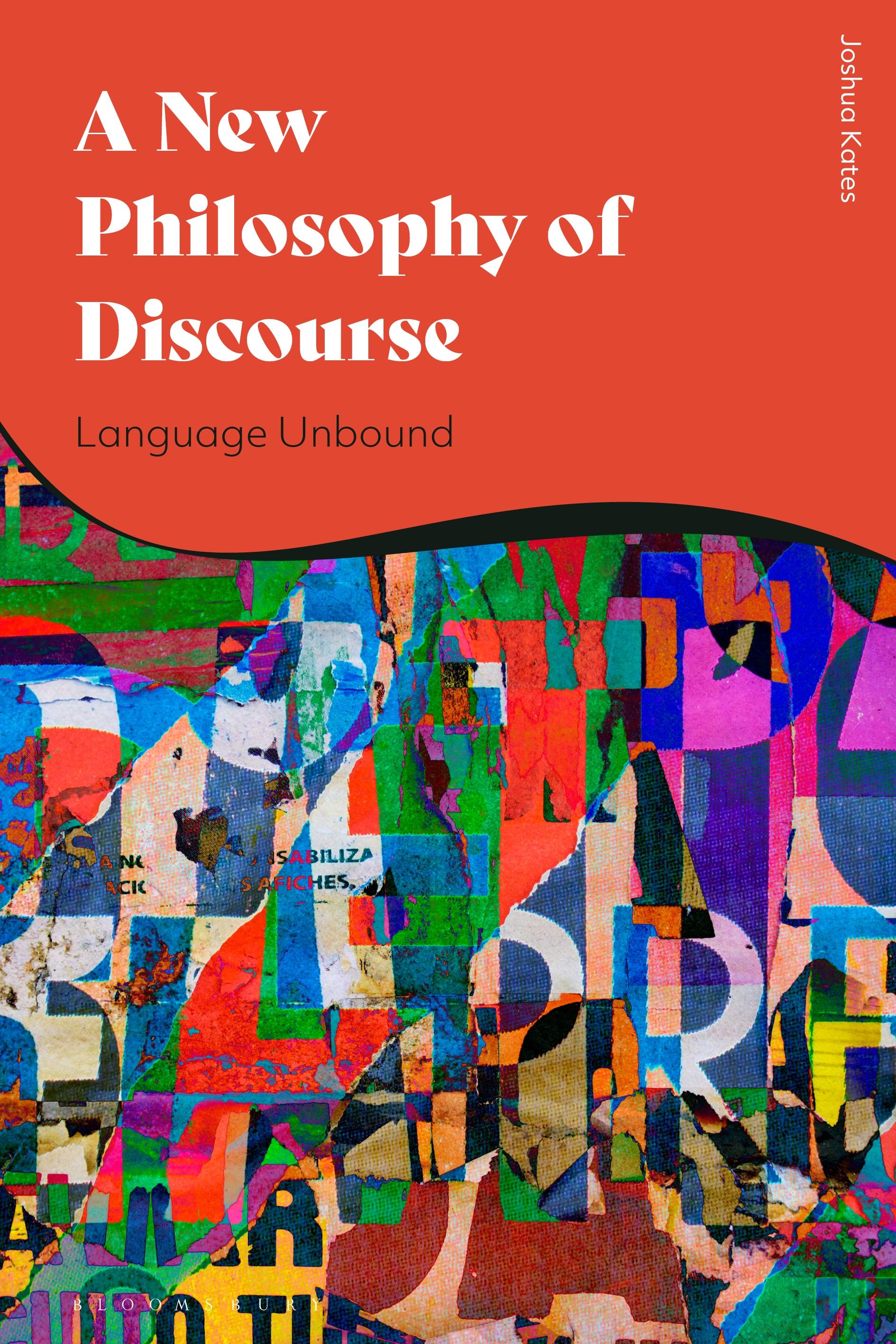
What would happen if structures, forms, and other stand-alone entities thought to comprise our intellectual toolkit-words, meanings, signs-were jettisoned? How would a work written in a purportedly dead language, like The Iliad, or penned in a foreign tongue be approached if deemed legible without structures such as meaning-bearing signs or grammatical rules?
A New Philosophy of Discourse charts a novel course in response to these questions, coining an original concept of discourse, or talk!, that Joshua Kates presents as more fundamental than language. In Kates' conception of discourse, writing and speech take shape entirely as events, situated within histories, contexts, and traditions themselves always in the making. Combining literary theory, literary criticism, and philosophy, to reveal a new perspective on discourse, Kates focuses on literary criticism, literary texts by Charles Bernstein and Stanley Elkin, and the philosophical writings of Stanley Cavell, Hans-Georg Gadamer, Donald Davidson and Martin Heidegger.
This ground-breaking study bridges the analytical/continental divide, by working through concrete problems using novel and extended interpretations with wide-ranging implications for the humanities.
A New Philosophy of Discourse charts a novel course in response to these questions, coining an original concept of discourse, or talk!, that Joshua Kates presents as more fundamental than language. In Kates' conception of discourse, writing and speech take shape entirely as events, situated within histories, contexts, and traditions themselves always in the making. Combining literary theory, literary criticism, and philosophy, to reveal a new perspective on discourse, Kates focuses on literary criticism, literary texts by Charles Bernstein and Stanley Elkin, and the philosophical writings of Stanley Cavell, Hans-Georg Gadamer, Donald Davidson and Martin Heidegger.
This ground-breaking study bridges the analytical/continental divide, by working through concrete problems using novel and extended interpretations with wide-ranging implications for the humanities.
Zahle einfach mit Karte, Klarna, Apple Pay oder Google Pay. Nicht zufrieden? Du hast immer ein 14-tägiges Widerrufsrecht. Lies mehr in unseren AGB. Hast du Fragen, schreib uns eine E-Mail an hello@memmo.org.
Memmo macht das Lernen einfacher – wo auch immer du bist. Bei uns findest du deine Kursbücher und smarte Lerntools an einem Ort: Zusammenfassungen, Quizzes, Podcasts und Lernkarten. Und Ted, dein Lernbuddy, beantwortet alles, was du wissen möchtest. Über 50.000 Studierende lernen bereits hier – gemacht, damit du schneller lernst und weniger Stress hast.