
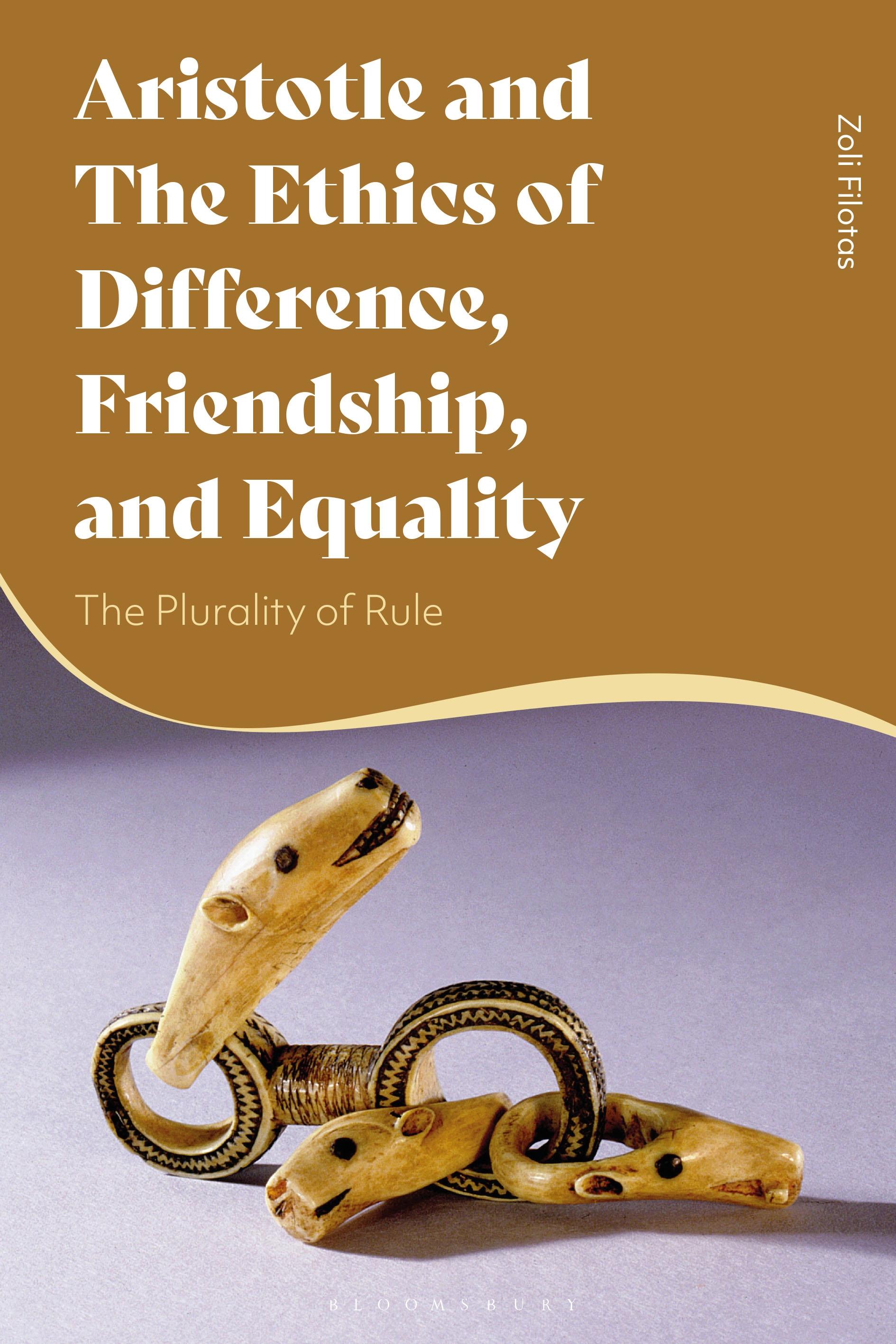
Connecting several strands of Aristotle's thought, Zoli Filotas sheds light on one of the axioms of Aristotle's ethics and political philosophy – that every community has a ruler – and demonstrates its relevance to his ideas on personal relationships.
Aristotle and the Ethics of Difference, Friendship, and Equality reveals a pluralistic theory of rule in Aristotle's thought, tracing it through his corpus and situating it in a discussion among such figures as Gorgias, Xenophon, and Plato. Considering the similarities and differences among various forms of rule, Filotas shows that for Aristotle even virtuous friends must exercise a version of rule akin to that of slaveholders. He also explores why Aristotle distinguishes the hierarchical rule over women from both the mastery of slaves and the political rule exercised by free and equal citizens. In doing so, he argues that natural and social differences among human beings play a complex, and troubling, role in Aristotle's reasoning. Illuminating and thought-provoking, this book reveals Aristotle's ambivalence about political relations and the equal treatment they involve and offers an engaging inquiry into how he understood the common structures of human relationships.
Aristotle and the Ethics of Difference, Friendship, and Equality reveals a pluralistic theory of rule in Aristotle's thought, tracing it through his corpus and situating it in a discussion among such figures as Gorgias, Xenophon, and Plato. Considering the similarities and differences among various forms of rule, Filotas shows that for Aristotle even virtuous friends must exercise a version of rule akin to that of slaveholders. He also explores why Aristotle distinguishes the hierarchical rule over women from both the mastery of slaves and the political rule exercised by free and equal citizens. In doing so, he argues that natural and social differences among human beings play a complex, and troubling, role in Aristotle's reasoning. Illuminating and thought-provoking, this book reveals Aristotle's ambivalence about political relations and the equal treatment they involve and offers an engaging inquiry into how he understood the common structures of human relationships.
Zahle einfach mit Karte, Klarna, Apple Pay oder Google Pay. Nicht zufrieden? Du hast immer ein 14-tägiges Widerrufsrecht. Lies mehr in unseren AGB. Hast du Fragen, schreib uns eine E-Mail an hello@memmo.org.
Memmo macht das Lernen einfacher – wo auch immer du bist. Bei uns findest du deine Kursbücher und smarte Lerntools an einem Ort: Zusammenfassungen, Quizzes, Podcasts und Lernkarten. Und Ted, dein Lernbuddy, beantwortet alles, was du wissen möchtest. Über 50.000 Studierende lernen bereits hier – gemacht, damit du schneller lernst und weniger Stress hast.