
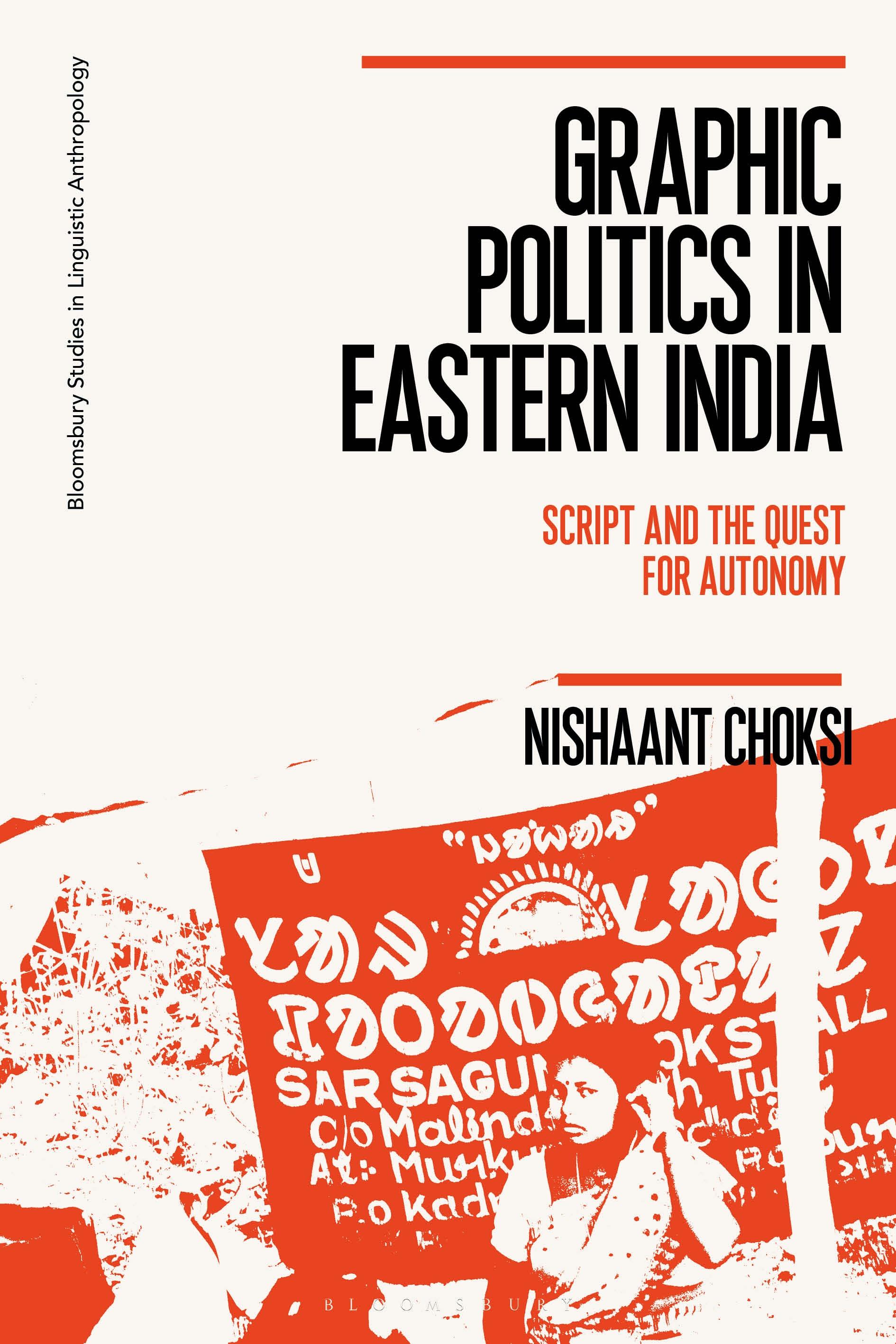
Investigating the communicative practices of indigenous Santali speakers in eastern India, Nishaant Choksi examines the overlooked role of script in regional movements for autonomy to provide one of the first comprehensive theoretical and ethnographical accounts of 'graphic politics'.
Based on extensive fieldwork in the villages of southwestern West Bengal, Choksi explores the deployment of Santali scripts, including a newly created script called Ol Chiki, in Bengali-dominated local markets, the education system and in the circulation of print media. He shows how manipulating the linguistic landscape and challenging the idea of a vernacular enables Santali speakers to delineate their own political domains and scale their language on local, regional and national levels. In doing so, they contest Bengali-speaking upper castes' hegemony over public spaces and institutions, as well as the administrative demarcations of the contemporary Indian nation-state.
Combining semiotic theory with ethnographically grounded investigation, Graphic Politics in Eastern India provides a new framework for understanding writing and literacy practices among ethnic minorities and points to future directions for interdisciplinary research on indigenous autonomy in South Asia.
Based on extensive fieldwork in the villages of southwestern West Bengal, Choksi explores the deployment of Santali scripts, including a newly created script called Ol Chiki, in Bengali-dominated local markets, the education system and in the circulation of print media. He shows how manipulating the linguistic landscape and challenging the idea of a vernacular enables Santali speakers to delineate their own political domains and scale their language on local, regional and national levels. In doing so, they contest Bengali-speaking upper castes' hegemony over public spaces and institutions, as well as the administrative demarcations of the contemporary Indian nation-state.
Combining semiotic theory with ethnographically grounded investigation, Graphic Politics in Eastern India provides a new framework for understanding writing and literacy practices among ethnic minorities and points to future directions for interdisciplinary research on indigenous autonomy in South Asia.
Zahle einfach mit Karte, Klarna, Apple Pay oder Google Pay. Nicht zufrieden? Du hast immer ein 14-tägiges Widerrufsrecht. Lies mehr in unseren AGB. Hast du Fragen, schreib uns eine E-Mail an hello@memmo.org.
Memmo macht das Lernen einfacher – wo auch immer du bist. Bei uns findest du deine Kursbücher und smarte Lerntools an einem Ort: Zusammenfassungen, Quizzes, Podcasts und Lernkarten. Und Ted, dein Lernbuddy, beantwortet alles, was du wissen möchtest. Über 50.000 Studierende lernen bereits hier – gemacht, damit du schneller lernst und weniger Stress hast.