
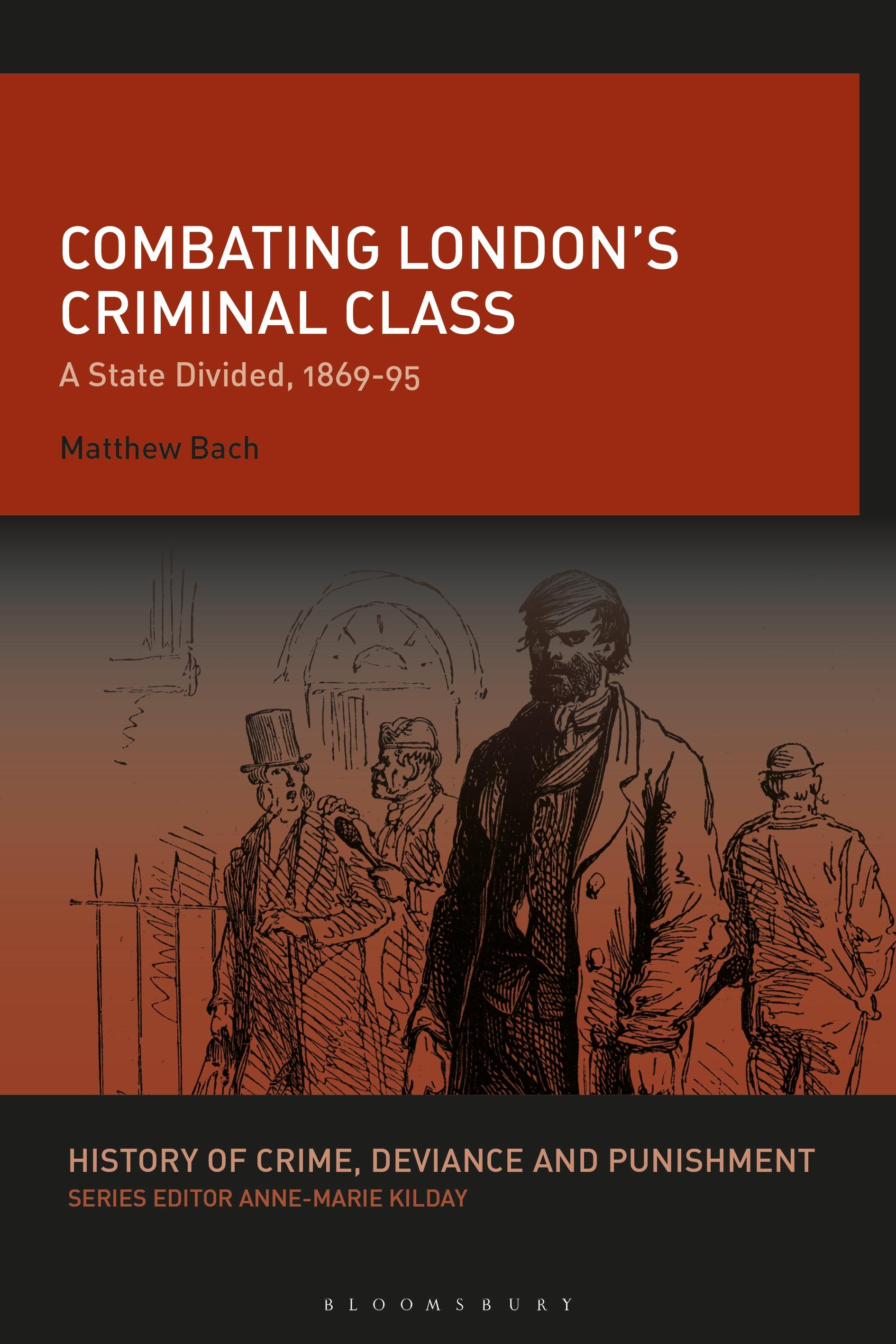
The criminal class was seen as a violent, immoral and dissolute sub-section of Victorian London's population. Making their living through crime and openly hostile to society, the lives of these criminals were characterised by drunkenness, theft and brutality. This book explores whether this criminal class did indeed truly exist, and the effectivenessof measures brought against it.
Tracing the notion of the criminal class from as early as the 16th century, this book questions whether this sub-section of society did indeed exist. Bach discusses how unease of London's notorious rookeries, the frenzy of media attention and a [word deleted here] panic among the general public enforced and encouraged the fear of the 'criminal class' and perpetuated state efforts of social control. Using the Habitual Criminals Bills, this book explores how and why this legislation was introduced to deal with repeat offenders, and assesses how successful its repressive measures were. Demonstrating how the Metropolitan Police Force and London's Magistrates were not always willing tools of the British state, this book uses court records and private correspondence to reveal how inconsistent and unsuccessful many of these measures and punishments were, and calls into question the notion that the state gained control over recidivists in this period.
Tracing the notion of the criminal class from as early as the 16th century, this book questions whether this sub-section of society did indeed exist. Bach discusses how unease of London's notorious rookeries, the frenzy of media attention and a [word deleted here] panic among the general public enforced and encouraged the fear of the 'criminal class' and perpetuated state efforts of social control. Using the Habitual Criminals Bills, this book explores how and why this legislation was introduced to deal with repeat offenders, and assesses how successful its repressive measures were. Demonstrating how the Metropolitan Police Force and London's Magistrates were not always willing tools of the British state, this book uses court records and private correspondence to reveal how inconsistent and unsuccessful many of these measures and punishments were, and calls into question the notion that the state gained control over recidivists in this period.
Zahle einfach mit Karte, Klarna, Apple Pay oder Google Pay. Nicht zufrieden? Du hast immer ein 14-tägiges Widerrufsrecht. Lies mehr in unseren AGB. Hast du Fragen, schreib uns eine E-Mail an hello@memmo.org.
Memmo macht das Lernen einfacher – wo auch immer du bist. Bei uns findest du deine Kursbücher und smarte Lerntools an einem Ort: Zusammenfassungen, Quizzes, Podcasts und Lernkarten. Und Ted, dein Lernbuddy, beantwortet alles, was du wissen möchtest. Über 50.000 Studierende lernen bereits hier – gemacht, damit du schneller lernst und weniger Stress hast.