
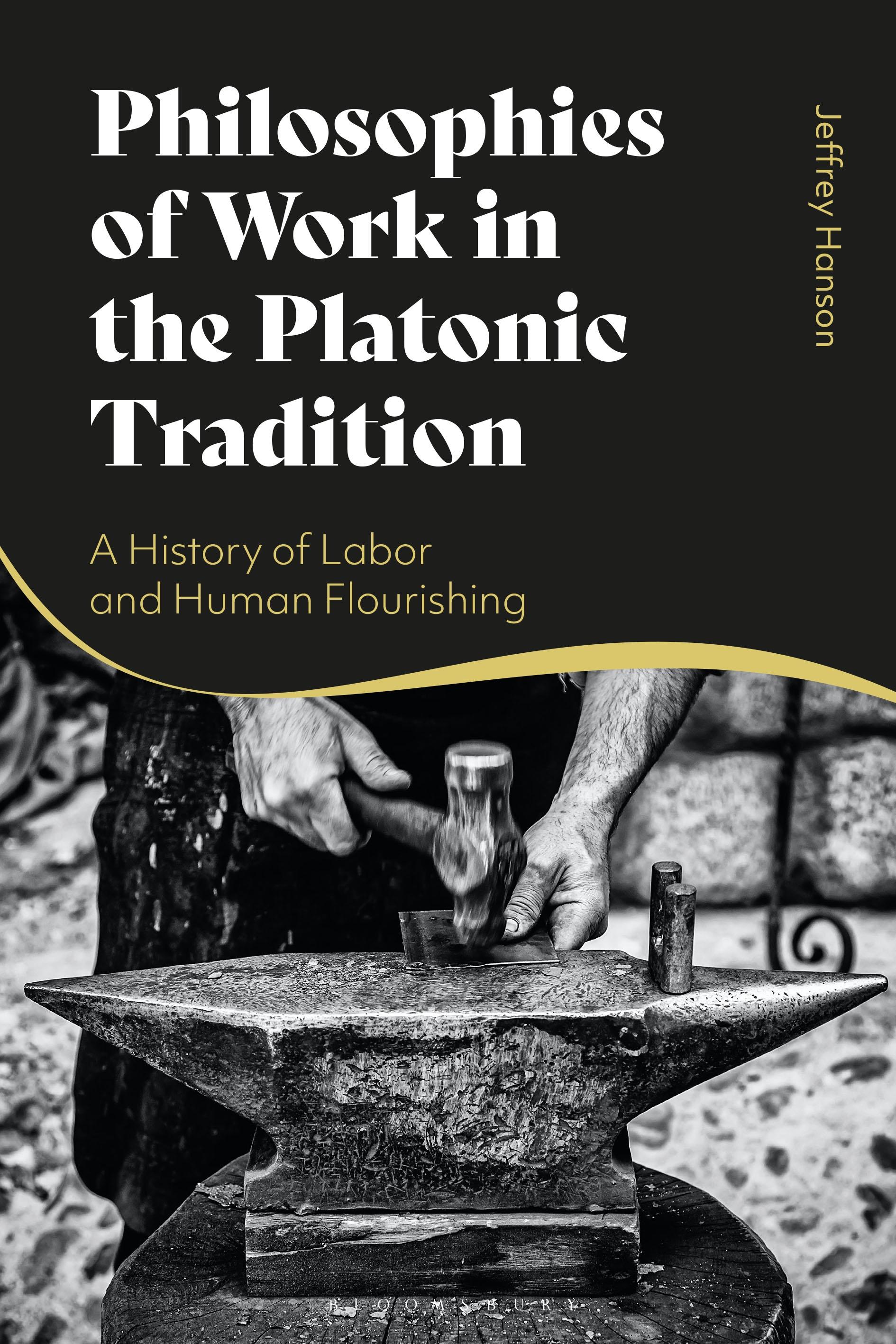
The Platonic tradition affords extraordinary resources for thinking about the meaning and value of work. In this historical survey of the tradition, Jeffrey Hanson draws on the work of its major thinkers to explain why our contemporary vocabulary for appraising labor and its rewards is too narrow and cramped. By tracing out the Platonic lineage of work Hanson is able to argue why we should be explaining its value for appraising it as an element of a happy and flourishing human life, quite apart from its financial rewards.
Beginning with Plato's extensive thinking about work's relationship to wisdom, Hanson covers the singularly powerful arguments of Augustine, who wrote the ancient world's only treatise dedicated to the topic of manual labor. He discusses Bernard of Clairvaux, introduces the priest-craftsman Theophilus Presbyter, and provides a study of work and leisure in the writings of Petrarch. Alongside Martin Luther, Hanson discusses John Ruskin and Simone Weil: two thinkers profoundly disturbed by the conditions of the working class in the rapidly industrializing economies of Europe.
This original study of Plato and his inheritors' ideas provides practical suggestions for how to approach work in a socially responsible manner in the 21st century and reveals the benefits of linking work and morality.
Beginning with Plato's extensive thinking about work's relationship to wisdom, Hanson covers the singularly powerful arguments of Augustine, who wrote the ancient world's only treatise dedicated to the topic of manual labor. He discusses Bernard of Clairvaux, introduces the priest-craftsman Theophilus Presbyter, and provides a study of work and leisure in the writings of Petrarch. Alongside Martin Luther, Hanson discusses John Ruskin and Simone Weil: two thinkers profoundly disturbed by the conditions of the working class in the rapidly industrializing economies of Europe.
This original study of Plato and his inheritors' ideas provides practical suggestions for how to approach work in a socially responsible manner in the 21st century and reveals the benefits of linking work and morality.
Zahle einfach mit Karte, Klarna, Apple Pay oder Google Pay. Nicht zufrieden? Du hast immer ein 14-tägiges Widerrufsrecht. Lies mehr in unseren AGB. Hast du Fragen, schreib uns eine E-Mail an hello@memmo.org.
Memmo macht das Lernen einfacher – wo auch immer du bist. Bei uns findest du deine Kursbücher und smarte Lerntools an einem Ort: Zusammenfassungen, Quizzes, Podcasts und Lernkarten. Und Ted, dein Lernbuddy, beantwortet alles, was du wissen möchtest. Über 50.000 Studierende lernen bereits hier – gemacht, damit du schneller lernst und weniger Stress hast.