
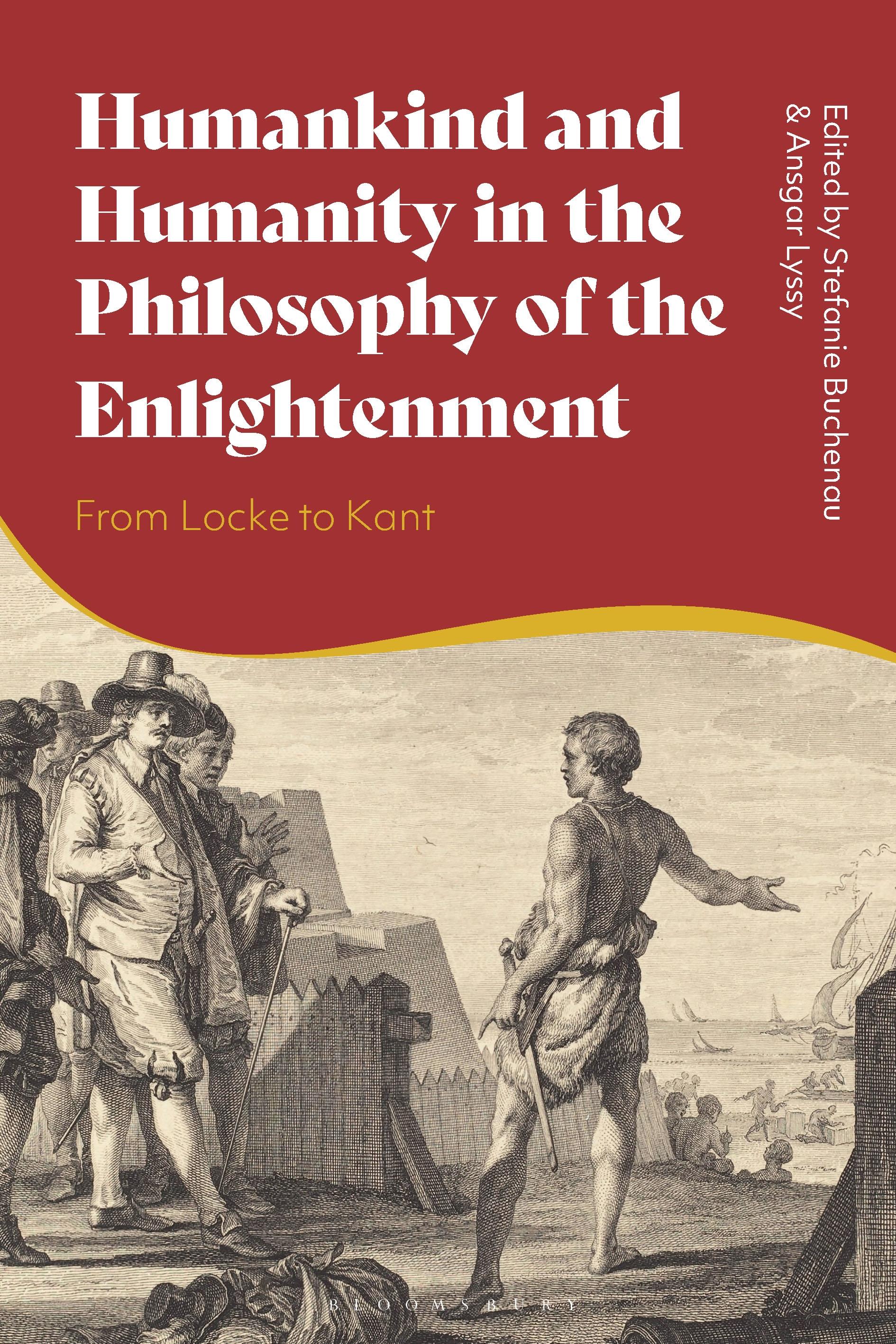
What makes us human beings? Is it merely some corporeal aspect, or rather some specific mental capacity, language, or some form of moral agency or social life? Is there a gendered bias within the concept of humanity? How do human beings become more human, and can we somehow cease to be human? This volume provides some answers to these fundamental questions and more by charting the increased preoccupation of the European Enlightenment with the concepts of humankind and humanity.
Chapters investigate the philosophical concerns of major figures across Western Europe, including Montesquieu, Diderot, Rousseau, Locke, Hume, Ferguson, Kant, Herder, Johann Friedrich Blumenbach and the Comte de Buffon. As these philosophers develop important descriptive and comparative approaches to the human species and moral and social ideals of humanity, they present a view of the Enlightenment project as a particular kind of humanism that is different from its Ancient and Renaissance predecessors.
With contributions from a team of internationally recognized scholars, including Stephen Gaukroger, Michael Forster, Céline Spector, Jacqueline Taylor, and Günter Zöller, this book offers a novel interpretation of the Enlightenment that is both clear in focus and impressive in scope.
Chapters investigate the philosophical concerns of major figures across Western Europe, including Montesquieu, Diderot, Rousseau, Locke, Hume, Ferguson, Kant, Herder, Johann Friedrich Blumenbach and the Comte de Buffon. As these philosophers develop important descriptive and comparative approaches to the human species and moral and social ideals of humanity, they present a view of the Enlightenment project as a particular kind of humanism that is different from its Ancient and Renaissance predecessors.
With contributions from a team of internationally recognized scholars, including Stephen Gaukroger, Michael Forster, Céline Spector, Jacqueline Taylor, and Günter Zöller, this book offers a novel interpretation of the Enlightenment that is both clear in focus and impressive in scope.
Zahle einfach mit Karte, Klarna, Apple Pay oder Google Pay. Nicht zufrieden? Du hast immer ein 14-tägiges Widerrufsrecht. Lies mehr in unseren AGB. Hast du Fragen, schreib uns eine E-Mail an hello@memmo.org.
Memmo macht das Lernen einfacher – wo auch immer du bist. Bei uns findest du deine Kursbücher und smarte Lerntools an einem Ort: Zusammenfassungen, Quizzes, Podcasts und Lernkarten. Und Ted, dein Lernbuddy, beantwortet alles, was du wissen möchtest. Über 50.000 Studierende lernen bereits hier – gemacht, damit du schneller lernst und weniger Stress hast.