
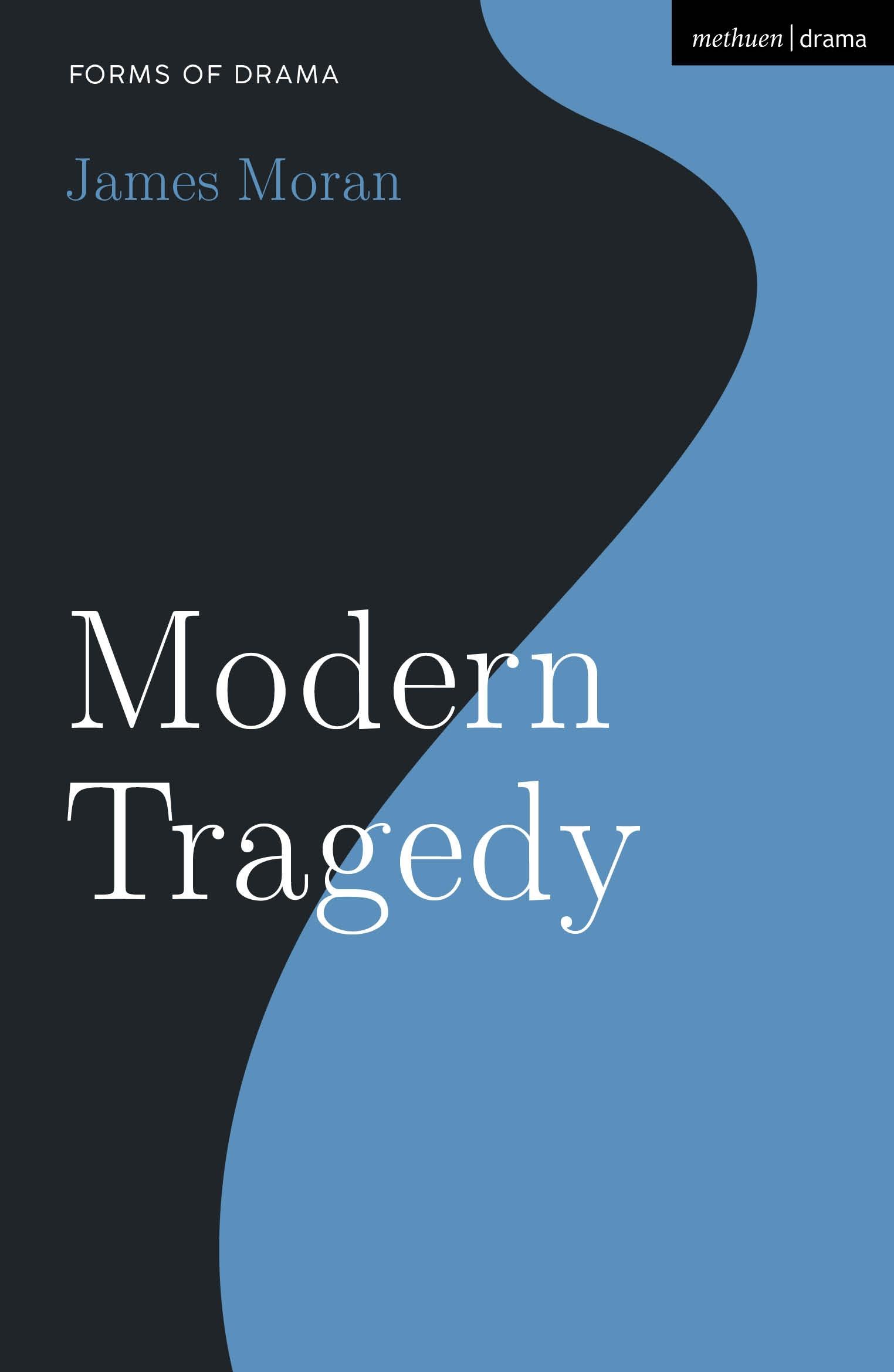
What distinguishes modern tragedy from other forms of drama? How does it relate to contemporary political and social conditions? To what ends have artists employed the tragic form in different locations during the 20th century?
Partly motivated by the urgency of our current situation in an age of ecocidal crisis, Modern Tragedy encompasses a variety of drama from throughout the 20th century. James Moran begins this book with John Millington Synge's Riders to the Sea (1904), which shows how environmental awareness might be expressed through tragic drama. Moran also looks at Brecht's reworking of Synge's drama in the 1937 play Señora Carrar's Rifles, and situates Brecht's script in the light of the theatre practitioner's broader ideas about tragedy. Brecht's tragic thinking – informed by Hegel and Marx – is contrasted with the Schopenhauerian approach of Samuel Beckett. The volume goes on to examine theatre makers whose ideas were partly motivated by applying an understanding of the tragic narrative of Synge's Riders to the Sea to postcolonial contexts. Looking at Derek Walcott's The Sea at Dauphin (1954), and J.P. Clark's The Goat (1961), Modern Tragedy explores how tragedy, a form that is often associated with regressive assumptions about hegemony, might be rethought, and how aspects of the tragic may coincide with the experiences and concerns of authors and audiences of colour.
Partly motivated by the urgency of our current situation in an age of ecocidal crisis, Modern Tragedy encompasses a variety of drama from throughout the 20th century. James Moran begins this book with John Millington Synge's Riders to the Sea (1904), which shows how environmental awareness might be expressed through tragic drama. Moran also looks at Brecht's reworking of Synge's drama in the 1937 play Señora Carrar's Rifles, and situates Brecht's script in the light of the theatre practitioner's broader ideas about tragedy. Brecht's tragic thinking – informed by Hegel and Marx – is contrasted with the Schopenhauerian approach of Samuel Beckett. The volume goes on to examine theatre makers whose ideas were partly motivated by applying an understanding of the tragic narrative of Synge's Riders to the Sea to postcolonial contexts. Looking at Derek Walcott's The Sea at Dauphin (1954), and J.P. Clark's The Goat (1961), Modern Tragedy explores how tragedy, a form that is often associated with regressive assumptions about hegemony, might be rethought, and how aspects of the tragic may coincide with the experiences and concerns of authors and audiences of colour.
Seiten: 192
Kategorie: Drama, Teater & Scenkonst
e-ISBN: 9781350139794
Versandgewicht: 1.2 kg
Versand in: 1-2 Tage
Zahle einfach mit Karte, Klarna, Apple Pay oder Google Pay. Nicht zufrieden? Du hast immer ein 14-tägiges Widerrufsrecht. Lies mehr in unseren AGB. Hast du Fragen, schreib uns eine E-Mail an hello@memmo.org.
Memmo macht das Lernen einfacher – wo auch immer du bist. Bei uns findest du deine Kursbücher und smarte Lerntools an einem Ort: Zusammenfassungen, Quizzes, Podcasts und Lernkarten. Und Ted, dein Lernbuddy, beantwortet alles, was du wissen möchtest. Über 50.000 Studierende lernen bereits hier – gemacht, damit du schneller lernst und weniger Stress hast.