
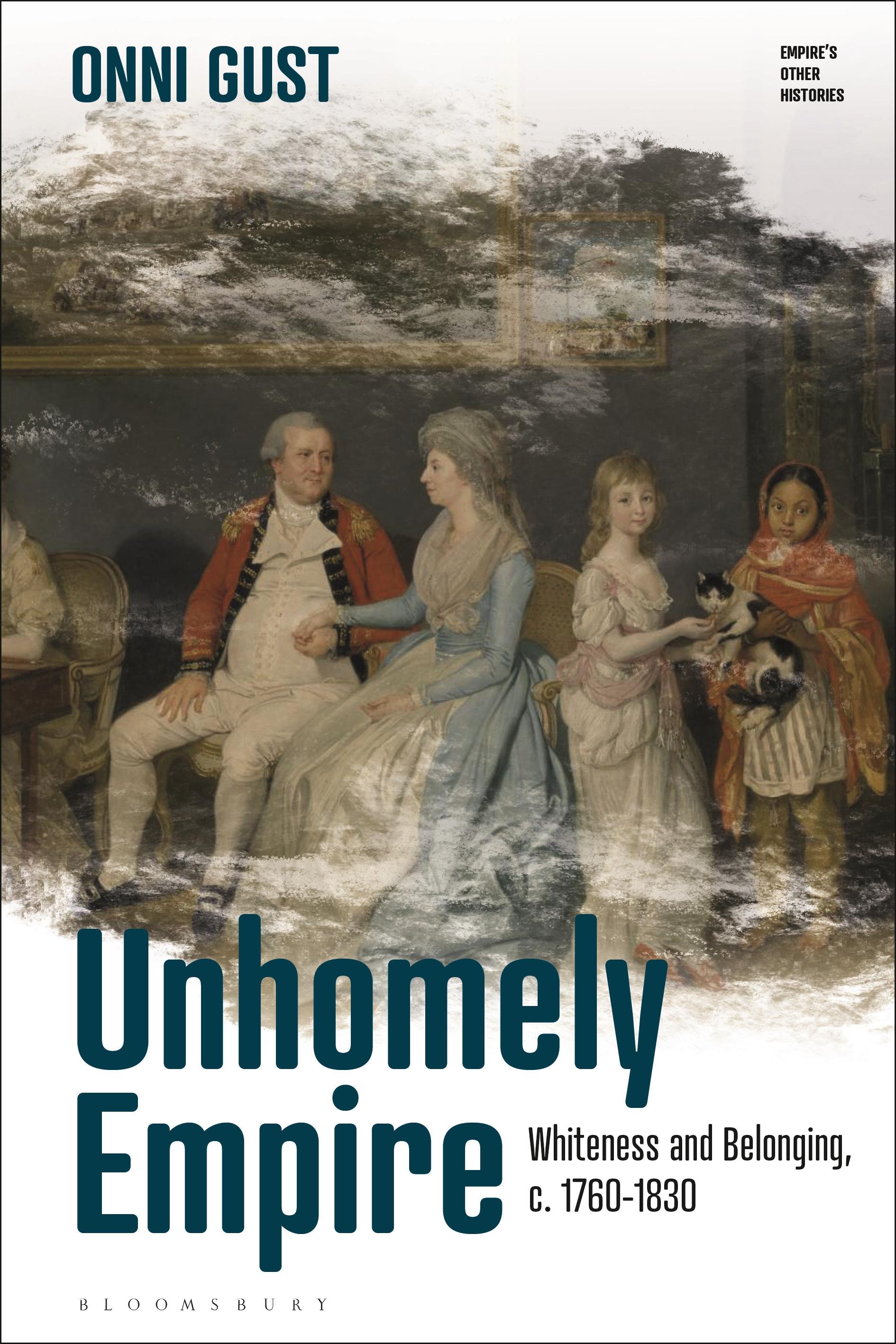
This book examines the role of Scottish Enlightenment ideas of belonging in the construction and circulation of white supremacist thought that sought to justify British imperial rule. During the 18th century, European imperial expansion radically increased population mobility through the forging of new trade routes, war, disease, enslavement and displacement. In this book, Onni Gust argues that this mass movement intersected with philosophical debates over what it meant to belong to a nation, civilization, and even humanity itself.
Unhomely Empire maps the consolidation of a Scottish Enlightenment discourse of 'home' and 'exile' through three inter-related case studies and debates; slavery and abolition in the Caribbean, Scottish Highland emigration to North America, and raising white girls in colonial India. Playing out over poetry, political pamphlets, travel writing, philosophy, letters and diaries, these debates offer a unique insight into the movement of ideas across a British imperial literary network. Using this rich cultural material, Gust argues that whiteness was central to 19th-century liberal imperialism's understanding of belonging, whilst emotional attachment and the perceived ability, or inability, to belong were key concepts in constructions of racial difference.
Unhomely Empire maps the consolidation of a Scottish Enlightenment discourse of 'home' and 'exile' through three inter-related case studies and debates; slavery and abolition in the Caribbean, Scottish Highland emigration to North America, and raising white girls in colonial India. Playing out over poetry, political pamphlets, travel writing, philosophy, letters and diaries, these debates offer a unique insight into the movement of ideas across a British imperial literary network. Using this rich cultural material, Gust argues that whiteness was central to 19th-century liberal imperialism's understanding of belonging, whilst emotional attachment and the perceived ability, or inability, to belong were key concepts in constructions of racial difference.
Zahle einfach mit Karte, Klarna, Apple Pay oder Google Pay. Nicht zufrieden? Du hast immer ein 14-tägiges Widerrufsrecht. Lies mehr in unseren AGB. Hast du Fragen, schreib uns eine E-Mail an hello@memmo.org.
Memmo macht das Lernen einfacher – wo auch immer du bist. Bei uns findest du deine Kursbücher und smarte Lerntools an einem Ort: Zusammenfassungen, Quizzes, Podcasts und Lernkarten. Und Ted, dein Lernbuddy, beantwortet alles, was du wissen möchtest. Über 50.000 Studierende lernen bereits hier – gemacht, damit du schneller lernst und weniger Stress hast.