
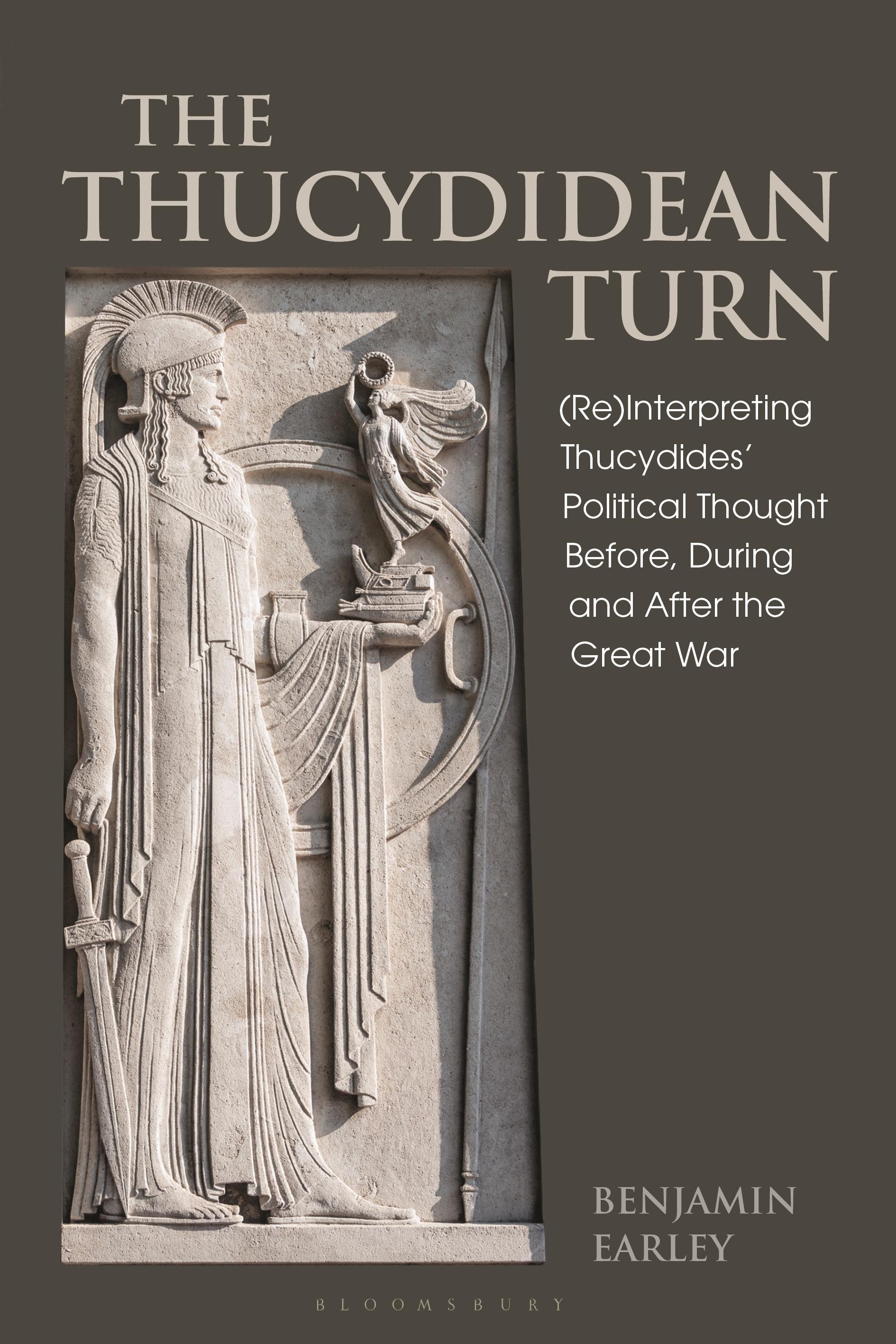
The emergence of Thucydides as an influential political thinker in the first half of the 20th century has been astonishingly neglected by modern scholars. This volume examines how, why, and when the Athenian historical came to occupy such a prominent position in political discourse in the US and Europe today. It argues that in the years before, during, and after the Great War Thucydides' History of the Peloponnesian War was mined for the insights that it could offer into contemporary politics, and that it was also used as part of the justification for the academic and cultural relevance of Classics at this time of great political upheaval.
Academic classicists and classically trained commentators were instrumental in this 'turn' in academic focus onto Thucydides' contemporary relevance. Among the former were several prominent figures, such as Francis Cornford, Gilbert Murray, and Enoch Powell, who attempted to find in Thucydides a dark depiction of human nature and the passions that drove politics to justify his contemporary relevance. The latter included International Relations scholars and journalists such as Alfred Zimmern, Albert Toynbee, and George Abbott, who 'turned' to Thucydides in order to better understand contemporary global and European politics. A final chapter demonstrates how this British 'turn' to Thucydides was received and reinterpreted in America on the eve of the Second World War.
Academic classicists and classically trained commentators were instrumental in this 'turn' in academic focus onto Thucydides' contemporary relevance. Among the former were several prominent figures, such as Francis Cornford, Gilbert Murray, and Enoch Powell, who attempted to find in Thucydides a dark depiction of human nature and the passions that drove politics to justify his contemporary relevance. The latter included International Relations scholars and journalists such as Alfred Zimmern, Albert Toynbee, and George Abbott, who 'turned' to Thucydides in order to better understand contemporary global and European politics. A final chapter demonstrates how this British 'turn' to Thucydides was received and reinterpreted in America on the eve of the Second World War.
Zahle einfach mit Karte, Klarna, Apple Pay oder Google Pay. Nicht zufrieden? Du hast immer ein 14-tägiges Widerrufsrecht. Lies mehr in unseren AGB. Hast du Fragen, schreib uns eine E-Mail an hello@memmo.org.
Memmo macht das Lernen einfacher – wo auch immer du bist. Bei uns findest du deine Kursbücher und smarte Lerntools an einem Ort: Zusammenfassungen, Quizzes, Podcasts und Lernkarten. Und Ted, dein Lernbuddy, beantwortet alles, was du wissen möchtest. Über 50.000 Studierende lernen bereits hier – gemacht, damit du schneller lernst und weniger Stress hast.