
Finalist for the American Academy of Religion (AAR) Book Award 2020
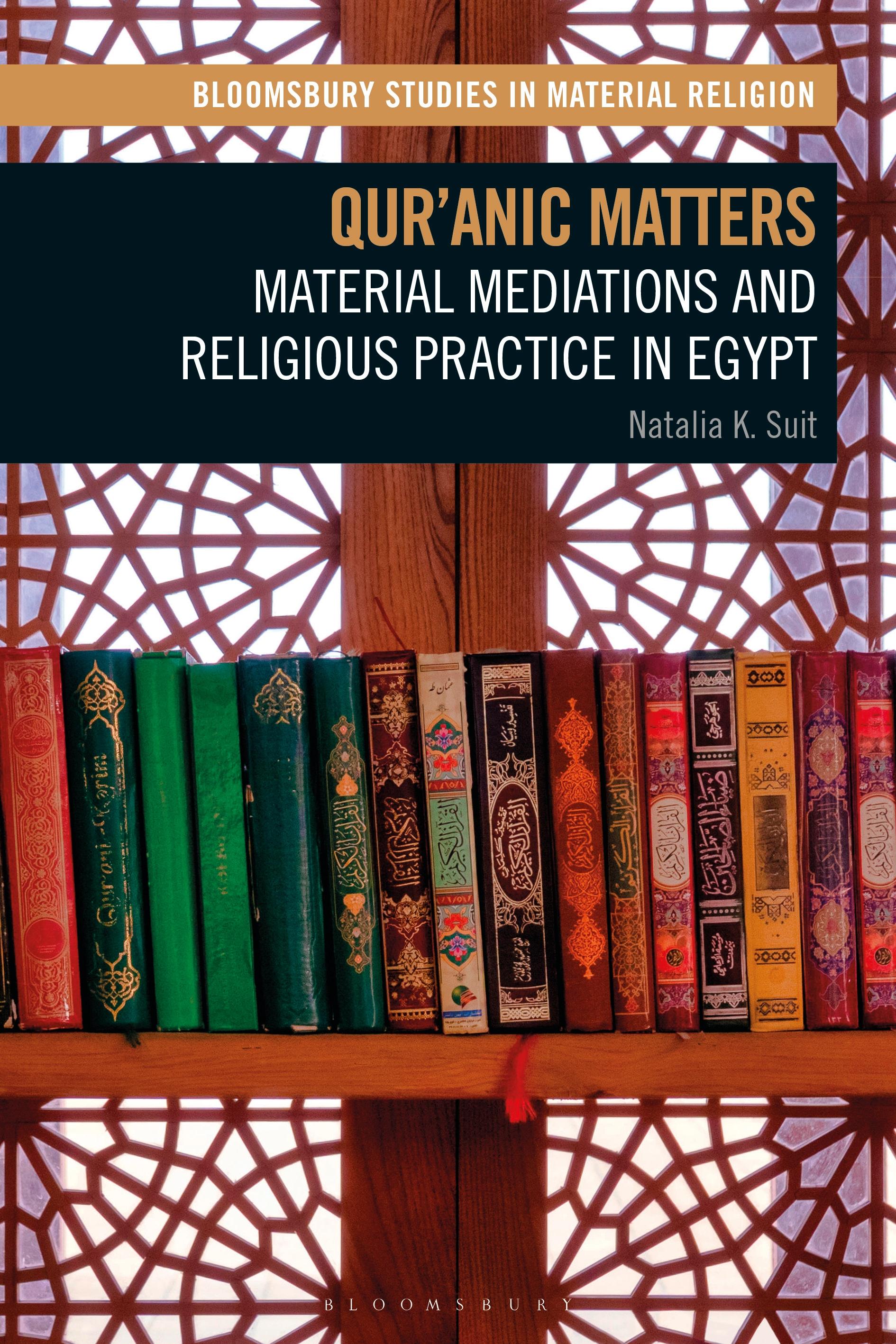
In Qur'anic Matters, Natalia Suit explores the materiality of books, focusing on the mushaf. With its paper, binding, ink, and script, the mushaf is not simply a carrier of the Qur'anic text but, by the virtue of its material body, it also has the ability to engender reformulations of religious knowledge and practice. Reading the Qur'an on a screen of a phone, for example, does not require the same forms of ritual ablutions as reading a printed text. The rules of purity limiting the access to the Qur'anic text for menstruating woman change when the Qur'anic text is mediated by digital bytes instead of paper.
Qur'anic Matters spans the time between two important technological shifts-the introduction of printed Qur'anic books in Egypt in the early nineteenth century and the digitization of the Qur'an almost two centuries later. Throughout, Natalia Suit weaves together the theological, legal, economic, and social “presences” of the Qur'anic books into a single account. She argues that the message and the materiality of the object are not separate from each other, nor are they separate from the human bodies with which they come in contact.
In Qur'anic Matters, Natalia Suit explores the materiality of books, focusing on the mushaf. With its paper, binding, ink, and script, the mushaf is not simply a carrier of the Qur'anic text but, by the virtue of its material body, it also has the ability to engender reformulations of religious knowledge and practice. Reading the Qur'an on a screen of a phone, for example, does not require the same forms of ritual ablutions as reading a printed text. The rules of purity limiting the access to the Qur'anic text for menstruating woman change when the Qur'anic text is mediated by digital bytes instead of paper.
Qur'anic Matters spans the time between two important technological shifts-the introduction of printed Qur'anic books in Egypt in the early nineteenth century and the digitization of the Qur'an almost two centuries later. Throughout, Natalia Suit weaves together the theological, legal, economic, and social “presences” of the Qur'anic books into a single account. She argues that the message and the materiality of the object are not separate from each other, nor are they separate from the human bodies with which they come in contact.
Zahle einfach mit Karte, Klarna, Apple Pay oder Google Pay. Nicht zufrieden? Du hast immer ein 14-tägiges Widerrufsrecht. Lies mehr in unseren AGB. Hast du Fragen, schreib uns eine E-Mail an hello@memmo.org.
Memmo macht das Lernen einfacher – wo auch immer du bist. Bei uns findest du deine Kursbücher und smarte Lerntools an einem Ort: Zusammenfassungen, Quizzes, Podcasts und Lernkarten. Und Ted, dein Lernbuddy, beantwortet alles, was du wissen möchtest. Über 50.000 Studierende lernen bereits hier – gemacht, damit du schneller lernst und weniger Stress hast.