
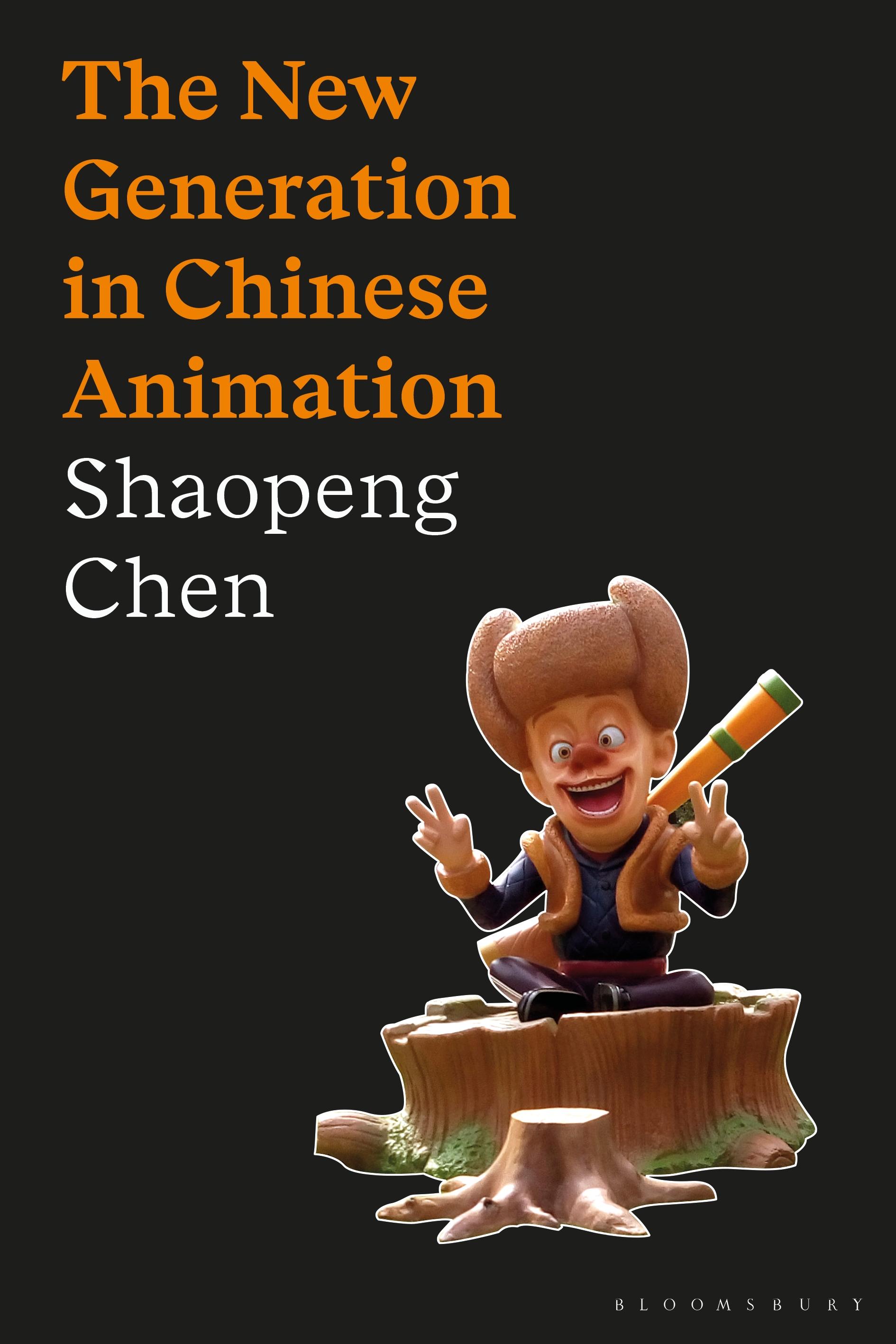
In 1995 Chinese animated filmmaking ceased to be a state-run enterprise and was plunged into the free market. Using key animated films as his case studies, Shaopeng Chen examines new generation Chinese animation in its aesthetic and industrial contexts. He argues that, unlike its predecessors, this new generation does not have a distinctive national identity, but represents an important stage of diversity and exploration in the history of Chinese animation.
Chen identifies distinct characteristics of new generation filmmaking, including an orientation towards young audiences and the recurring figure of the immortal monkey-like Sun Wukong. He explores how films such as Lotus Lantern/Baolian Deng (1999) responded to competition from American imports such as The Lion King (1994), retaining Chinese iconography while at the same time adopting Hollywood aesthetics and techniques.
Addressing the series Boonie Bears/Xiong Chumo (2014-5), Chen focuses on the films' adaptation from the original TV series, and how the films were promoted across generations and by means of both online and offline channels. Discussing the series Kuiba/Kui Ba (2011, 2013, 2014), Chen examines Vasoon Animation Studio's ambitious attempt to create the first Chinese-style high fantasy fictional universe, and considers why the first film was a critical success but a failure at the box-office. He also explores the relationship between Japanese anime and new generation Chinese animation. Finally, Chen considers how word-of-mouth social media engagement lay behind the success of Monkey King: Hero is Back (2015).
Chen identifies distinct characteristics of new generation filmmaking, including an orientation towards young audiences and the recurring figure of the immortal monkey-like Sun Wukong. He explores how films such as Lotus Lantern/Baolian Deng (1999) responded to competition from American imports such as The Lion King (1994), retaining Chinese iconography while at the same time adopting Hollywood aesthetics and techniques.
Addressing the series Boonie Bears/Xiong Chumo (2014-5), Chen focuses on the films' adaptation from the original TV series, and how the films were promoted across generations and by means of both online and offline channels. Discussing the series Kuiba/Kui Ba (2011, 2013, 2014), Chen examines Vasoon Animation Studio's ambitious attempt to create the first Chinese-style high fantasy fictional universe, and considers why the first film was a critical success but a failure at the box-office. He also explores the relationship between Japanese anime and new generation Chinese animation. Finally, Chen considers how word-of-mouth social media engagement lay behind the success of Monkey King: Hero is Back (2015).
Seiten: 304
Kategorie: Film- & Medievetenskap
e-ISBN: 9781350118973
Versandgewicht: 1.2 kg
Versand in: 1-2 Tage
Zahle einfach mit Karte, Klarna, Apple Pay oder Google Pay. Nicht zufrieden? Du hast immer ein 14-tägiges Widerrufsrecht. Lies mehr in unseren AGB. Hast du Fragen, schreib uns eine E-Mail an hello@memmo.org.
Memmo macht das Lernen einfacher – wo auch immer du bist. Bei uns findest du deine Kursbücher und smarte Lerntools an einem Ort: Zusammenfassungen, Quizzes, Podcasts und Lernkarten. Und Ted, dein Lernbuddy, beantwortet alles, was du wissen möchtest. Über 50.000 Studierende lernen bereits hier – gemacht, damit du schneller lernst und weniger Stress hast.