
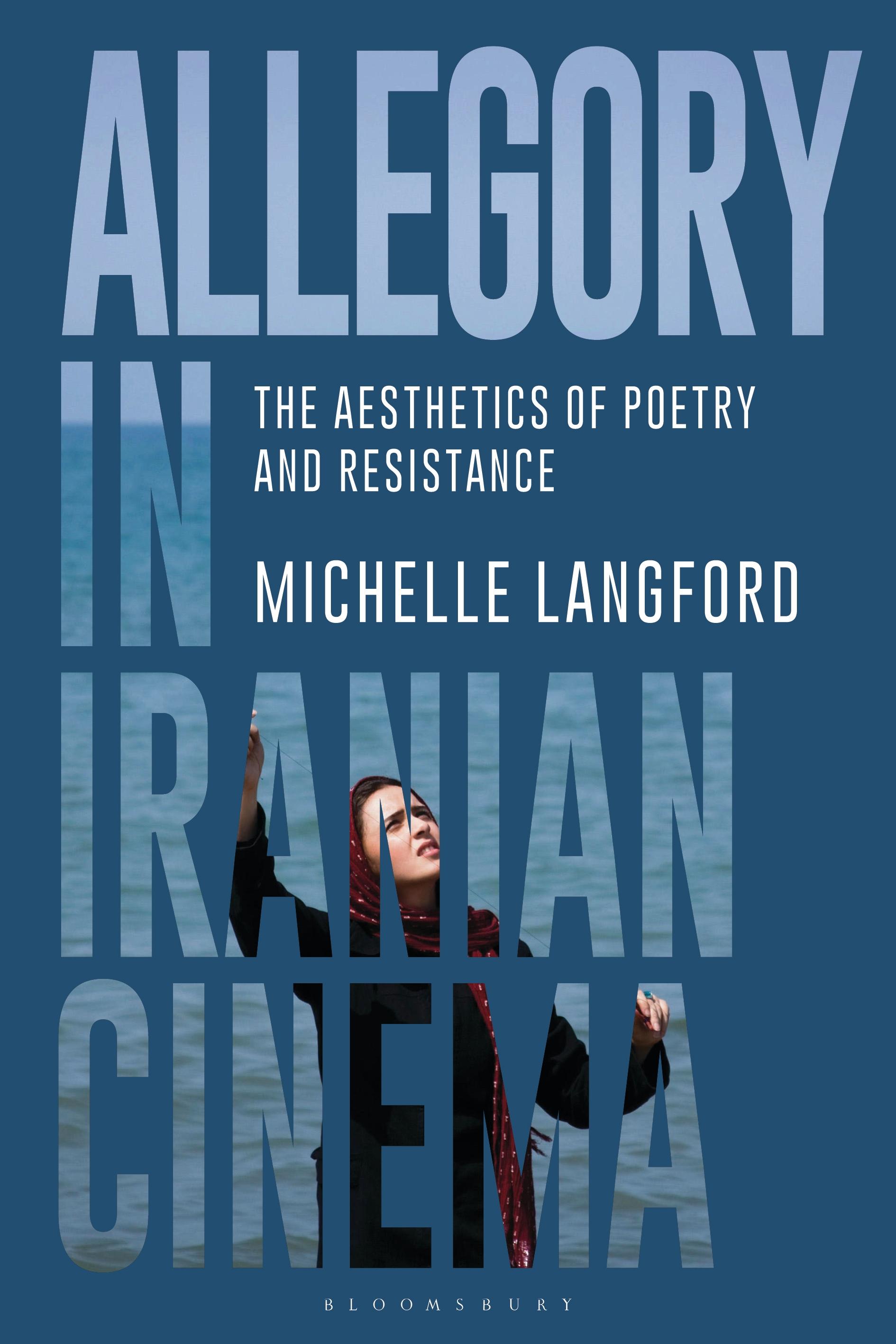
Iranian filmmakers have long been recognised for creating a vibrant, aesthetically rich cinema whilst working under strict state censorship regulations. As Michelle Langford reveals, many have found indirect, allegorical ways of expressing forbidden topics and issues in their films. But for many, allegory is much more than a foil against haphazardly applied censorship rules. Drawing on a long history of allegorical expression in Persian poetry and the arts, allegory has become an integral part of the poetics of Iranian cinema. Allegory in Iranian Cinema explores the allegorical aesthetics of Iranian cinema, explaining how it has emerged from deep cultural traditions and how it functions as a strategy for both supporting and resisting dominant ideology.
As well as tracing the roots of allegory in Iranian cinema before and after the 1979 revolution, Langford also theorizes this cinematic mode. She draws on a range of cinematic, philosophical and cultural concepts - developed by thinkers such as Walter Benjamin, Gilles Deleuze, Pier Paolo Pasolini, Christian Metz and Vivian Sobchack - to provide a theoretical framework for detailed analyses of films by renowned directors of the pre-and post-revolutionary eras including Masoud Kimiai, Dariush Mehrjui, Ebrahim Golestan, Kamran Shirdel, Majid Majidi, Jafar Panahi, Marziyeh Meshkini, Mohsen Makhmalbaf, Rakhshan Bani-Etemad and Asghar Farhadi.
Allegory in Iranian Cinema explains how a centuries-old means of expression, interpretation, encoding and decoding becomes, in the hands of Iran's most skilled cineastes, a powerful tool with which to critique and challenge social and cultural norms.
As well as tracing the roots of allegory in Iranian cinema before and after the 1979 revolution, Langford also theorizes this cinematic mode. She draws on a range of cinematic, philosophical and cultural concepts - developed by thinkers such as Walter Benjamin, Gilles Deleuze, Pier Paolo Pasolini, Christian Metz and Vivian Sobchack - to provide a theoretical framework for detailed analyses of films by renowned directors of the pre-and post-revolutionary eras including Masoud Kimiai, Dariush Mehrjui, Ebrahim Golestan, Kamran Shirdel, Majid Majidi, Jafar Panahi, Marziyeh Meshkini, Mohsen Makhmalbaf, Rakhshan Bani-Etemad and Asghar Farhadi.
Allegory in Iranian Cinema explains how a centuries-old means of expression, interpretation, encoding and decoding becomes, in the hands of Iran's most skilled cineastes, a powerful tool with which to critique and challenge social and cultural norms.
Seiten: 296
Kategorie: Film- & Medievetenskap
e-ISBN: 9781350113268
Versandgewicht: 1.2 kg
Versand in: 1-2 Tage
Zahle einfach mit Karte, Klarna, Apple Pay oder Google Pay. Nicht zufrieden? Du hast immer ein 14-tägiges Widerrufsrecht. Lies mehr in unseren AGB. Hast du Fragen, schreib uns eine E-Mail an hello@memmo.org.
Memmo macht das Lernen einfacher – wo auch immer du bist. Bei uns findest du deine Kursbücher und smarte Lerntools an einem Ort: Zusammenfassungen, Quizzes, Podcasts und Lernkarten. Und Ted, dein Lernbuddy, beantwortet alles, was du wissen möchtest. Über 50.000 Studierende lernen bereits hier – gemacht, damit du schneller lernst und weniger Stress hast.