
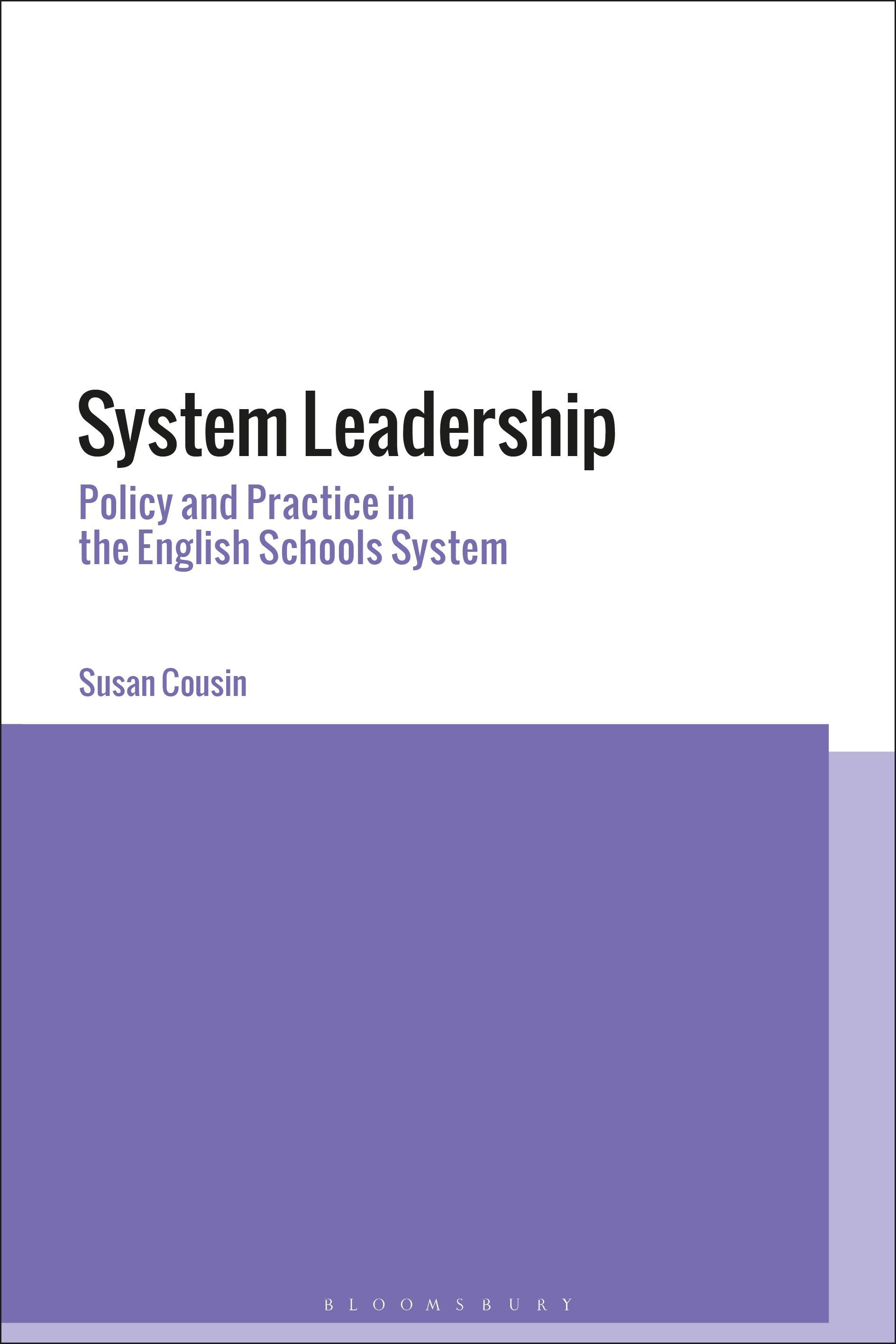
'System leadership' (defined as 'leading beyond a single institution') is a feature of the English education system which has been heralded as both the solution to school improvement and an extension to the school leadership career ladder. However, claims that it evidences a change of governance towards increasing self-regulation of the education system are contested.
Susan Cousin explores the governance and policy perspectives of system leadership. She captures rich narratives over several years from the lived experience of system leaders, headteachers they worked with and those brokering the relationships. The daily realities of the challenges they faced include tensions arising from conflicted governance environments where autonomy coexists with accountability and collaboration with competition. Identifying four types of system leader: the Hero-head, the Auditor, the Protector and the Collaborator, she presents a conceptual model of system leadership practice. A clear explanation of how different approaches affect power relationships, the nature of trust and types of learning, the model can be used to inform decisions made by current and future system leaders, and those who make policy. The book concludes by reaffirming the power of system leadership to deliver educational reform and the need to avoid unintended consequences including the fragmentation of the system and increased inequality.
Susan Cousin explores the governance and policy perspectives of system leadership. She captures rich narratives over several years from the lived experience of system leaders, headteachers they worked with and those brokering the relationships. The daily realities of the challenges they faced include tensions arising from conflicted governance environments where autonomy coexists with accountability and collaboration with competition. Identifying four types of system leader: the Hero-head, the Auditor, the Protector and the Collaborator, she presents a conceptual model of system leadership practice. A clear explanation of how different approaches affect power relationships, the nature of trust and types of learning, the model can be used to inform decisions made by current and future system leaders, and those who make policy. The book concludes by reaffirming the power of system leadership to deliver educational reform and the need to avoid unintended consequences including the fragmentation of the system and increased inequality.
Zahle einfach mit Karte, Klarna, Apple Pay oder Google Pay. Nicht zufrieden? Du hast immer ein 14-tägiges Widerrufsrecht. Lies mehr in unseren AGB. Hast du Fragen, schreib uns eine E-Mail an hello@memmo.org.
Memmo macht das Lernen einfacher – wo auch immer du bist. Bei uns findest du deine Kursbücher und smarte Lerntools an einem Ort: Zusammenfassungen, Quizzes, Podcasts und Lernkarten. Und Ted, dein Lernbuddy, beantwortet alles, was du wissen möchtest. Über 50.000 Studierende lernen bereits hier – gemacht, damit du schneller lernst und weniger Stress hast.