
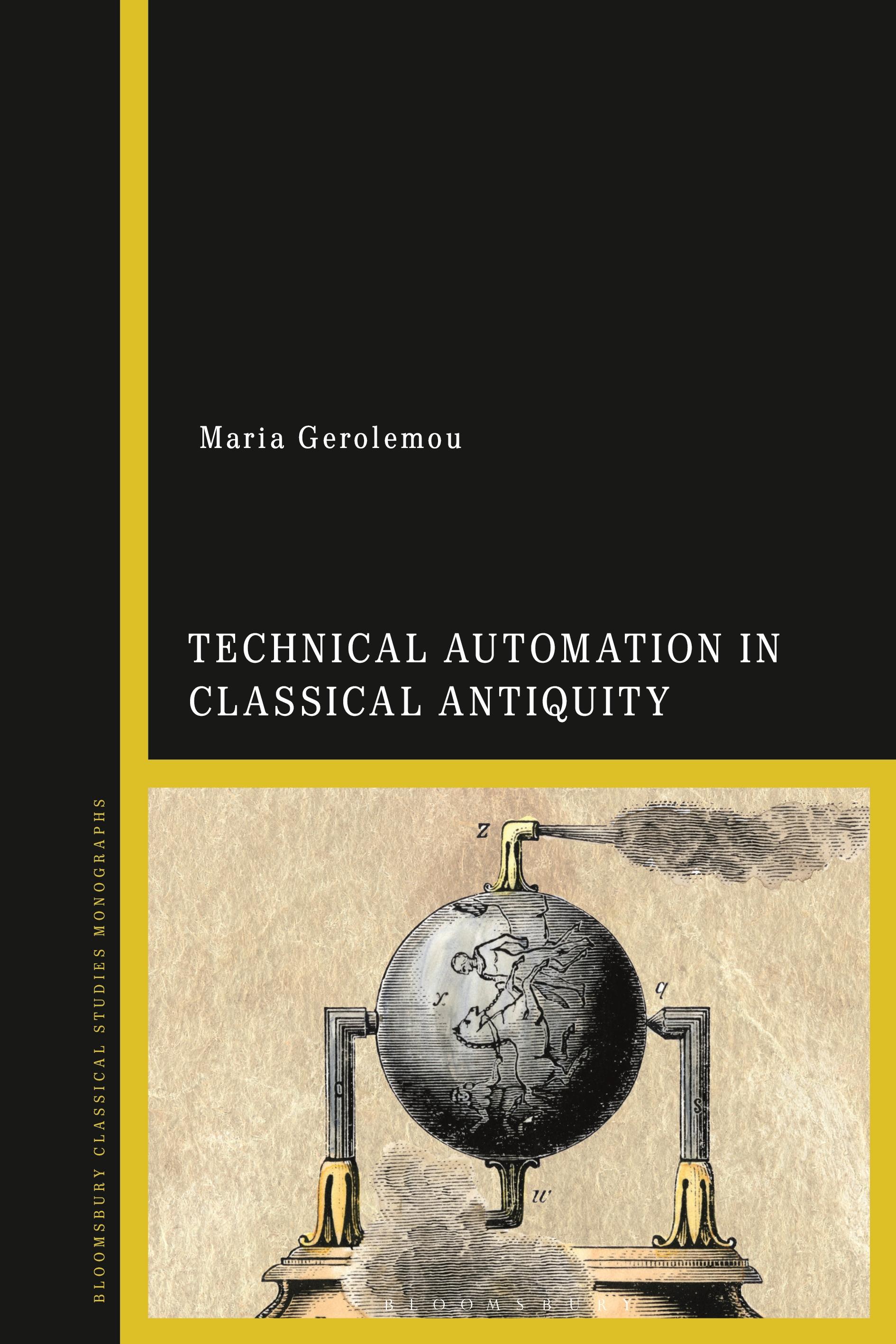
Technical automation – the ability of man-made (or god-made) objects to move and act autonomously – is not just the province of engineering or science fiction. In this book, Maria Gerolemou, by taking as her starting point the close semantic and linguistic relevance of technical automation to natural automatism, demonstrates how ancient literature, performance and engineering were often concerned with the way nature and artifice interacted. Moving across epic, didactic, tragedy, comedy, philosophy and ancient science, this is a brilliant assembly of evidence for the power of 'automatic theatre' in ancient literature.
Gerolemou starts with the earliest Greek literature of Homer and Hesiod, where Hephaestus' self-moving artefacts in the Iliad reflect natural forces of motion and the manufactured Pandora becomes an autonomous woman. Her second chapter looks at Greek drama, where technical automation is used to augment and undermine nature not only through staging and costume but also in plot devices where statues come to life and humans behave as automatic devices. In the third chapter, Gerolemou considers how the philosophers of the 4th century BCE and the engineers of the Hellenistic period with their mechanical devices contributed to a growing dialogue around technical automation and how it could help its audience glance and marvel at the hidden mechanisms of self-motion. Finally, the book explores the ways technical automation is employed as an ekphrastic technique in late antiquity and early Byzantium.
Gerolemou starts with the earliest Greek literature of Homer and Hesiod, where Hephaestus' self-moving artefacts in the Iliad reflect natural forces of motion and the manufactured Pandora becomes an autonomous woman. Her second chapter looks at Greek drama, where technical automation is used to augment and undermine nature not only through staging and costume but also in plot devices where statues come to life and humans behave as automatic devices. In the third chapter, Gerolemou considers how the philosophers of the 4th century BCE and the engineers of the Hellenistic period with their mechanical devices contributed to a growing dialogue around technical automation and how it could help its audience glance and marvel at the hidden mechanisms of self-motion. Finally, the book explores the ways technical automation is employed as an ekphrastic technique in late antiquity and early Byzantium.
Zahle einfach mit Karte, Klarna, Apple Pay oder Google Pay. Nicht zufrieden? Du hast immer ein 14-tägiges Widerrufsrecht. Lies mehr in unseren AGB. Hast du Fragen, schreib uns eine E-Mail an hello@memmo.org.
Memmo macht das Lernen einfacher – wo auch immer du bist. Bei uns findest du deine Kursbücher und smarte Lerntools an einem Ort: Zusammenfassungen, Quizzes, Podcasts und Lernkarten. Und Ted, dein Lernbuddy, beantwortet alles, was du wissen möchtest. Über 50.000 Studierende lernen bereits hier – gemacht, damit du schneller lernst und weniger Stress hast.