
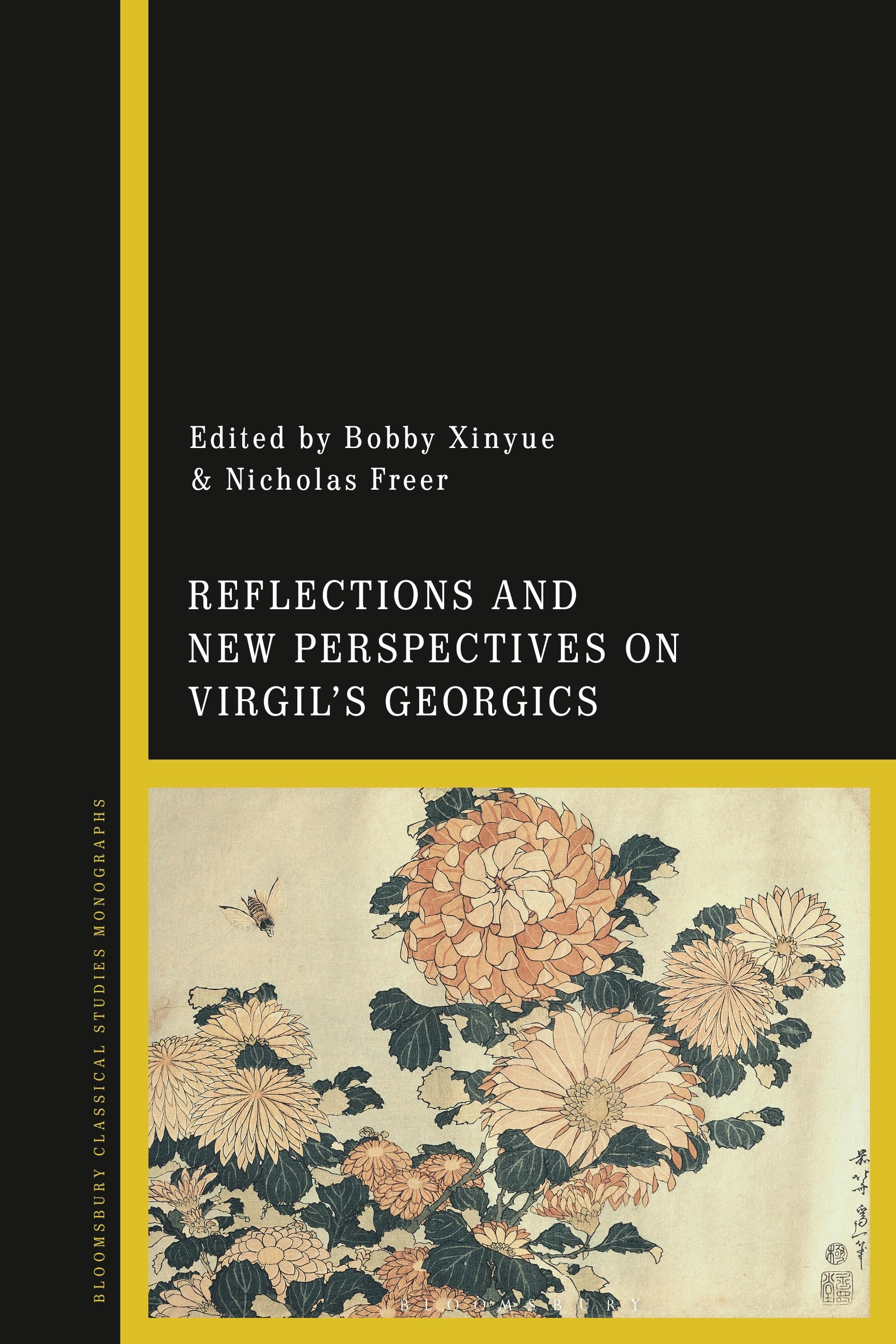
Virgil's Georgics, the most neglected of the poet's three major works, is brought to life and infused with fresh meanings in this dynamic collection of new readings. The Georgics is shown to be a rich field of inherited and varied literary forms, actively inviting a wide range of interpretations as well as deep reflection on its place within the tradition of didactic poetry.
The essays contained in this volume – contributed by scholars from Australia, Europe and North America – offer new approaches and interpretive methods that greatly enhance our understanding of Virgil's poem. In the process, they unearth an array of literary and philosophical sources which exerted a rich influence on the Georgics but whose impact has hitherto been underestimated in scholarship. A second goal of the volume is to examine how the Georgics – with its profound meditations on humankind, nature, and the socio-political world of its creation – has been (re)interpreted and appropriated by readers and critics from antiquity to the modern era. The volume opens up a number of exciting new research avenues for the study of the reception of the Georgics by highlighting the myriad ways in which the poem has been understood by ancient readers, early modern poets, explorers of the 'New World', and female translators of the twentieth and twenty-first centuries.
The essays contained in this volume – contributed by scholars from Australia, Europe and North America – offer new approaches and interpretive methods that greatly enhance our understanding of Virgil's poem. In the process, they unearth an array of literary and philosophical sources which exerted a rich influence on the Georgics but whose impact has hitherto been underestimated in scholarship. A second goal of the volume is to examine how the Georgics – with its profound meditations on humankind, nature, and the socio-political world of its creation – has been (re)interpreted and appropriated by readers and critics from antiquity to the modern era. The volume opens up a number of exciting new research avenues for the study of the reception of the Georgics by highlighting the myriad ways in which the poem has been understood by ancient readers, early modern poets, explorers of the 'New World', and female translators of the twentieth and twenty-first centuries.
Zahle einfach mit Karte, Klarna, Apple Pay oder Google Pay. Nicht zufrieden? Du hast immer ein 14-tägiges Widerrufsrecht. Lies mehr in unseren AGB. Hast du Fragen, schreib uns eine E-Mail an hello@memmo.org.
Memmo macht das Lernen einfacher – wo auch immer du bist. Bei uns findest du deine Kursbücher und smarte Lerntools an einem Ort: Zusammenfassungen, Quizzes, Podcasts und Lernkarten. Und Ted, dein Lernbuddy, beantwortet alles, was du wissen möchtest. Über 50.000 Studierende lernen bereits hier – gemacht, damit du schneller lernst und weniger Stress hast.