
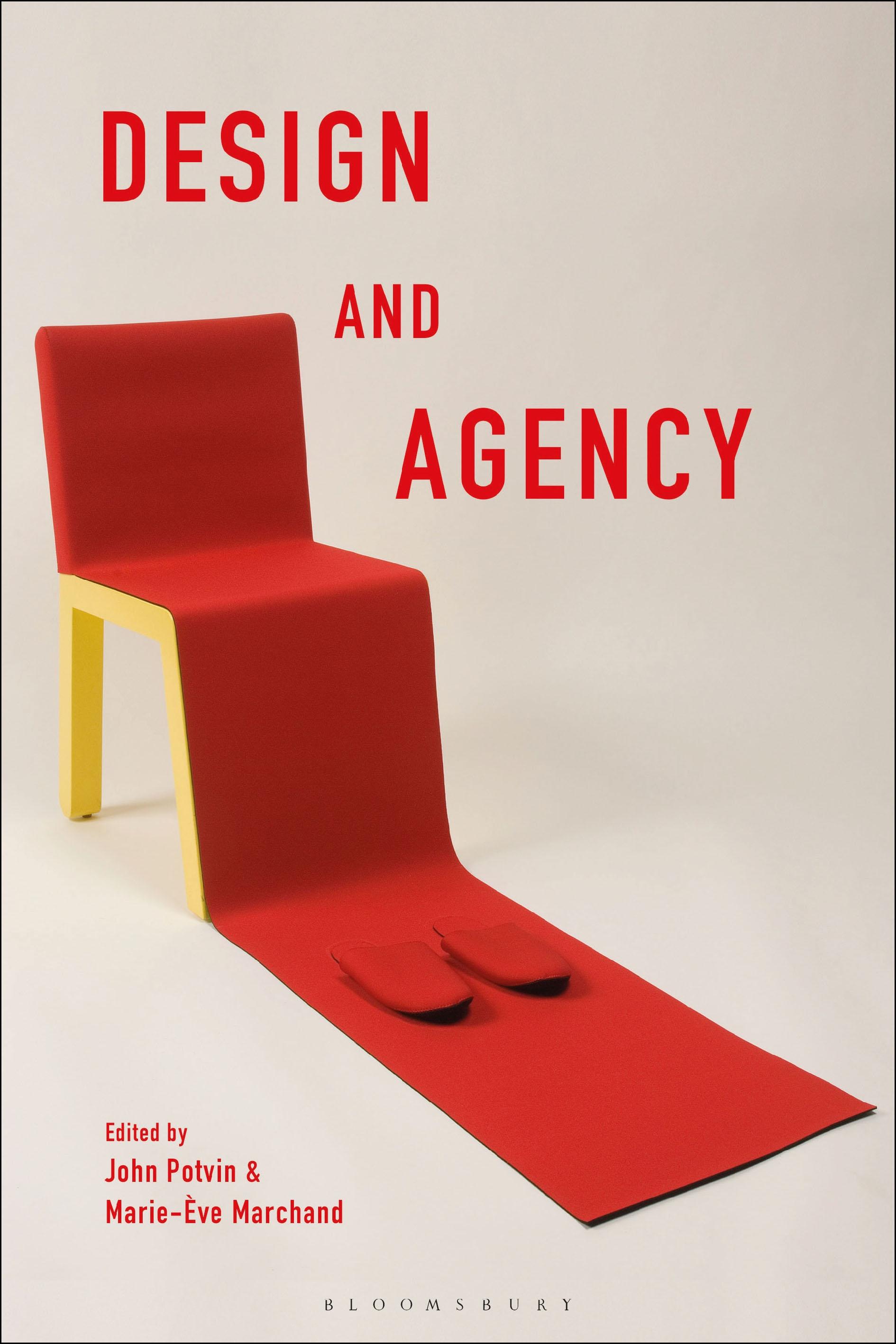
Design and Agency brings together leading international design scholars and practitioners to address the concept of agency in relation to objects, organisations and people. The authors set out to expand the scope of design history and practice, avoiding the heroic narratives of a typical modernist approach. They consider both how the agents of design construct and express their identities and subjectivities through practice, while also investigating the distinctive contribution of design in the construction of individual identity and subjectivity.
Individual chapters explore notions of agency in a range of design disciplines and historical periods, including the agency of women in effecting changes to the design of offices and working practices; the role of Jeffrey Lindsay and Buckminster Fuller in developing the design of a geodesic dome; Le Corbusier's 'Casa Curutchet'; a re-consideration of the gendered historiography of the 'Jugendstil' movement, and Bruce Mau's design exhibitions. Taken together, the essays in Design and Agency provide a much-needed response to the traditional texts which dominate design history. With a broad chronological span from 1900 to the present, and an equally broad understanding of the term 'design', it expands how we view the discipline, and shows how design itself can be an agent for social, cultural and economic change.
Individual chapters explore notions of agency in a range of design disciplines and historical periods, including the agency of women in effecting changes to the design of offices and working practices; the role of Jeffrey Lindsay and Buckminster Fuller in developing the design of a geodesic dome; Le Corbusier's 'Casa Curutchet'; a re-consideration of the gendered historiography of the 'Jugendstil' movement, and Bruce Mau's design exhibitions. Taken together, the essays in Design and Agency provide a much-needed response to the traditional texts which dominate design history. With a broad chronological span from 1900 to the present, and an equally broad understanding of the term 'design', it expands how we view the discipline, and shows how design itself can be an agent for social, cultural and economic change.
Zahle einfach mit Karte, Klarna, Apple Pay oder Google Pay. Nicht zufrieden? Du hast immer ein 14-tägiges Widerrufsrecht. Lies mehr in unseren AGB. Hast du Fragen, schreib uns eine E-Mail an hello@memmo.org.
Memmo macht das Lernen einfacher – wo auch immer du bist. Bei uns findest du deine Kursbücher und smarte Lerntools an einem Ort: Zusammenfassungen, Quizzes, Podcasts und Lernkarten. Und Ted, dein Lernbuddy, beantwortet alles, was du wissen möchtest. Über 50.000 Studierende lernen bereits hier – gemacht, damit du schneller lernst und weniger Stress hast.