
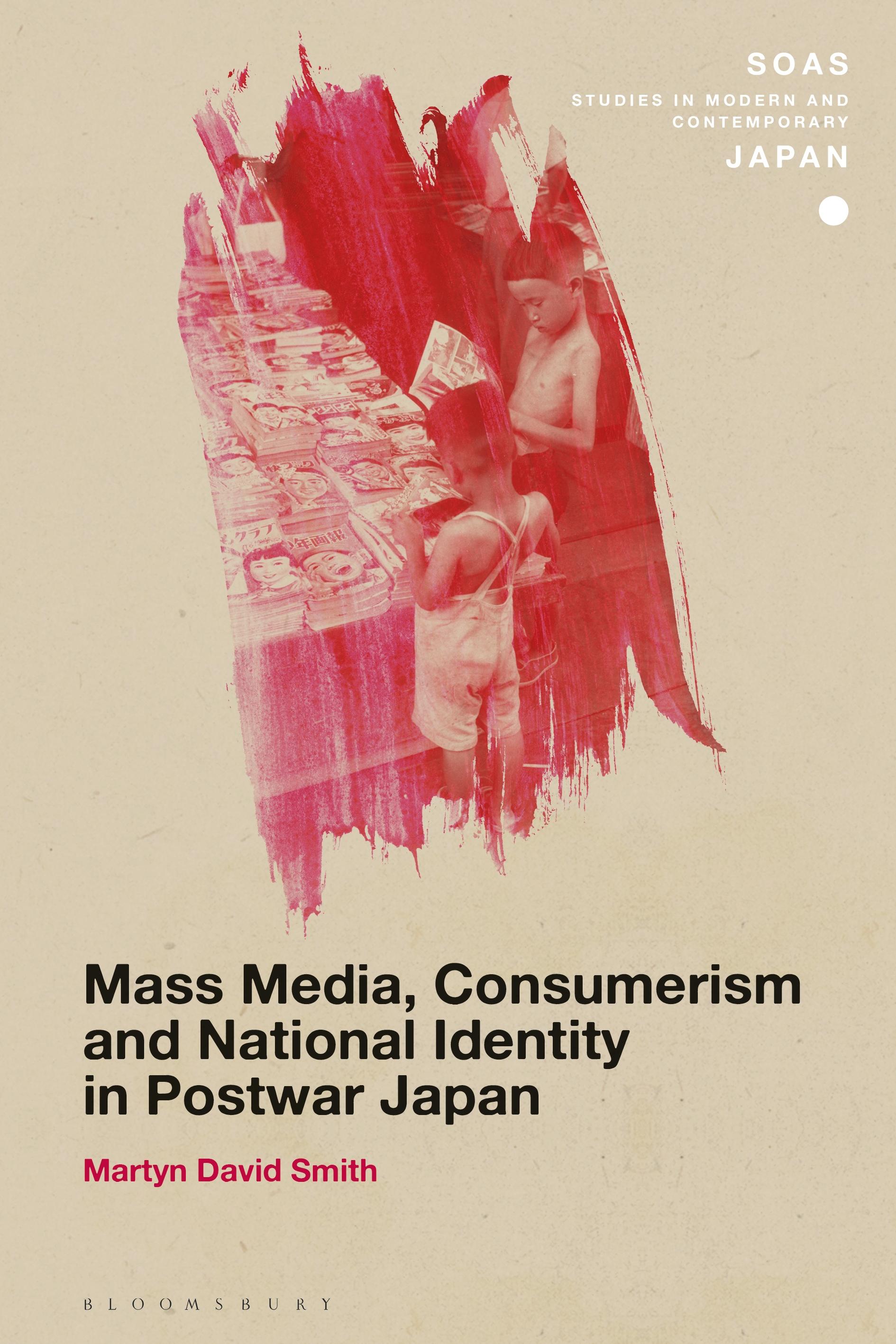
Mass Media, Consumerism and National Identity in Postwar Japan addresses Japan's evolving nationalism and national identity in relation to its newly rising consumerism during the two decades from 1952 to 1972, through a study of the transformation of the print media and the market for weekly and monthly magazines.
Martyn Smith argues that the transformation of the print media in the 1950s and 1960s expanded the possibilities for social, individual and national identities in Japan. From the late 1950s, the growth in the market for weekly magazines was fuelled by the huge potential for advertising revenue, the rapid development of the Japanese economy, and the necessity for the growth of a consumer society. This resulted in the merging of national identity with individual subjectivity – which this book describes as 'national subjectivity' – as the Japanese media promoted individual consumption to aid the recovery of the Japanese nation as a whole.
Examining housewife magazines such as Fujin Koron, Fujin no Tomo and Fujin Gaho, as well as news magazines such as Mainichi Graph and Asahi Graph, and publications aimed at young people – Shukan Heibon and Heibon Punch – Smith shows how the relationship of nationalism to everyday life is best understood by taking into account the changing nature of consumption in the period. By presenting an alternative to the traditional 'top-down' narrative of state-driven economic nationalism, this book therefore makes a unique contribution to the study of postwar Japanese history and Japanese nationalism.
Martyn Smith argues that the transformation of the print media in the 1950s and 1960s expanded the possibilities for social, individual and national identities in Japan. From the late 1950s, the growth in the market for weekly magazines was fuelled by the huge potential for advertising revenue, the rapid development of the Japanese economy, and the necessity for the growth of a consumer society. This resulted in the merging of national identity with individual subjectivity – which this book describes as 'national subjectivity' – as the Japanese media promoted individual consumption to aid the recovery of the Japanese nation as a whole.
Examining housewife magazines such as Fujin Koron, Fujin no Tomo and Fujin Gaho, as well as news magazines such as Mainichi Graph and Asahi Graph, and publications aimed at young people – Shukan Heibon and Heibon Punch – Smith shows how the relationship of nationalism to everyday life is best understood by taking into account the changing nature of consumption in the period. By presenting an alternative to the traditional 'top-down' narrative of state-driven economic nationalism, this book therefore makes a unique contribution to the study of postwar Japanese history and Japanese nationalism.
Seiten: 192
Kategorie: Film- & Medievetenskap
e-ISBN: 9781350030794
Versandgewicht: 1.2 kg
Versand in: 1-2 Tage
Zahle einfach mit Karte, Klarna, Apple Pay oder Google Pay. Nicht zufrieden? Du hast immer ein 14-tägiges Widerrufsrecht. Lies mehr in unseren AGB. Hast du Fragen, schreib uns eine E-Mail an hello@memmo.org.
Memmo macht das Lernen einfacher – wo auch immer du bist. Bei uns findest du deine Kursbücher und smarte Lerntools an einem Ort: Zusammenfassungen, Quizzes, Podcasts und Lernkarten. Und Ted, dein Lernbuddy, beantwortet alles, was du wissen möchtest. Über 50.000 Studierende lernen bereits hier – gemacht, damit du schneller lernst und weniger Stress hast.