
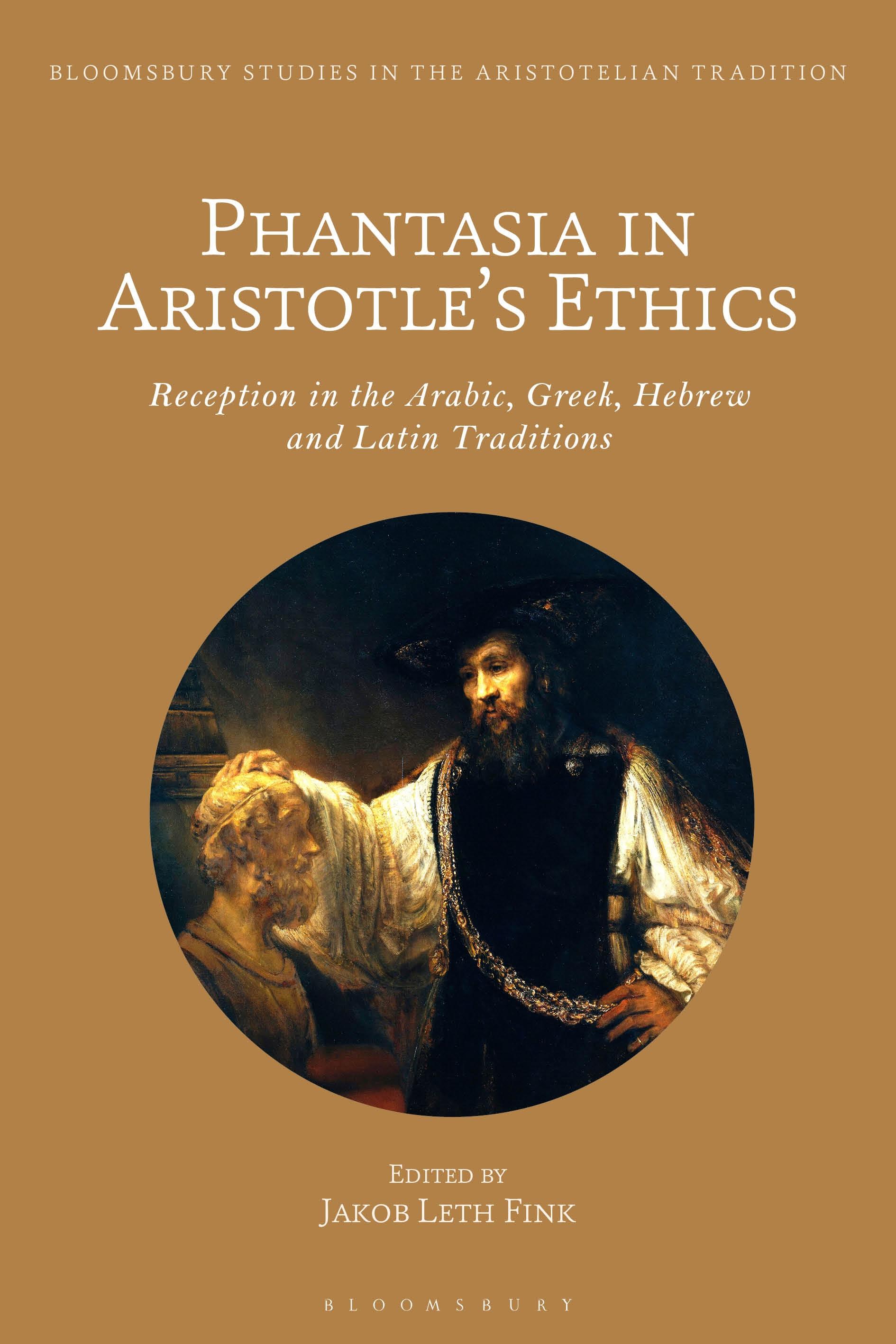
In the Nicomachean Ethics, Aristotle suggests that a moral principle 'does not immediately appear to the man who has been corrupted by pleasure or pain'. Phantasia in Aristotle's Ethics investigates his claim and its reception in ancient and medieval Aristotelian traditions, including Arabic, Greek, Hebrew and Latin.
While contemporary commentators on the Ethics have overlooked Aristotle's remark, his ancient and medieval interpreters made substantial contributions towards a clarification of the claim's meaning and relevance. Even when the hazards of transmission have left no explicit comments on this particular passage, as is the case in the Arabic tradition, medieval responders still offer valuable interpretations of phantasia (appearance) and its role in ethical deliberation and action. This volume casts light on these readings, showing how the distant voices from the medieval Arabic, Greek, Hebrew and Latin Aristotelian traditions still contribute to contemporary debate concerning phantasia, motivation and deliberation in Aristotle's Ethics.
While contemporary commentators on the Ethics have overlooked Aristotle's remark, his ancient and medieval interpreters made substantial contributions towards a clarification of the claim's meaning and relevance. Even when the hazards of transmission have left no explicit comments on this particular passage, as is the case in the Arabic tradition, medieval responders still offer valuable interpretations of phantasia (appearance) and its role in ethical deliberation and action. This volume casts light on these readings, showing how the distant voices from the medieval Arabic, Greek, Hebrew and Latin Aristotelian traditions still contribute to contemporary debate concerning phantasia, motivation and deliberation in Aristotle's Ethics.
Zahle einfach mit Karte, Klarna, Apple Pay oder Google Pay. Nicht zufrieden? Du hast immer ein 14-tägiges Widerrufsrecht. Lies mehr in unseren AGB. Hast du Fragen, schreib uns eine E-Mail an hello@memmo.org.
Memmo macht das Lernen einfacher – wo auch immer du bist. Bei uns findest du deine Kursbücher und smarte Lerntools an einem Ort: Zusammenfassungen, Quizzes, Podcasts und Lernkarten. Und Ted, dein Lernbuddy, beantwortet alles, was du wissen möchtest. Über 50.000 Studierende lernen bereits hier – gemacht, damit du schneller lernst und weniger Stress hast.